

More news on this day
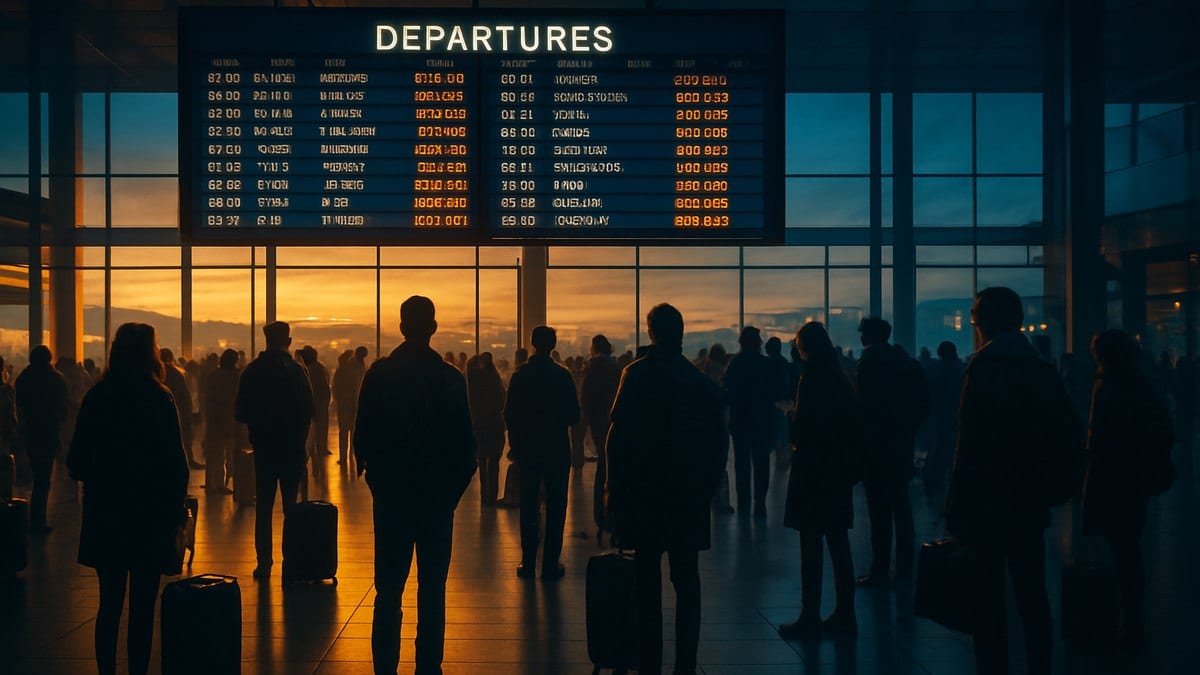
Los Angeles International Airport recorded 69 delayed departures across major carriers on April 10, underscoring how weather, congestion and nationwide scheduling strains continue to pressure one of the country’s busiest hubs.
Get the latest news straight to your inbox!
Ripple Effects Hit Major Airlines at a Key West Coast Hub
Flight-tracking data and airline status boards for April 10 indicate that the 69 delayed departures at Los Angeles International Airport were concentrated among the country’s largest carriers, including American, Delta, United, Southwest and Alaska. While the number represents only a fraction of the day’s total operations, it highlights how even modest disruption can affect thousands of travelers at a high-volume hub.
Many of the delays involved routes linking LAX with other major domestic airports that were also dealing with weather and congestion issues this week. Recent coverage of nationwide disruptions shows that New York, Los Angeles, Seattle and Orlando collectively saw several hundred delays and more than one hundred cancellations in early April, creating a pool of late arriving aircraft and crew that continued to reverberate through schedules on April 10.
Publicly available on-time performance data for recent months suggests that, on a typical day, more than eight in ten flights at LAX depart within fifteen minutes of schedule. On April 10, the cluster of 69 delayed flights indicates a notable deviation from that pattern, particularly given that many of the affected services were operated by major network and low-cost carriers with extensive connecting traffic.
Passenger experiences shared on travel and aviation forums in recent weeks describe a patchwork of outcomes at LAX, with some travelers moving quickly through security while others face downstream delays at the gate as aircraft and crew arrive late from disrupted cities elsewhere in the country.
Compounding Factors: Weather, Traffic and a Strained National System
While April 10 did not bring a single extreme weather event to Los Angeles, operations at LAX are closely tied to conditions across the national airspace system. Reports from industry and consumer-rights sites point to thunderstorms and unstable spring conditions in other regions earlier in the week, including major disruptions at Fort Lauderdale and other East Coast and Gulf airports, that contributed to broader schedule instability.
When aircraft and crews are delayed leaving other hubs, LAX often receives those knock-on effects several hours later. Federal data and recent analytical reports on delays show that a significant share of disruptions across large U.S. airports now arises from these cascading carrier and system issues rather than local weather alone. As a result, an apparently calm day in Southern California can still produce an elevated number of late departures.
On the ground, LAX continues to manage its own chronic pressure points. The airport’s central terminal loop and nearby roadways are frequently congested, and construction tied to modernization projects has periodically adjusted traffic flows and gate assignments. Studies of passenger delay at major U.S. airports rank LAX among the facilities where congestion-related holdups contribute meaningfully to overall traveler time lost, even when flight operations remain largely on schedule.
Recent research into national delay patterns also notes that departure delays, even when limited to 30 or 40 minutes, can generate significant passenger time costs when multiplied by the large number of people on each aircraft. With LAX handling tens of millions of travelers annually, a day with nearly seventy delayed flights represents a substantial cumulative impact.
Safety Scrutiny and Operational Complexity at LAX
The disruptions on April 10 occurred during a period of heightened attention to ground operations at LAX. On the same date, national outlets reported that federal regulators are examining a close call on a taxiway involving a Frontier Airlines aircraft and ground vehicles earlier in the week. According to published coverage, the incident did not involve an airborne conflict and occurred at low speed, but it added fresh scrutiny to how busy airports manage growing traffic and construction zones.
LAX is in the midst of a multi-year modernization program that includes terminal upgrades and a new automated people mover intended to ease curbside congestion. Public documents and local reporting describe how the scale and complexity of these projects have required extensive coordination among airport operations teams, airlines and contractors, increasing the importance of precise scheduling and ground movement planning.
Although there is no indication that the April 10 delays were directly tied to the recent taxiway incident, the overlap in timing underscores the balancing act facing one of the country’s primary international gateways. As regulators and airport managers focus on safety margins on runways and taxiways, airlines and passengers simultaneously contend with the operational ripples that come from any bottleneck at such a heavily used facility.
Analysts who track airport performance note that even as security wait times at LAX have improved in early April, with some reports indicating typical queues of 5 to 15 minutes at checkpoints, the broader system remains vulnerable to issues that originate beyond the terminal doors, from air traffic control constraints to aircraft maintenance holds.
How April 10 Fits Into Broader Spring Travel Patterns
The timing of the April 10 disruptions aligns with the spring-travel surge that typically brings heavier loads and tighter turn times for airlines. Travel trade publications have highlighted that, in the days leading up to April 10, U.S. carriers collectively delayed several thousand flights across the country as schools’ spring breaks and holiday travel pushed demand higher.
At LAX, that meant more fully booked flights and fewer empty seats available for rebooking when delays occurred. Industry data covering the first half of April indicates that Los Angeles joined a list of large U.S. airports experiencing elevated disruption levels, although some peers, particularly in Florida, have seen even more severe weather-related effects.
Longer term, federal transportation statistics and independent analyses show that departure delays per passenger at LAX are in line with or slightly better than several other top-tier hubs, but the absolute scale of traffic means that any uptick in disruptions can be felt widely. Policy reports examining delay costs list LAX among the top contributors to national passenger delay hours simply because of its large share of total U.S. air travel.
For travelers, that context helps explain why an airport that often touts strong on-time performance can still deliver a frustrating experience on specific high-demand days. The 69 delayed flights on April 10 appear to be one example of how broader national trends and local constraints intersect at a major West Coast gateway.
What Travelers Can Do on High-Disruption Days
Consumer advocates and travel organizations consistently recommend that passengers flying through large hubs like LAX build in extra time and flexibility during peak seasons. Guidance shared by travel rights groups and airport-focused information sites emphasizes checking flight status frequently on the day of departure, enabling airline notifications and monitoring conditions at both origin and destination airports.
In recent days, several outlets have reminded travelers of new federal rules that strengthen refund and compensation rights in specific delay and cancellation scenarios. While the impact of those rules on airlines’ operational decisions is still emerging, some commentators suggest that carriers may increasingly adjust schedules and capacity in advance to reduce the risk of prolonged disruptions that trigger additional obligations.
On April 10, many LAX passengers affected by delays relied on rebooking options, same-day flight changes or standby lists, particularly when their original flights were part of multi-segment itineraries. Travel industry advice indicates that passengers who are proactive in contacting their airline through apps or digital channels may have more options than those waiting at crowded gate counters during a disruption.
As the busy summer travel period approaches, the pattern seen at LAX on April 10 is likely to inform how airlines, regulators and airport managers approach scheduling, staffing and infrastructure readiness. For now, the day’s 69 delayed flights offer a snapshot of an air travel system that is functioning, but still finely balanced between smooth operations and widespread inconvenience.