

More news on this day
Flight disruptions are extracting an estimated 34 billion dollars in annual costs in 2026, as airlines, airports and regulators struggle to contain cascading delays, cancellations and growing passenger compensation obligations.
Get the latest news straight to your inbox!
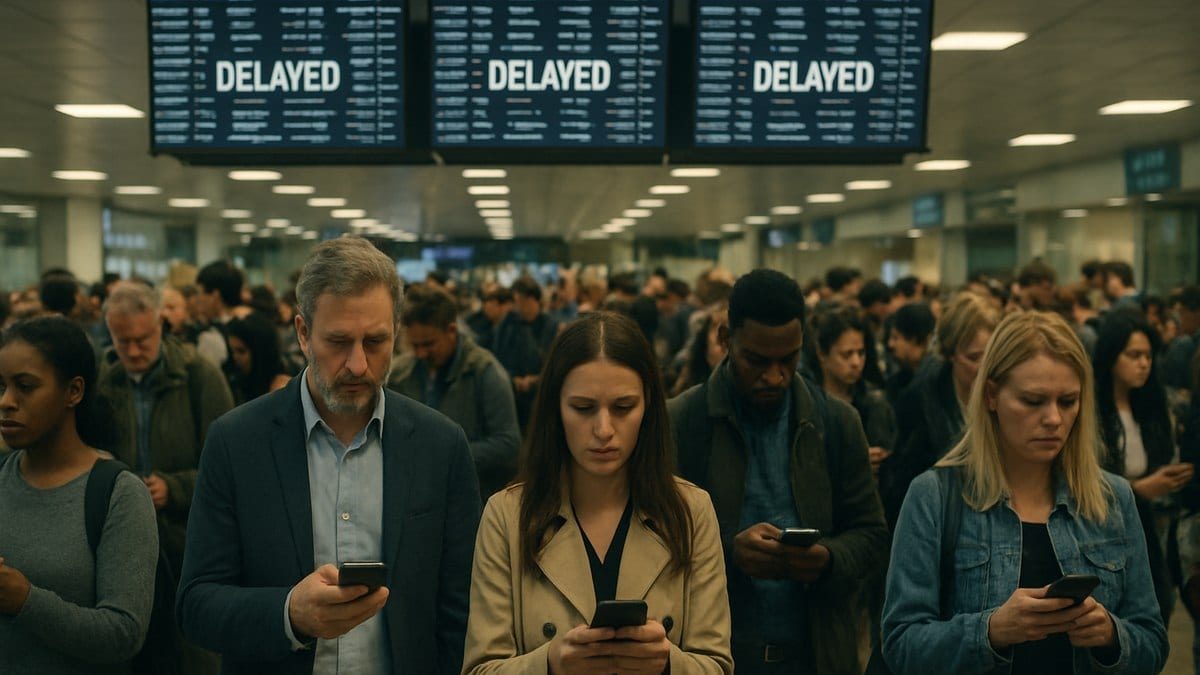
New Data Underscore the Rising Cost of Disruption
Recent economic analyses of flight operations indicate that the worldwide bill for disrupted services has climbed to roughly 34 billion dollars per year once airline expenses, passenger time losses and knock-on effects in the wider economy are taken into account. Studies drawing on 2022 and 2023 traffic patterns already placed the United States alone in the 30 to 34 billion dollar range for disruption-related costs, and industry bodies now describe those figures as a baseline rather than a peak.
The 34 billion dollar estimate typically bundles together several elements: direct airline operating losses from cancellations and lengthy delays, crew and aircraft repositioning, hotel and meal vouchers, rebooking on alternative flights, and compensation in regions where statutory schemes apply. On top of that come productivity losses for businesses, missed connections in tourism and trade, and increased logistical and staffing costs for airports.
While severe weather and airspace constraints remain consistent drivers, recent years have added new triggers that inflate the tally, including large scale IT outages, staffing shortages in air traffic control and security, and industrial action. Individual events, such as the summer 2024 technology failure that forced a major United States carrier to cancel more than a thousand flights and book a charge in the hundreds of millions of dollars, show how quickly disruption costs can accumulate for a single airline.
Regulatory filings and research papers released through late 2024 and early 2025 also note that disruption impacts are increasingly being measured in environmental terms, with additional holding patterns and diversions contributing extra emissions and fuel burn, further embedding the cost of unreliability into the sector’s climate footprint.
Airlines Squeezed Between Thin Margins and Passenger Rights
For airlines, the 34 billion dollar disruption bill arrives on top of already tight operating margins. Industry outlooks published for 2025 and 2026 project modest profitability improvements overall, but they also stress that labor, fuel and financing costs are rising. Within that context, every extended delay or mass cancellation can turn a profitable quarter into a marginal one.
Carriers in Europe face some of the heaviest direct financial exposure, as the longstanding EU261 framework continues to require lump sum cash payments in many cases of long delay, cancellation or denied boarding. Airline groups have argued that the regime already costs European operators more than eight billion euros annually in compensation and related care, and they contend that proposed revisions under discussion in Brussels risk adding further burdens.
In the United States, by contrast, passenger protection is structured more around refunds and ancillary assistance than automatic compensation. Proposals to move closer to the European model have faced political headwinds, and recent federal actions indicate a more cautious approach. Policy documents released in late 2024 and 2025 include estimates that importing an EU-style compensation regime into the US market could add several billion dollars to annual airline costs, raising concerns about ticket prices and service to smaller communities.
Analysts note that, regardless of jurisdiction, airlines typically recover a portion of disruption expenses indirectly through fare structures, add-on fees or network adjustments. However, the speed and visibility of high profile disruption events mean that carriers also face reputational costs when irregular operations recur, encouraging continued investment in resilience even when the immediate financial return is difficult to quantify.
Regulators Revisit Passenger Protection Amid System Strain
The escalating cost of unreliability is prompting governments and regulators to reopen long running debates on how best to protect passengers without destabilizing airline finances. In Europe, transport ministers and the European Parliament have been negotiating revisions to the air passenger rights regulation, with draft texts circulated in 2024 and 2025 proposing changes to delay thresholds and clearer definitions of extraordinary circumstances.
Some proposals would raise the minimum delay before compensation is triggered on certain short and medium haul routes, a move industry advocates say would reflect operational realities and reduce legal uncertainty. Consumer groups and claims firms have pushed back, warning that millions of passengers each year could lose eligibility for payments if thresholds move further out, even as delays and cancellations remain frequent at congested hubs.
In the United States, regulatory work has focused more on transparency and refund enforcement. Publicly available rulemaking documents describe efforts to require clearer communication of rights when flights are significantly changed or canceled, standardized definitions of “significant” delay for refund eligibility, and strengthened requirements for prompt reimbursements. Advocacy organizations argue that these steps, while important, still leave US travelers with fewer direct financial remedies than their European counterparts when lengthy delays occur.
Across both regions, legal and economic reviews emphasize that any tightening or loosening of compensation rules is likely to influence airline behavior, including scheduling buffers, spare aircraft availability and staffing levels. That, in turn, feeds back into the underlying disruption rate and the scale of the now 34 billion dollar annual cost burden.
Operational Fragilities Keep Disruptions Elevated
Beneath the regulatory and financial debate lies a more fundamental challenge: the air transport system remains vulnerable to shocks. Several high profile events over the past two years have demonstrated how closely interlinked carriers, airports, technology providers and air navigation services have become, and how an outage or staffing shortfall in one part of the system can ripple across continents within hours.
Investigations into major disruption episodes in North America and Europe since 2022 point repeatedly to common weak points, including legacy IT infrastructure, fragmented crew scheduling systems and limited spare capacity in air traffic control. When these weaknesses intersect with peak travel demand, severe weather or industrial unrest, the result has been prolonged recovery periods in which normal operations take days rather than hours to restore.
Academic work on aviation resilience published in 2025 highlights a growing interest in quantifying resilience as a distinct performance metric, rather than focusing solely on punctuality. Researchers suggest that investments in redundancy, smarter use of data and closer coordination between airlines and infrastructure providers could reduce both the frequency and duration of disruption events, cutting into the 34 billion dollar impact over time.
However, these investments compete with other priorities, such as fleet renewal for climate goals and the rising cost of sustainable aviation fuel. Industry observers caution that without targeted incentives or regulatory recognition of resilience spending, some operators may struggle to justify major outlays, particularly in competitive short haul markets where margins are thinnest.
Travelers Adapt as Delays Become Part of the Journey
For passengers, the macroeconomic numbers translate into a familiar reality at the gate and on the tarmac. Large scale disruptions in the summers of 2023 and 2024, along with several high visibility technology failures, have taught frequent travelers to expect irregular operations during peak seasons in both Europe and North America.
Consumer information platforms and claims services report continued demand for guidance on rights, particularly under EU261 and similar regimes. Data compiled by passenger advocacy groups suggest that a significant share of eligible travelers still do not pursue compensation, either because they are unaware of their options or find the process complex, meaning that the visible cost to airlines may understate the broader economic loss borne by the traveling public.
Airports and airlines have responded by expanding digital tools for rebooking and notifications, and by experimenting with automatic vouchers or loyalty credits during severe disruption events. Some carriers have also invested in more detailed real time communication strategies, after earlier crises drew criticism for leaving passengers without clear information on causes, expected timelines or available remedies.
As traffic continues to recover and grow into 2026, analysts expect the tension between demand for affordable fares and demand for reliability to sharpen. Unless structural bottlenecks in airspace management, staffing and infrastructure are resolved, the annual disruption bill estimated at 34 billion dollars is likely to persist, shaping strategic decisions in boardrooms and travel plans for millions of passengers worldwide.