

More news on this day
Air travel across Brazil descended into disarray on March 13 as major carriers including LATAM Brasil, Azul and GOL canceled 49 flights and delayed another 312, crippling operations at São Paulo, Rio de Janeiro, Brasília, Belo Horizonte and several secondary airports during one of the busiest weekday travel periods of the year.
Get the latest news straight to your inbox!
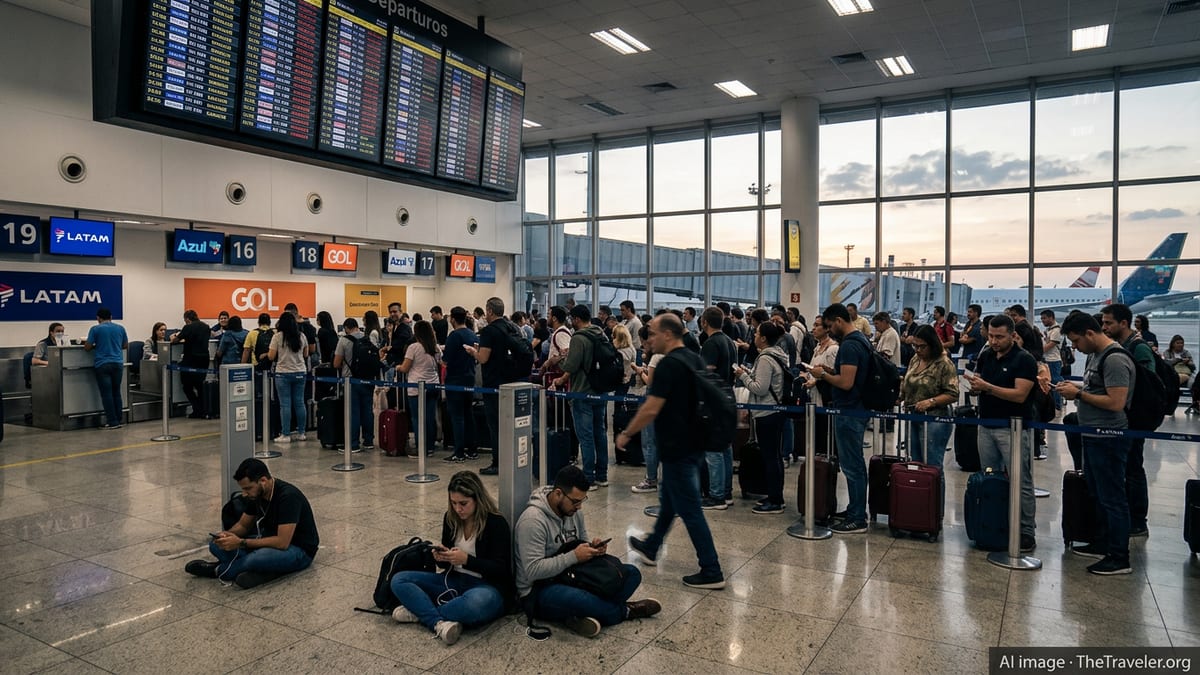
Hubs From São Paulo to Rio Struggle Under Mounting Disruptions
The most severe disruption was reported at São Paulo’s Guarulhos and Congonhas airports, where a combination of weather, aircraft rotation issues and congestion led to cascading delays on domestic and regional routes. Morning departures quickly fell behind schedule, forcing airlines to reshuffle aircraft and crews and pushing knock-on delays deep into the afternoon peak.
In Rio de Janeiro, operations at both Santos Dumont and Galeão were hampered as delayed inbound aircraft from São Paulo and other cities failed to arrive on time. Passengers waiting for shuttle flights between Brazil’s two largest cities faced rolling departure estimates that often shifted by 60 minutes or more, while airport display boards filled with red and orange status alerts.
The federal capital Brasília, a key connecting hub for central and northern Brazil, also saw its tightly banked morning and midday schedules unravel. With several connecting banks misaligned, travelers reported missed onward flights to Amazonian and northeastern destinations, compounding frustration among business and government passengers alike.
In Belo Horizonte’s Confins airport, delays on Azul and GOL services rippled across Minas Gerais, affecting flights to cities such as Vitória, Salvador and Recife. Airport staff warned that the combination of delayed arrivals and tight turnaround times left little margin to recover the schedule quickly.
LATAM Brasil, Azul and GOL Lead Cancellations and Delays
Industry data from Brazil’s main airport monitoring platforms indicated that carriers LATAM Brasil, Azul and GOL accounted for the majority of the 49 cancellations and 312 delayed flights recorded nationwide. While the proportional impact varied by airline and route, travelers in São Paulo, Rio de Janeiro, Brasília and Belo Horizonte reported similar experiences of last-minute gate changes, extended boarding holds and repeated schedule revisions.
At Guarulhos, LATAM Brasil’s extensive network of domestic and international services meant that disruption on a handful of early flights quickly spread. Once aircraft missed their planned rotation windows, crews timed out and aircraft had to be reassigned, forcing the cancellation of some shorter domestic legs in order to protect long-haul operations.
Azul, which maintains a strong presence at Belo Horizonte and in secondary cities, struggled to keep its high-frequency shuttle services running on time. Delays on trunk routes between Belo Horizonte, São Paulo and Rio led to tight or missed connections for passengers headed to smaller regional destinations, magnifying the overall effect of each delayed departure.
GOL, a major operator on Brazil’s busiest domestic corridors, was also heavily affected. Its shuttle flights linking São Paulo and Rio, as well as services to Brasília and the northeast, experienced recurring ground holds as congestion built in terminal and runway operations and as airlines prioritized certain flights over others to regain network stability.
Travelers Face Long Queues, Missed Connections and Scramble for Rebooking
Across Brazil’s largest airports, passengers described scenes of crowded departure halls, overflowed seating areas and long queues at check in, security and airline customer service desks. With hundreds of flights operating off schedule, many travelers found that carefully timed connections or same day return trips collapsed under the weight of rolling delays.
At São Paulo’s Guarulhos and Congonhas terminals, travelers connecting from international arrivals to domestic flights found themselves particularly vulnerable. Even small delays on inbound long haul flights had outsized consequences once they intersected with a domestic network already under strain, leaving some passengers forced to rebook for late night or next day departures.
Families traveling at the tail end of school holidays and business travelers returning from midweek meetings reported difficulties finding alternative seats, especially on high demand routes between São Paulo, Rio, Brasília and Belo Horizonte. With load factors already high, airlines had limited flexibility to absorb displaced passengers without further disrupting their schedules.
In several airports, passengers said that information often lagged behind events. Departure boards and mobile applications sometimes updated only after boarding times had already passed, and gate announcements varied by carrier and terminal, creating additional confusion for non Portuguese speaking travelers and visitors unfamiliar with Brazil’s large, multi terminal hubs.
Operational Strain Highlights Structural Vulnerabilities in Brazil’s Air Network
Aviation analysts noted that while adverse weather and localized technical issues may have triggered some of the cancellations and delays, the scale of the disruption reflected deeper vulnerabilities in Brazil’s air transport system. Concentration of traffic through a handful of mega hubs, tight aircraft utilization and limited slack in crew scheduling all increase the risk that relatively small incidents can cascade into nationwide gridlock.
At São Paulo and Rio in particular, peak hour banks are tightly timed to maximize connectivity, leaving little room to absorb unscheduled maintenance, air traffic control slowdowns or ground handling constraints. When disruptions occur simultaneously at more than one major hub, airlines can quickly run out of spare aircraft and crews, making cancellations inevitable as they attempt to protect long haul and high revenue services.
The disruption also renewed debate about the resilience of domestic air travel in a country where long distances and limited rail infrastructure leave many travelers with few alternatives. While Brazil’s road network offers some backup on routes between neighboring states, journeys between hubs such as São Paulo, Brasília and northeastern capitals are often too long to be practical substitutes when flights fail.
Consumer groups argued that the incident illustrated the need for clearer communication protocols and faster digital rebooking tools, so that passengers can secure alternative options and necessary documentation for compensation or travel insurance without standing in hours long lines at airport counters.
Authorities Monitor Situation as Airlines Work to Stabilize Schedules
By late afternoon on March 13, airlines reported that recovery efforts were under way, with some additional aircraft and reserve crews activated to help clear backlogs at the most affected airports. However, with aircraft and staff out of position across the network, experts warned that knock on effects could continue into the evening and potentially spill over into early morning departures on March 14.
Airport operators in São Paulo, Rio de Janeiro, Brasília and Belo Horizonte deployed extra staff to help manage queues and direct passengers through terminals, particularly in areas where tight connections required priority handling. Some airports opened overflow areas and encouraged travelers with long waits to move away from crowded boarding gates.
Brazilian aviation regulators said they were monitoring on time performance and cancellation levels, and reminded passengers of their rights to assistance, rebooking and, in some circumstances, compensation when flights are significantly delayed or canceled. Travelers were urged to retain boarding passes and receipts for meals, transport and accommodation needed as a direct result of the disruptions.
With the busy Easter and southern winter travel seasons approaching, industry observers said airlines and airport operators will face growing pressure to demonstrate that lessons have been learned from this episode, and that contingency plans are robust enough to prevent a repeat of such widespread chaos across Brazil’s air network.