

More news on this day
Air travel across Saudi Arabia remains unsettled as a fresh wave of cancellations and delays hits services at Riyadh, Jeddah and Dammam, with Saudia, Gulf Air and several other airlines collectively recording around three dozen cancellations and multiple delays, according to publicly available flight-tracking data and local media reports on Wednesday.
Get the latest news straight to your inbox!
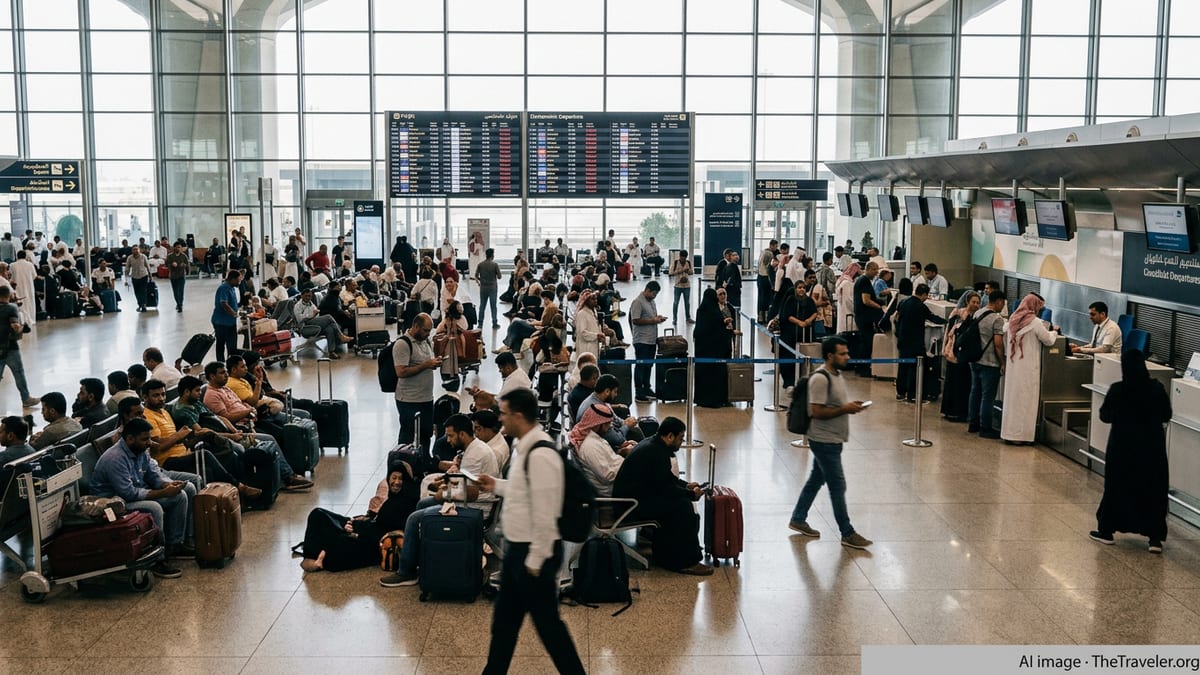
Ongoing Disruptions at Riyadh, Jeddah and Dammam
Flight schedules at King Khalid International Airport in Riyadh, King Abdulaziz International Airport in Jeddah and King Fahd International Airport in Dammam continued to show notable disruption, with reports indicating roughly 38 cancellations and at least six delayed departures and arrivals across carriers in a single day of operations. While the majority of scheduled flights are still operating, the uneven pattern is creating uncertainty for travelers using these key Saudi gateways.
Publicly available information from airport boards and flight-tracking platforms shows that Saudia, the national carrier, remains the most affected simply because of its dominant presence at all three hubs. Regional operators, including Gulf Air and other Gulf-based airlines, are also listed among the disrupted services, particularly on short- and medium-haul routes linking Saudi Arabia with neighboring states.
Operational notices from aviation and logistics providers describe Saudi airports as open but operating on constrained schedules, with certain routes reduced or adjusted in response to broader regional conditions. For passengers, this is translating into last-minute schedule changes, rolling delays and occasional same-day cancellations that may repeat over several consecutive days on the same route.
The uneven nature of the disruption means that some long-haul flights continue to operate close to schedule, while select domestic and regional services are more vulnerable to short-notice changes. Travelers connecting through Riyadh, Jeddah or Dammam are being advised in published guidance to monitor their bookings closely and allow additional time for rebooking if required.
Regional Tensions and Airspace Constraints
The continuing pattern of disruption is unfolding against the backdrop of heightened tensions in the wider Gulf region and a series of attacks and security incidents affecting critical energy and transport infrastructure. Analytical briefings circulated to the aviation and logistics sectors describe a complex operating environment, with airspace management and routing decisions being revisited frequently as the regional security picture evolves.
Industry reports highlight that carriers across the Middle East have been rethinking flight paths, adjusting timings and, in some cases, temporarily suspending services along certain corridors to avoid sensitive areas. These network adjustments can ripple through schedules at hub airports, contributing to the clusters of cancellations and delays now visible at major Saudi gateways.
Saudi airports themselves are generally described in open reporting as operational, but some airlines are applying their own restrictions or capacity cuts, particularly where crew positioning, fuel supply, or overflight approvals have become more complex. This combination of local operations remaining open while airline networks remain constrained is one reason why disruption can appear inconsistent from one day to the next.
Travel advisories and commercial risk assessments circulated this month continue to reference the possibility of sudden schedule changes across the region. For passengers, this environment means that even confirmed tickets on routinely busy routes are not entirely insulated from late operational changes if airlines need to rebalance networks with little warning.
Impact on Saudia, Gulf Air and Other Carriers
Saudia, as the primary operator at Riyadh, Jeddah and Dammam, has borne a significant portion of the disruptions. According to schedules and operational summaries reviewed in recent days, the carrier has trimmed frequencies on selected regional routes and occasionally consolidated services, resulting in same-day cancellations on overlapping flight numbers.
Gulf Air and several other Gulf-based airlines serving Saudi cities have also been adjusting their timetables. Publicly accessible route updates show certain flights into and out of Dammam and Riyadh operating on reduced frequencies or with modified timings, while some services to Jeddah have been periodically cancelled or rerouted as carriers recalibrate their networks.
Analysts commenting in industry publications note that the current environment combines elevated fuel and operating costs with complex routing decisions, encouraging airlines to concentrate capacity on routes with stronger demand or strategic importance. This leaves some secondary or shorter regional links more exposed to tactical cuts whenever conditions tighten.
Low-cost and regional carriers operating alongside Saudia and Gulf Air have reported smaller but still noticeable schedule shifts, often in the form of retimed departures rather than outright suspensions. For passengers, this fragmented picture can make it difficult to distinguish between minor operational tweaks and more significant, recurring disruptions on specific routes.
Passenger Experience: Long Queues and Uncertain Itineraries
For travelers passing through Riyadh, Jeddah and Dammam, the disruption is being felt most clearly in the form of extended waiting times, rebooking queues and shifting itineraries. Social media posts and traveler forums over recent days have described queues at check-in and transfer desks following clusters of cancellations, particularly on busy evening banks of regional departures.
Some passengers report that flights initially shown as delayed have, in a number of cases, later been cancelled or retimed again, requiring repeated visits to airline counters or customer service channels. Others note that while security and immigration processing generally remains orderly, congestion arises when multiple flights are disrupted in quick succession, placing pressure on seating and amenities in departure areas.
Published advice from travel agents and airline partners suggests that affected passengers are being rebooked where possible onto later services or alternative routings, although limited spare capacity on certain corridors can extend the time required to secure a new itinerary. In some instances, travelers have reported being offered departures one or more days later than originally planned.
Business travelers and those undertaking religious journeys to or through Saudi Arabia appear particularly sensitive to the uncertainty, as missed connections can impact onward travel to smaller domestic destinations or time-specific commitments. The resulting pressure has led many to build in additional buffer days or choose routings perceived as less exposed to last-minute change.
Outlook for the Coming Days
Forward-looking operational briefings point to continued volatility in regional aviation networks, suggesting that Saudi airports are likely to experience further intermittent disruption in the near term. While there is no indication in public reporting of a complete shutdown at Riyadh, Jeddah or Dammam, the pattern of scattered cancellations and select delays appears set to persist as long as regional tensions and routing challenges remain unresolved.
Industry observers note that airlines are now balancing the need to maintain connectivity into and out of Saudi Arabia with the imperative to manage costs and operational risk. This could mean that schedules are adjusted with relatively short notice, particularly for flights with lower load factors or those requiring complex overflight planning.
Travel industry advisories recommend that passengers due to fly to, from or via Saudi Arabia in the coming days regularly check airline apps, airport boards and carrier announcements before leaving for the airport. Flexible tickets, comprehensive travel insurance and a willingness to consider alternative routings are all being highlighted as prudent choices for those with imminent travel plans.
For now, the situation across Riyadh, Jeddah and Dammam remains one of partial but persistent disruption rather than complete closure. As airlines and authorities continue to respond to developments in the wider region, travelers can expect conditions to remain fluid, with daily schedules potentially differing significantly from originally published timetables.