

More news on this day
Travelers across the United States are facing a fresh wave of disruption as delays and cancellations at Miami International Airport spill over into major hubs from New York to Los Angeles, with Delta Air Lines, American Airlines and Qatar Airways among the hardest hit carriers.
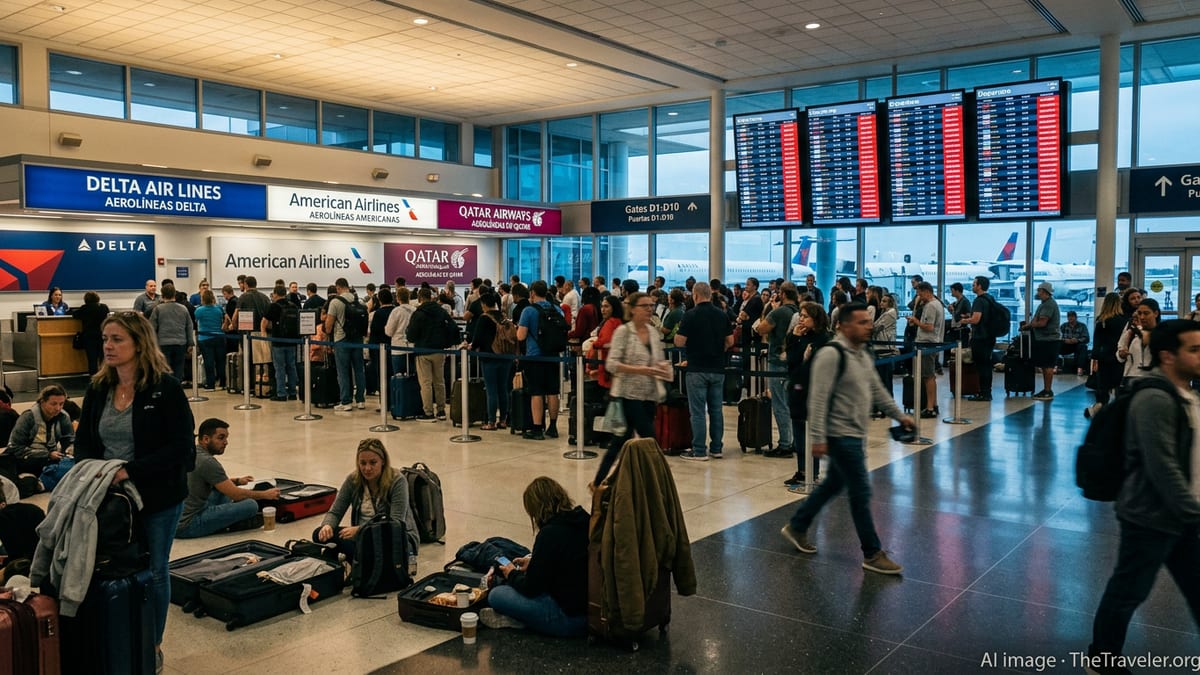
Miami Bottleneck Sends Shockwaves Through US Air Network
Miami International Airport, one of the country’s busiest gateways for both domestic and international traffic, is contending with an intense bout of congestion that has resulted in 264 delayed flights and 17 cancellations tied to Delta Air Lines, American Airlines and Qatar Airways. The disruption, centered on departures but increasingly affecting arrivals, is rippling through the broader US aviation system at the height of a busy early March travel weekend.
Traffic management initiatives introduced to deal with heavy volume at Miami, combined with unsettled weather patterns over Florida, have pushed routine schedule pressures into full-scale operational strain. Even as official metrics describe many of the holdups as moderate, the cumulative effect of tight turnarounds, saturated airspace and strained gate capacity has translated into missed connections, rolling delays and mounting passenger frustration.
Airport officials and airline representatives say they are working to “normalize” operations over the course of the day, but acknowledge that the sheer number of delayed departures means knock-on effects will linger into the evening and, for some travelers, into Sunday. With major carriers already operating near capacity on popular routes, rebooking options are limited and many passengers are being advised to expect overnight stays.
Delta and American Struggle to Keep Coastal Hubs Moving
Delta and American, the two largest US carriers serving Miami, are bearing the brunt of the disruption. A high concentration of their delayed and cancelled flights is feeding directly into some of the nation’s most critical coastal hubs, including New York’s John F. Kennedy and LaGuardia airports, Newark Liberty International and Los Angeles International. Those airports, already managing their own weather and congestion challenges, are now dealing with the added strain of late inbound aircraft and displaced crews.
At New York area airports, travelers arriving from Miami and other Florida cities reported long waits on taxiways and at gate holds as controllers sequenced a backlog of late-running flights. For passengers scheduled to connect through New York to Europe, the Caribbean and secondary US cities, even modest delays out of Miami proved enough to cause missed onward flights and unexpected overnight stays.
On the West Coast, Los Angeles International has seen a similar pattern, with delayed transcontinental services cascading into long-haul departures. Late-arriving aircraft from Miami and other southeastern gateways are compressing turnaround times and forcing some last-minute gate and crew swaps. Airline staff in Los Angeles say they are prioritizing long-haul departures to Asia-Pacific and Latin America, which has in turn pushed some domestic departures further behind schedule.
Qatar Airways Disruptions Tie US Chaos to Middle East Turmoil
The situation at Miami is being further complicated by ongoing turmoil in Middle East airspace, which continues to affect Qatar Airways operations just as the carrier attempts to rebuild a reliable long-haul schedule. A combination of airspace closures, emergency corridors and limited repatriation flights has left the airline juggling aircraft and crew availability worldwide, and Miami is among the US gateways feeling the impact.
Several Qatar Airways services touching Miami have been delayed or cancelled outright amid shifting routings and last-minute operational decisions. One scheduled departure from Miami to Doha was scrubbed on Saturday, adding to the tally of 17 cancellations at the airport and leaving connecting passengers to Europe, Africa and South Asia scrambling for alternatives on other carriers or waiting for newly scheduled relief flights.
Because Qatar Airways flights out of Miami feed into a global network still constrained by partially reopened airspace and emergency operating windows, even a single cancellation can translate into dozens of missed onward connections. Travelers booked on multi-leg itineraries via Doha reported receiving rolling text updates, with revised departure times slipping later into the night before ultimately being cancelled or reprotected onto future dates.
Passengers Confront Long Lines, Uncertain Plans and Limited Options
Inside Miami International, the human impact of the disruption has been unmistakable. Snaking queues at check-in, crowded gate areas and packed customer service counters have become a familiar sight through much of the day, as travelers look for answers about delayed departures, missed connections and lost hotel nights. Many passengers describe a sense of déjà vu reminiscent of past holiday meltdowns and winter storm disruptions.
Families returning from Caribbean holidays, business travelers connecting to international meetings and students heading back to school after midterm breaks have all found themselves suddenly marooned. Some have been rebooked onto red-eye departures from Miami or routed through secondary hubs such as Dallas, Charlotte or Atlanta, while others have been advised to seek refunds or travel credits and try again later in the week.
With hotel inventory near major airports already tight, especially in New York and South Florida, airline-issued vouchers have not always guaranteed immediate accommodation. Airport seating areas and quiet corners have filled with stranded passengers attempting to sleep between periodic loudspeaker announcements and rolling updates on departure boards.
What Travelers Can Expect in the Coming Days
Operational experts warn that, even if weather improves and airspace congestion around Miami and other key hubs eases, the knock-on effects of Saturday’s disruptions are likely to persist. Aircraft and crew will remain out of position for at least another news cycle, and the recovery will be complicated by high load factors on many domestic and international routes as spring travel demand ramps up.
Passengers booked on Delta, American or Qatar Airways itineraries that touch Miami, New York, Los Angeles or other major US hubs in the next 24 to 48 hours are being urged to monitor their flights closely via airline apps and to check the status of inbound aircraft before heading to the airport. Same-day schedule changes, rolling delays and occasional short-notice cancellations remain a distinct possibility as airlines work to restore regular operations.
Travel advisors suggest that, where possible, customers build extra time into connections, especially when linking domestic flights with long-haul international departures. For those yet to start their trips, flexible fares, travel insurance with disruption coverage and a willingness to accept alternate routings could make the difference between a lengthy airport ordeal and a manageable inconvenience as the aviation system works through the latest bout of travel turmoil.