

More news on this day
More than 2,345 U.S. flights were delayed in a fresh wave of disruption sweeping major hubs from Atlanta and Chicago to New York and Los Angeles, as spring storms, airport congestion and tightly wound airline schedules converged to slow air travel for thousands of passengers.
Get the latest news straight to your inbox!
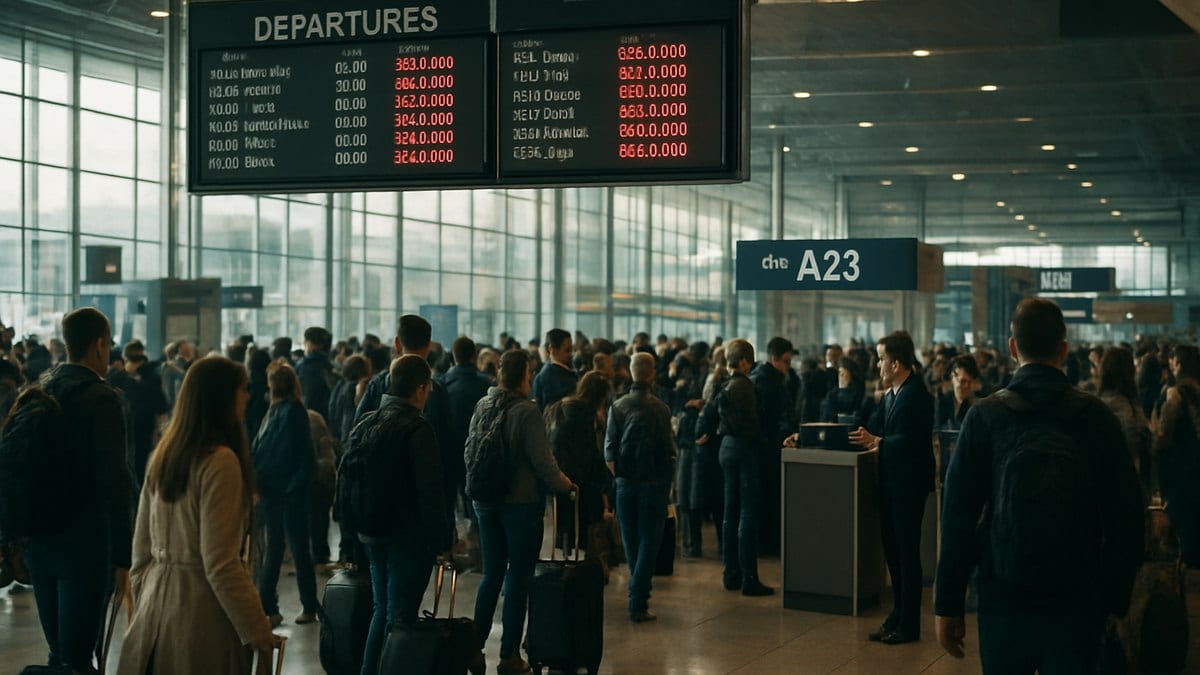
Delays Mount Across a Network of Busy Hubs
Publicly available flight tracking tallies and industry coverage from early April indicate that delay totals across the United States have surged well into the thousands on multiple days, with one national roundup attributing more than 4,300 delays and just over 200 cancellations to a single 24 hour period at major airports including Atlanta, Chicago, Houston, Orlando, Los Angeles, Boston and New York area hubs. Chicago O’Hare alone logged well over 200 delayed flights in that snapshot, underscoring how quickly congestion can build at high traffic fields.
Separate reporting focused on New York’s LaGuardia Airport over the Easter travel weekend points to around 600 delayed flights and roughly 80 cancellations there at the peak of the disruption, with fog, thunderstorms and resulting ground stops spilling delays throughout the broader network. Across the same period nationwide, estimates compiled from flight tracking services suggest that roughly 5,500 flights were delayed and about 460 were canceled, highlighting the scale of the strain on carriers and travelers.
Another data point from a travel industry analysis of a recent nationwide disruption wave shows roughly 4,395 delays and 207 cancellations in one day affecting passengers on American, Delta, Southwest, United, Spirit, Alaska, Frontier and other airlines. That figure aligns with a broader pattern in which delay counts pushing well beyond 2,300 have become increasingly common during weather heavy travel periods, particularly when holiday demand and busy hub operations overlap.
Weather, Holiday Demand and Tight Schedules Collide
Recent coverage of the disruption pattern emphasizes a familiar combination of triggers: strong spring storm systems, lingering pockets of winter weather, runway and airfield work at key airports, and passenger volumes that remain at or above pre pandemic levels at many hubs. Severe thunderstorms, low visibility and high winds over the Easter period reduced capacity in important aviation corridors, prompting air traffic flow restrictions and intermittent ground stops at major airports.
Analyses of flight operations during this period note that the disruptions intensified as the Easter holiday weekend approached, when demand for leisure travel is typically elevated. Reports highlight that this surge arrived at a time when airline schedules were already densely packed, leaving little spare aircraft or crew capacity to absorb even short term shocks to the system. When departures at some hubs began running significantly behind schedule, delay ratios rose quickly, with publicly available figures showing that more than one third of departures at certain airports were running late at the worst points.
Research on hub and spoke air traffic structures and recent academic work on U.S. aviation delays point out that weather remains the dominant catalyst for these spikes, but operational and scheduling choices strongly influence how far and how fast disruptions spread. When many flights are timed tightly to feed connecting banks at a handful of hubs, a localized storm cell, a brief runway closure or a sequence of late arriving aircraft can propagate into a multi day, multi airport disruption pattern that is difficult to unwind.
Miami, Atlanta and New York Emerge as Flashpoints
Several recent case studies at individual airports illustrate how these broader trends are playing out on the ground. In Miami, travel outlets tracking conditions on April 6 describe high levels of disruption linked to thunderstorms over the Southeast and knock on effects from delays elsewhere in the network. Miami’s role as a key gateway for American and other carriers connecting North America, Latin America and Europe meant that late running flights and crew imbalances there quickly rippled outward to other hubs.
In Atlanta, publicly available data shows that travelers on April 5 faced more than 280 delayed flights and over 70 cancellations tied to routes touching Hartsfield Jackson Atlanta International Airport. Reports attribute the problems to a mixture of unsettled weather, tight crew scheduling and congestion in critical parts of U.S. airspace, with the disruption reaching carriers ranging from Delta and its regional partners to low cost operators.
New York’s LaGuardia has been another focal point, with Easter weekend weather triggering rolling ground stops and delays that extended far beyond the New York region. Coverage of that episode notes that as LaGuardia racked up hundreds of delays and dozens of cancellations, the impact was felt at downline airports handling diverted or late arriving flights, contributing to the national delay totals that surged beyond 2,345.
Individual Airline Disruptions Feed the Wider Crunch
Overlaying these airport specific events are carrier focused disruptions that interact with the broader system strain. In one recent episode, data compiled by passenger rights advocates shows a major U.S. airline recording more than 800 delayed flights and several dozen cancellations across its hub network in a single day, with Newark, Chicago O’Hare, Denver, Washington Dulles and Houston particularly affected. At the height of that event, more than 30 percent of departures at some hubs were running late.
Another low cost carrier reported just over 200 significant delays and close to 20 cancellations on a recent day, with the heaviest disruption centered on Denver, New York and Chicago. Analyses of that pattern highlight how a carrier with a leaner schedule and fewer spare aircraft can struggle to recover quickly once several flights fall heavily behind, especially when they operate from already busy hubs that are themselves dealing with weather and congestion.
These carrier specific events rarely happen in isolation. When a major airline experiences a spike in delays at one of its fortress hubs, late arriving aircraft and out of position crews can contribute to further delays at shared airports, adding to the overall totals seen across the country. As a result, days with more than 2,345 delays often feature overlapping weather, airport and airline issues that together push the system beyond its available slack.
What Travelers Can Expect in the Coming Weeks
Transportation analysts and aviation commentators reviewing recent disruption data suggest that the conditions fueling the latest wave of delays are unlikely to disappear quickly. Spring storm systems are expected to remain frequent across large parts of the United States, while airlines continue to operate dense schedules to meet sustained leisure and business travel demand. This combination points to an environment where additional high delay days are plausible, particularly around peak travel weekends.
Public information from the U.S. Department of Transportation’s Airline Customer Service Dashboard indicates that most large carriers commit to providing meal vouchers or equivalent support when significant delays keep passengers waiting for several hours, and some also offer hotel accommodations during non weather disruptions that stretch overnight. Passenger rights organizations note, however, that compensation for delays directly tied to weather or air traffic control restrictions remains limited under current U.S. rules, meaning many travelers will continue to shoulder costs linked to missed connections and last minute itinerary changes.
Given the recent pattern, consumer advocates and travel planners are encouraging passengers to build additional buffer time into itineraries, especially when connecting through the busiest hubs highlighted by recent disruption reports. While airlines and airports are investing in technology and infrastructure intended to smooth operations over the long term, current evidence across multiple data sets and recent case studies suggests that delay spikes of more than 2,345 flights nationwide will remain a recurring feature of U.S. air travel as the peak spring and summer seasons approach.