

More news on this day
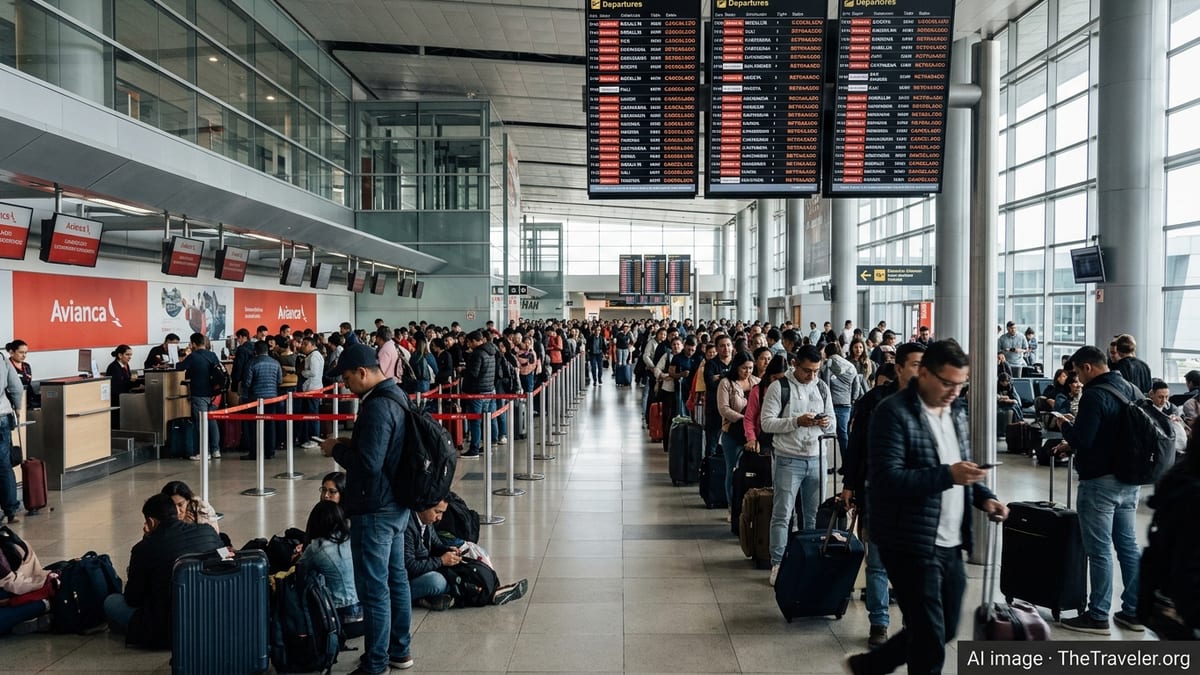
Air travel across Colombia has entered a turbulent stretch in early April, with a mix of protests, weather issues and operational strains disrupting flights at key airports and complicating journeys for domestic and international passengers.
Get the latest news straight to your inbox!
Road Blockades Choke Access to Major Airports
Access to airports rather than issues in the sky has emerged as one of the main pain points for travelers in Colombia this week. Publicly available reports from Colombian and international outlets describe extensive road blockades on April 9, as simultaneous demonstrations by rural communities and taxi drivers converged on key transport corridors in several departments.
In Bogotá, coverage indicates that taxi strikes spread to major thoroughfares and approaches to El Dorado International Airport, one of Latin America’s busiest hubs for both domestic and international flights. Traffic bottlenecks around the capital left some travelers struggling to reach check in counters on time, and social media posts showed passengers dragging suitcases along congested access roads while vehicles stood still for extended periods.
Reports from national newsrooms note that similar protests and slowdowns affected other cities, including disruptions on highways that feed regional airports. While most airports technically remained open, the combination of traffic jams and uncertainty over which routes were passable translated into missed departures, tight connections and an uptick in same day rebooking requests.
Travel advocates in the region have pointed out that such surface transport disruptions highlight how vulnerable air travel remains to events outside airlines’ direct control. Even when flight operations proceed largely as scheduled, blocked access roads can quickly cascade into no shows, standby lists and additional pressure on already busy departure halls.
Weather and Infrastructure Strains Add to Delays
Beyond street protests, recent weather patterns and infrastructure challenges have contributed to a choppy operating environment for Colombian aviation. In late February, severe rain and hailstorms in Bogotá prompted flooding and localized transport disruption, with reports indicating that El Dorado International Airport experienced delays tied to thunderstorms and gusty winds. While those conditions eased, they underscored how quickly schedules can unravel when storms sweep across the Andean region.
Regional aviation summaries for March and early April point to wider turbulence across the Americas, with tens of thousands of delays and cancellations recorded from North America down through the Caribbean and into parts of South America. Colombia sits in the middle of many of these flows, serving as both a connection point and an origin for traffic heading to the United States, Mexico, Central America and neighboring Andean countries. When storms or staffing constraints disrupt traffic in one major market, knock on effects can reverberate through Colombian airports hours later.
Analysts tracking post pandemic aviation performance have observed that airlines are operating tighter schedules with high aircraft utilization, which leaves limited slack when weather cells, airspace restrictions or equipment issues arise. In Colombia, this environment means that even modest delays on inbound flights can lead to rolling pushbacks for subsequent departures, particularly on heavily used domestic routes linking Bogotá, Medellín, Cali, Barranquilla and coastal resort cities.
Operational updates published in recent days suggest that while there have been no nationwide ground stops attributed to a single technical failure, the accumulation of minor and moderate disruptions has translated into longer lines at check in, crowded boarding gates and a rising number of passengers seeking assistance with missed connections.
Domestic Routes Feel the Pressure First
Domestic travelers appear to be bearing the brunt of the latest wave of disruptions. Colombia’s internal air network has expanded in recent years as airlines added capacity between secondary cities, responding to demand from business travelers and tourists who rely on flights to traverse mountainous terrain and long overland distances.
Industry data and recent airline announcements show that carriers have emphasized connectivity to regional destinations such as Quibdó and Valledupar, along with traditional trunk routes from Bogotá to Medellín, Cali and the Caribbean coast. During peak periods, these domestic links operate at high load factors, leaving little room to absorb passengers from canceled or delayed services without knock on impacts to later departures.
Reports from travel forums and consumer channels describe cases where travelers on domestic legs encountered last minute schedule changes, equipment substitutions and extended waits at airports while operations staff worked to reassign aircraft and crews. Although such accounts do not represent the entire system, they align with a broader picture of a network operating close to its limits on busy days.
Some carriers have responded by selectively trimming frequencies or adjusting departure times, aiming to build more resilience into their schedules. Publicly available timetables for late April and May show tweaks on certain Colombian domestic routes, including additional flights planned for specific events, but also indications that airlines are still calibrating capacity in light of operational constraints.
International Connections Face Knock-On Effects
International flights to and from Colombia have not been spared from the disruption, though the pattern often reflects external shocks as much as local conditions. Severe weather and air traffic control restrictions in the United States earlier in the week caused thousands of delays and several thousand cancellations across major U.S. airports, according to industry monitoring services. Those disruptions affected connections for Colombian passengers traveling through hubs such as Miami, Fort Lauderdale and New York.
Travel industry analyses describe how delay propagation works along long haul and regional networks. When a flight from North America departs several hours late due to storms or staffing limits, its late arrival in Bogotá or other Colombian cities can interfere with planned turnaround times for onward segments. As a result, passengers on southbound legs might face late night arrivals, while those booked on early morning departures connecting to Europe or the Caribbean can encounter rebookings or unexpectedly tight connections.
Route maps and current schedules show that Colombia remains deeply integrated into global aviation, with flag carriers and foreign airlines linking the country to destinations in North America, Europe and other parts of Latin America. This connectivity is a strength for tourism and business, but it also means that instability in distant markets quickly ripples into Colombian airports, particularly during seasonal peaks.
Observers note that the latest snarl of disruptions coincides with heavy demand surrounding Easter holidays and local cultural events, a period when aircraft are often operating at or near full capacity. As airlines work to clear backlogs, some travelers are encountering limited rebooking options and longer wait times at customer service counters, especially when itineraries involve multiple carriers or alliances.
Travelers Confront Uncertainty and Evolving Rules
The convergence of protests, weather and operational constraints has left many passengers in Colombia navigating a landscape of uncertainty. Travel blogs and consumer platforms report that some visitors have had to reroute journeys at short notice, purchase last minute tickets on alternative carriers or adjust hotel and tour bookings when outbound flights were delayed or connections were missed.
At the same time, shifting regulations and policies can make it challenging for passengers to know what support or compensation they may be entitled to. International guidance on air passenger rights typically distinguishes between disruptions within an airline’s control, such as technical or staffing problems, and those caused by factors like extreme weather, air traffic control limits or civil unrest. In the Colombian context, current disruptions often fall across both categories in a single journey, complicating efforts to obtain refunds or vouchers.
Consumer advocates and travel publications covering the region continue to emphasize practical steps for coping with irregular operations. Recommendations typically include monitoring flight status through airline apps and airport displays, allowing extra time to reach airports when road conditions are uncertain, keeping receipts for out of pocket expenses and documenting any written communication from airlines or travel agents.
With Colombia’s aviation network likely to remain busy through upcoming festivals and the southern hemisphere’s mid year travel season, current events serve as a reminder that resilience planning has become central to trip preparation. Travelers heading into or out of the country in the coming weeks may benefit from flexible itineraries, carefully chosen connection times and contingency plans in case the next disruption unfolds far from the runway itself.