

More news on this day
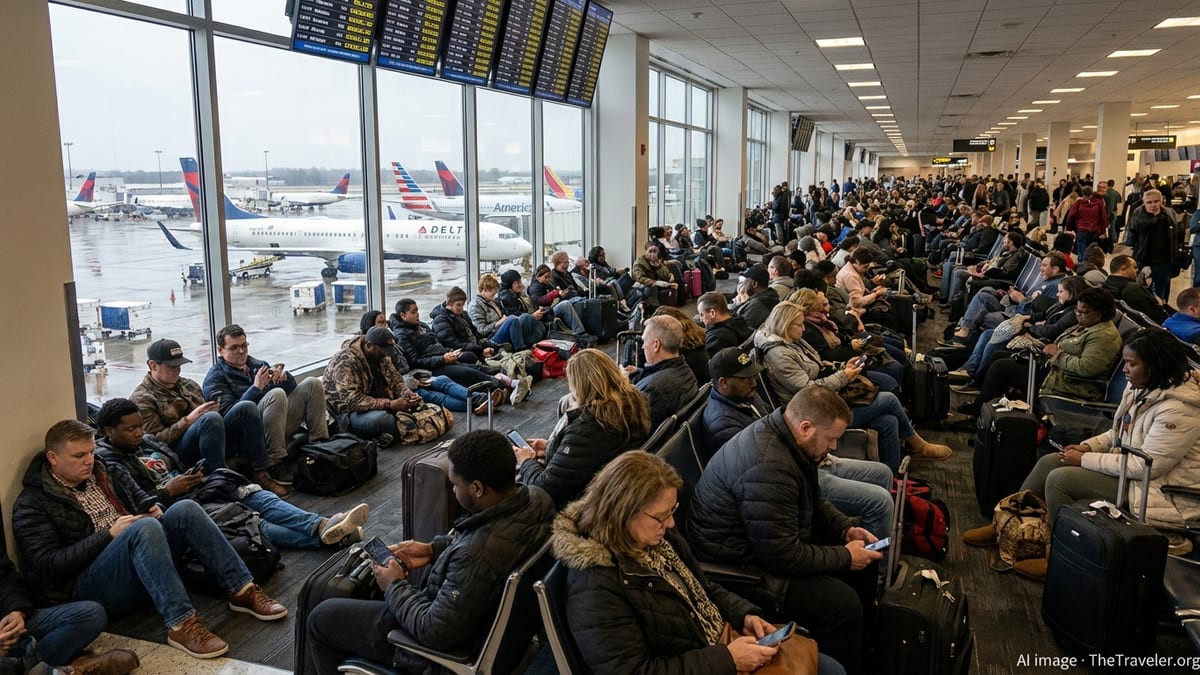
Travelers moving through Atlanta on Thursday faced a fresh wave of disruption as Delta Air Lines, American Airlines and Southwest struggled with a combined 188 delays and 15 cancellations, snarling connections to New York, Los Angeles, Chicago and other major U.S. cities during an already difficult winter for air travel.
Winter Weather and System Strain Converge in Atlanta
Atlanta’s Hartsfield-Jackson International Airport, the world’s busiest air hub and a critical gateway for domestic connections, has once again become a flashpoint for nationwide travel disruption. Following weeks of volatile winter weather across the country and lingering operational strain from earlier storms, a fresh round of delays and cancellations rippled through the airport’s Thursday schedule, immediately affecting flights to the country’s largest coastal and Midwestern hubs.
Operations staff and airline officials pointed to a combination of factors: residual impact from the late-January North American winter storm, colder-than-normal temperatures across the Southeast, and tight crew and aircraft rotations still recovering from earlier disruptions. These pressures have left little margin for error when new weather cells or brief ground stops arise, causing knock-on delays that spread quickly through tightly timed networks.
While Thursday’s numbers fall far short of the thousands of cancellations seen during the peak of recent nationwide storms, they underscore how even a modest volume of disruptions at a major hub like Atlanta can cascade through the system, slowing travel for tens of thousands of passengers in other cities that might be experiencing clear skies and calm conditions.
For carriers like Delta, which relies heavily on Atlanta to feed its domestic and international networks, individual delays on core trunk routes to New York, Los Angeles and Chicago can set off a sequence of reschedulings that ripple into later flights, aircraft repositioning and crew duty limits. American and Southwest, both of which also operate significant services through Atlanta, are facing similar operational puzzles as they attempt to preserve key connections while meeting safety and staffing requirements.
Routes to New York, Los Angeles and Chicago Most Affected
The heaviest disruption on Thursday centered on high-demand corridors linking Atlanta with New York, Los Angeles and Chicago, routes that are among the busiest in the United States and that serve as lifelines for both business and leisure travelers. Even when the number of outright cancellations remains modest, persistent delays on these city pairs can radiate across multiple time zones as aircraft and crews cycle through the network.
Flights from Atlanta to New York area airports, including LaGuardia and John F. Kennedy, experienced rolling delays as carriers adjusted to changing runway conditions and traffic management initiatives. The New York region has been dealing with its own weather and congestion challenges in recent weeks, and any slowdown there can quickly back up departures in Atlanta, where schedules are built around tight banks of connections designed to funnel passengers through in short windows.
Services to Los Angeles, a critical transcontinental link, also saw extended departure and arrival times. These long-haul routes depend on precise scheduling to align with onward connections to the West Coast, Hawaii and international destinations, meaning a delay leaving Atlanta can lead to missed connections hours later in California. For travelers booked on evening departures to Los Angeles, even moderate delays can push arrival times well beyond midnight local time, complicating ground transport and hotel plans.
Chicago, another key national hub frequently affected by winter storms, has remained a pain point as well. Even when conditions at Chicago’s airports improve, lingering congestion and the need for ongoing de-icing can reduce capacity and force airlines to space out arrivals and departures. That, in turn, prompts airlines in Atlanta to adjust their schedules, holding flights on the ground or re-timing departures to avoid bottlenecks in the Midwest.
Passengers Face Long Lines, Missed Connections and Scrambled Plans
For travelers in Atlanta on Thursday, the impact of 188 delays and 15 cancellations was felt most immediately in long check-in counters, crowded concourses and tense conversations at customer service desks. Early-morning disruption quickly bled into midday and afternoon operations, with many passengers reporting missed connections and unplanned overnight stays.
Families heading to New York and Boston for school breaks or personal visits reported being rebooked on later departures or rerouted through secondary hubs. Business travelers bound for Chicago and Los Angeles described scrambling to reschedule meetings or switch to virtual appointments as their arrival times slid by hours. Some passengers, particularly those with short domestic hops planned after transatlantic arrivals into Atlanta, found themselves separated from checked baggage that had already been routed onward.
Airport staff and airline agents worked to rebook passengers, offer meal vouchers where policies allowed and provide updated information via app notifications and gate announcements. Yet the volume of disrupted travelers meant that hold times on customer service phone lines stretched, and standby lists for the next available flights lengthened as the day wore on. For passengers, the uncertainty of when they would actually depart often proved as stressful as the delays themselves.
In addition to the operational stress, there were practical concerns on the ground. Travelers reported difficulty finding last-minute hotel rooms near the airport, particularly for those whose flights were canceled after dark. Ride-hailing wait times and surge pricing spiked during peak disruption periods, adding to the overall cost and frustration of what, for many, had begun as a routine domestic trip.
Airlines Lean on Waivers, Reduced Schedules and Recovery Plans
Delta, American and Southwest have spent much of this winter season trying to get ahead of storms and congestion by proactively trimming schedules, issuing travel waivers and building additional recovery time into busy bank structures. Recent storms in late January forced major reductions across dozens of U.S. airports, and carriers have been cautious about ramping back up too quickly, wary of the reputational damage that comes from large-scale meltdowns.
In Atlanta, Delta has already been operating a somewhat reduced schedule on selected days to better align with crew availability and aircraft positioning, a strategy the airline credits with limiting the number of outright cancellations relative to the most severe winter events. American and Southwest have taken similar approaches, cutting some marginal frequencies and consolidating lightly booked flights rather than pushing the system to its theoretical maximum capacity.
For Thursday’s disruption, airlines activated playbooks that have become increasingly familiar to frequent fliers: weather and operational waivers allowing fee-free rebooking, priority given to stranded passengers on the next available flights, and selective use of larger aircraft on trunk routes to accommodate displaced travelers. These measures can soften the blow but are rarely enough to avoid the broader frustration that spreads when airports fill with stranded passengers.
Behind the scenes, airline operations centers focused on minimizing the spread of knock-on effects into Friday and the weekend. That meant difficult decisions about which flights to delay, which to cancel and which to protect at all costs, including early-morning departures that set the tone for the day and last-bank flights that serve as final connections for travelers heading to smaller regional airports.
Weather, Infrastructure and Staffing Expose System Vulnerabilities
The latest disruptions in Atlanta highlight structural challenges facing the U.S. air travel system as it navigates a period of intense demand, aging infrastructure and chronic staffing shortages. The cumulative effect is an environment in which a single weather event or operational hiccup can quickly magnify into multi-city disruption, even when overall cancellation numbers appear modest on paper.
Winter storms that swept across the country in late January exposed particular vulnerabilities in the Southeast, a region not traditionally associated with heavy snow and ice but whose airports, aircraft and ground operations are nonetheless highly sensitive to those conditions. Atlanta’s performance during that storm, with more than a thousand flights canceled over several days, underscored how severely the hub can be affected when freezing rain and ice coatings complicate runway operations and aircraft de-icing.
At the same time, airlines and airports are still contending with staffing challenges in key roles, from pilots and flight attendants to ground handlers and maintenance technicians. While staffing levels have improved since the most acute shortages of recent years, absences due to illness, weather-related commuting problems and simple burnout can reduce operational resilience right when it is needed most.
Air traffic control staffing remains another concern, particularly at busy facilities that manage flows into cities like New York, Chicago and Atlanta. Any restrictions imposed to maintain safety during periods of heavy traffic or bad weather can force airlines to throttle back schedules, introducing delays that ripple across multiple hubs and spokes.
Impact Spreads to Other Major U.S. Cities
Although the focus on Thursday was Atlanta, the consequences of disruption there were quickly felt at airports across the country. New York, Los Angeles and Chicago, already grappling with their own weather patterns and congestion, saw additional delays as flights inbound from Atlanta arrived late or were rerouted. For airlines, that meant juggling gate assignments, reassigning aircraft and coping with knock-on crew scheduling challenges in multiple time zones.
Secondary hubs and popular leisure destinations also absorbed some of the impact. Flights connecting through Atlanta to Florida, Texas and West Coast cities experienced rolling delays as aircraft arrived behind schedule and needed extended turn times. In some cases, operational leaders chose to protect long-haul and international services by delaying or canceling shorter domestic segments, a tradeoff that ensured compliance with duty-time regulations but left some regional markets with thin or disrupted service.
The pattern underlined a central reality of U.S. aviation: what happens in Atlanta rarely stays in Atlanta. As a primary connection point for east-west and north-south routes, any disruption at the airport can reverberate as far as small Midwestern cities, Rocky Mountain gateways and coastal tourism hotspots. Passengers booked on seemingly unrelated routes can find their flights affected simply because their aircraft operated earlier in the day through the Georgia hub and picked up delays there.
With winter far from over, aviation analysts warn that Thursday’s disruption could be a preview of additional waves of delays and cancellations should new storms track across the central and eastern United States. The system remains under pressure, and repeated weather shocks risk compounding recovery challenges week after week.
What Travelers Can Do if Their Atlanta Flight Is Disrupted
For passengers caught up in Thursday’s delays and cancellations at Atlanta, travel experts point to several practical steps that can help minimize disruption and regain control of travel plans. First, they emphasize the importance of monitoring flights through official airline apps and signing up for text or email alerts, which often provide faster updates than airport information boards or gate announcements.
When delays begin to appear, proactively contacting the airline via app chat functions or call centers can sometimes secure alternative routings before flights sell out. In some cases, agents can reroute passengers through secondary hubs or nearby airports, such as rebooking Atlanta travelers bound for New York onto flights connecting through Charlotte, Dallas or Miami instead of the more congested direct corridors.
Travelers are also reminded of their rights when flights are canceled or significantly delayed. While U.S. regulations do not mandate compensation for weather-related disruption, airlines are generally obligated to provide refunds when a flight is canceled and the passenger chooses not to travel. Additionally, carriers sometimes offer meal vouchers or hotel accommodations when delays are within their control, though policies differ by airline and circumstance.
For those with urgent commitments or limited flexibility, experts recommend building extra time into itineraries during the winter months, especially when connecting through weather-sensitive hubs like Atlanta, Chicago or New York. Booking earlier flights in the day, avoiding the last connection to a destination and considering nonstop options where feasible can all lower the risk of becoming stranded.
Outlook for the Coming Days
Airlines serving Atlanta expect to spend the next 24 to 48 hours working through the current backlog of disrupted flights, repositioning aircraft and stabilizing schedules for weekend travel. Much will depend on the behavior of regional weather systems, particularly any additional rounds of precipitation or low ceilings that might force new ground stops or de-icing delays at major hubs.
Operational planners will be closely monitoring crew duty limits as they build Friday and Saturday schedules, taking care to avoid situations in which crews “time out” due to extended duty days linked to Thursday’s disruption. That could result in selective cancellations on certain lower-demand routes even if weather improves, as airlines prioritize the integrity of their core trunk networks to cities like New York, Los Angeles and Chicago.
For travelers with upcoming itineraries through Atlanta, the advice is consistent: keep a close eye on flight status, be prepared for possible schedule changes and, where possible, consider flexible options that allow rebooking without heavy penalties. While the worst of the January storms has passed, the broader pattern of winter volatility and tight system capacity means that further bouts of disruption remain a realistic possibility in the weeks ahead.
As Atlanta’s runways and concourses slowly return to a more normal rhythm, the day’s events add another reminder of the fragile balance that underpins modern air travel in the United States. With demand remaining strong and the weather pattern still unsettled, airline and airport leaders face the ongoing challenge of keeping that balance from tipping into renewed chaos every time the forecast turns unfavorable.