

More news on this day
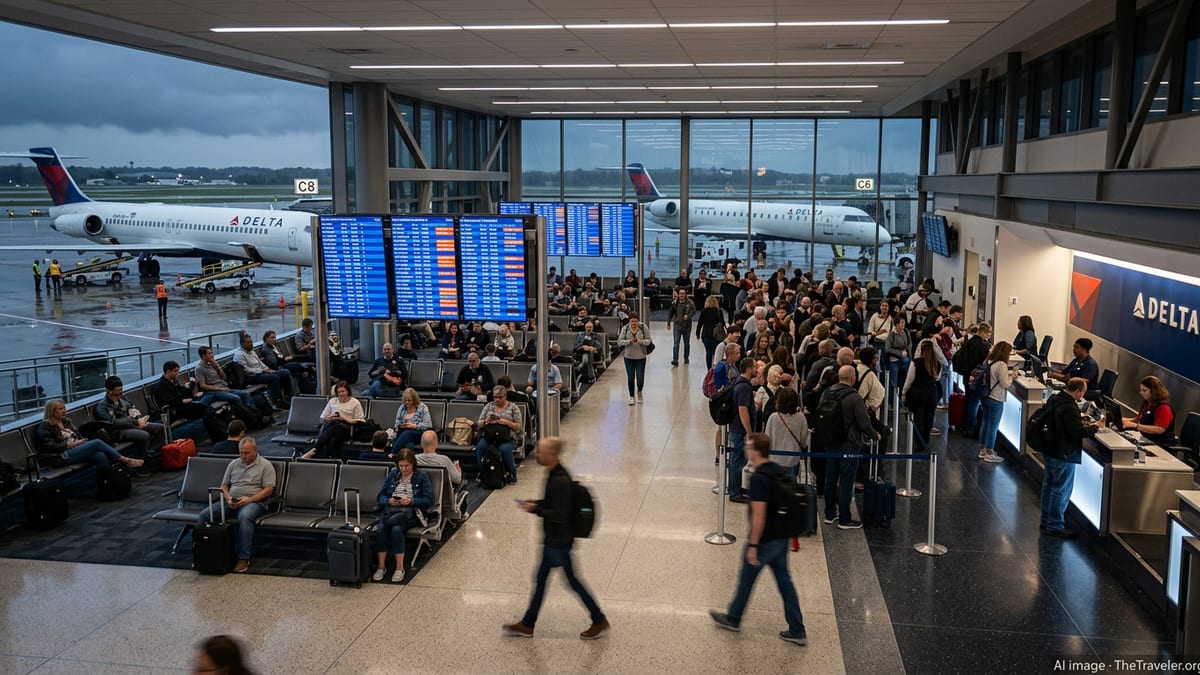
Dozens of travelers at St. Louis Lambert International Airport faced unexpected disruptions on Sunday as Delta Air Lines and its regional partner SkyWest canceled six flights and delayed many more, snarling key connections to Atlanta, Salt Lake City, Nashville, Boston, Charlotte and other major hubs across the United States.
Weather and Network Strains Ripple Into St. Louis
The latest disruptions at Lambert appear tied to a broader wave of weather related turbulence and congestion that has swept across the national air network this weekend, leaving carriers scrambling to reposition aircraft and crews. Severe thunderstorms and low clouds around major hubs including Chicago, Denver, Atlanta, Boston and Nashville on March 7 triggered hundreds of cancellations and thousands of delays, creating lingering knock on effects into March 8 as airlines worked through backlogs and mandatory crew rest requirements.
Operational data compiled over the past 48 hours show SkyWest and Delta among the hardest hit carriers nationwide as they absorbed multiple ground delay programs and intermittent ground stops at key hubs. Those bottlenecks limited the number of departures and arrivals an airport could handle per hour, forcing airlines to trim schedules and prioritize high demand trunk routes, often at the expense of smaller regional links.
With Lambert heavily reliant on connections to Delta hubs such as Atlanta and Salt Lake City, as well as shared SkyTeam and codeshare traffic feeding Boston and other East Coast cities, even a small number of cancellations can translate into a disproportionate impact for St. Louis origin and connecting travelers. Sunday’s six scrubbed flights and a raft of rolling delays were enough to reset travel plans for hundreds of passengers passing through the Missouri gateway.
Key Routes to Major Hubs Affected
Among the most affected services on Sunday were Delta mainline and SkyWest operated flights between St. Louis and Hartsfield Jackson Atlanta International Airport, the airline’s largest hub and primary connecting point for the Southeast and international routes. With Atlanta already managing elevated delay volumes over the weekend, Lambert departures to the Georgia hub faced extended holds, gate swaps and, in some cases, outright cancellation as the carrier sought to stabilize its schedule.
St. Louis flights linking into Delta’s western stronghold at Salt Lake City also saw disruptions, limiting same day connections to West Coast destinations and mountain markets. Travelers who had planned seamless itineraries from Lambert through Salt Lake City to cities such as Portland, San Diego or Boise found themselves rebooked via alternative hubs or pushed to Monday services as available seats dwindled.
On the eastern side of the network, SkyWest regional operations under the Delta Connection banner reported cancellations and substantial delays on services touching Nashville and Boston, two increasingly important connecting and leisure markets for Midwest flyers. Passengers heading to New England and the Mid South reported departure pushes in 30 to 90 minute increments as crews and aircraft arrived late from previously delayed legs.
Industry schedule analysts noted that a smaller number of additional Lambert services, including a Charlotte bound flight operated through a codeshare partner, also encountered delays tied to congestion and weather recovery along the East Coast corridor. While those flights eventually departed, the late running operations resulted in missed onward connections for some travelers.
Knock On Impacts for Passengers and Crews
For travelers inside Terminal 1 and Terminal 2 at Lambert, the operational stress translated into long lines at customer service desks, crowded gate areas and a scramble for scarce hotel rooms and rental cars. Families returning from spring break trips and business travelers aiming for Monday morning meetings were among those forced to adjust plans, with many opting to overnight in St. Louis or larger hub cities after misconnecting.
Several passengers described a familiar pattern of rolling delay messages on departure boards as airlines waited for inbound aircraft or confirmation of updated air traffic control slots. Some flights initially postponed by 45 minutes ultimately stretched past the 3 hour mark, while others were preemptively canceled when it became clear that crew duty time limits would be exceeded.
The disruptions also placed added pressure on flight and cabin crews, many of whom had already endured extended duty days during Saturday’s severe weather. Airlines are required to comply with strict federal rest rules, meaning that once a crew reaches its maximum hours for the day, the flight cannot legally operate without a replacement team. With reserve staff already deployed in other markets wrestling with the same storms, Lambert flights were left with few options beyond cancellation.
Lambert’s Role in a Fragile National Network
While St. Louis Lambert did not rank among the worst airports nationally in terms of raw cancellation numbers this weekend, the situation highlights how quickly operations can unravel at mid sized hubs when national conditions deteriorate. Lambert sits at a crossroads of east west and north south flows, connecting the Midwest to Delta’s and SkyWest’s wider networks via a relatively compact schedule of daily departures.
A single canceled regional jet flight between St. Louis and a hub such as Atlanta or Salt Lake City can represent the only nonstop option of the day for that city pair, especially on weekends when frequencies are thinner. That means a missed connection in St. Louis may not be easily salvaged with a later departure, forcing complete itinerary rewrites and overnight stays rather than simple rebookings a few hours later.
Airport officials have invested in upgraded information systems and collaborative decision making protocols with airlines and the Federal Aviation Administration to smooth recovery during events like this weekend’s weather pattern. Even so, the growing complexity of airline schedules, high load factors on many routes and more concentrated hub structures leave limited room to absorb shocks without visible disruption at passenger level.
What Travelers Can Expect Next
Delta and SkyWest representatives indicated on Sunday that they expect conditions to gradually stabilize into Monday as aircraft and crews are repositioned and the worst of the storms move east or dissipate. However, they cautioned that knock on effects can linger for 24 to 48 hours after a major disruption event, particularly for regional routes that depend on a small number of daily frequencies.
Passengers booked from St. Louis to Atlanta, Salt Lake City, Nashville, Boston, Charlotte and other hubs over the next day have been urged to monitor their flight status frequently and to consider allowing additional connection time where possible. Same day rebooking options remain limited on certain peak departures, and some itineraries may involve circuitous routings through secondary hubs as airlines work around bottlenecks.
For Lambert and its anchor carriers, the weekend’s setbacks serve as a reminder that even modest schedule trims and a handful of cancellations can have an outsized impact when the broader system is already strained. As spring travel ramps up and weather volatility remains high, both airlines and passengers are likely to face more days where flexibility becomes as important as a confirmed seat assignment.