

More news on this day
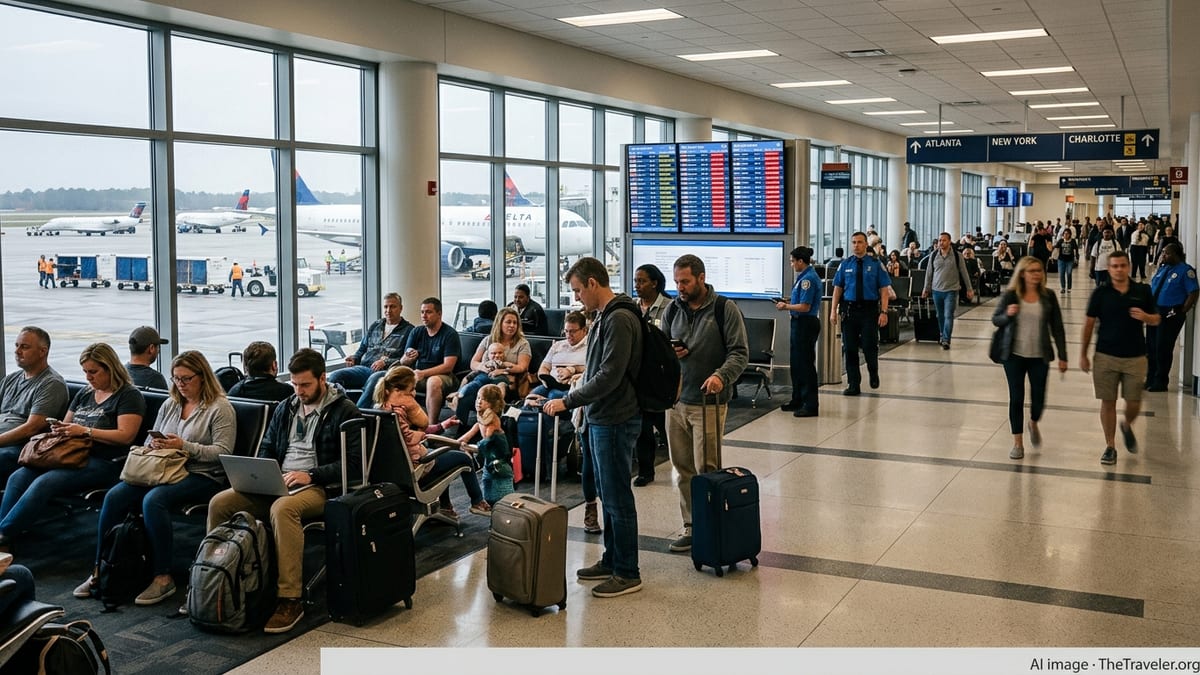
Travelers moving through Charleston International Airport on March 28 faced a morning of mounting frustration as flight status boards filled with delays and cancellations affecting routes to major hubs including Atlanta, New York and Charlotte.
Get the latest news straight to your inbox!
Operational Snags Hit Multiple Carriers at CHS
Publicly available flight status information for Charleston International Airport on Saturday indicates at least 25 departures and arrivals were delayed and six were cancelled, affecting a mix of regional and mainline services. The disruption involved flights marketed or operated by Republic, Allegiant Air, Delta Air Lines and Endeavor Air, all of which link Charleston with key connecting hubs across the eastern United States.
Regional operator Republic, which flies under major airline brands, appeared among the hardest hit, with several services to large hub airports showing extended departure holds or last-minute cancellations. Delta and its regional affiliate Endeavor Air also showed irregular operations on Charleston routes that typically connect through Atlanta and New York, compounding schedule problems for passengers attempting to make onward connections.
Allegiant Air, which focuses heavily on point-to-point leisure routes, was not spared. Charleston departures associated with its network reported late departures and rolling gate changes, affecting passengers headed to secondary and vacation markets. By midmorning, the cumulative effect was a noticeably congested terminal environment and a steady stream of rebooking activity at airline customer service counters.
The irregular operations at Charleston unfolded against a backdrop of recent weather systems and operational pressures across the East Coast and broader national network that have periodically strained airline schedules during March. While not attributed to a single cause, the pattern at Charleston mirrors broader instability affecting regional and mainline carriers as they move aircraft and crews through multiple congested hubs.
Key Routes to Atlanta, New York and Charlotte Disrupted
The most visible impact for Charleston travelers came on high-demand routes to Atlanta, New York area airports and Charlotte, which serve as primary gateways to the rest of the country. Delta and Endeavor Air services into Atlanta, a cornerstone connection point for southeastern travelers, recorded a string of delayed departures and arrivals that rippled through later flights. Some flights were held on the ground for extended periods as crews and aircraft were repositioned.
Connections to the New York region also saw interruptions, particularly services feeding into major hubs used for both domestic and transatlantic itineraries. Delayed morning departures from Charleston reduced connection windows for afternoon international flights, prompting many passengers to be rebooked onto alternate routings or next-day options. Check-in counters reported a steady demand for itinerary changes and seat availability checks throughout the day.
Charlotte-bound travelers experienced similar uncertainty. Flights that typically complete the short hop between Charleston and Charlotte were reported as delayed, with one or more rotations cancelled outright. Given Charlotte’s role as a significant connecting hub for travelers from the Carolinas, these disruptions added pressure to an already busy regional network and left some passengers facing unexpected overnight stays or long ground transfers.
Smaller domestic routes from Charleston to other US cities also felt the knock-on effects. Aircraft that arrived late from major hubs turned around behind schedule, pushing mid-day departures later into the afternoon and compressing turn times for evening flights. The result was an uneven pattern of congestion at gates and on taxiways as controllers sought to accommodate late-running operations.
Weather, Congested Hubs and Staffing Under Scrutiny
Recent weeks have seen several weather events across the eastern United States, including storms and cold fronts that have affected air travel into and out of key hubs such as Atlanta, New York and Charlotte. Published coverage and airline advisories in mid-March detailed travel waivers and anticipatory schedule adjustments on the East Coast, reflecting how quickly convective weather or low ceilings can ripple through airline networks.
When storms or low visibility affect major hubs, regional airports like Charleston often experience disruptions that are out of proportion to local conditions. Aircraft en route to Charleston may be held at their origin, delayed in departure queues at congested hubs or routed around weather systems, in turn pushing back subsequent departures from Charleston. Short-haul sectors, often flown by regional affiliates such as Republic and Endeavor Air, are particularly vulnerable to these types of cascading delays.
Operational and staffing pressures have also been a recurring theme across US aviation this year. National reporting has highlighted tight crew availability, more stringent scheduling rules and capacity constraints at air traffic control facilities in several regions. When combined with seasonal weather, these factors can create conditions in which relatively minor schedule disturbances quickly grow into clusters of delays and cancellations at airports of all sizes.
Charleston International has been part of this broader environment. Even when local weather appears benign, aircraft and crews serving the airport often originate from or connect through hubs that are facing more difficult conditions. Travelers at Charleston on March 28 encountered the downstream effects of that complexity as airlines adjusted rotations to keep as much of their overall network moving as possible.
Passenger Experience: Long Lines, Tight Connections and Rebookings
Inside the Charleston terminal, the day’s disruption translated into visibly longer lines at check-in counters and security lanes as passengers arrived early amid uncertainty about departure times. Overhead departure boards cycled through status changes, with some flights moving from “on time” to “delayed” multiple times, and a handful of services eventually marked as cancelled after extended holds.
Families beginning spring trips, business travelers heading to meetings and cruise passengers connecting through major hubs all found themselves competing for limited seats on alternative flights. Some travelers were rebooked onto later services the same day, while others were offered routings through secondary hubs or next-day departures depending on seat availability.
Airport seating areas near the affected gates filled with passengers monitoring airline apps and announcements for updated departure times. Portable chargers and power outlets were in high demand as travelers leaned on mobile devices to rebook, adjust hotel reservations or update ground transportation plans at their final destinations.
For those with tight onward connections, the delays raised the possibility of missed flights in Atlanta, New York and Charlotte. Many opted to proactively request new itineraries rather than risk misconnecting at large hubs known for busy security checkpoints and lengthy terminal transfers, particularly during peak afternoon and evening waves.
What Travelers Through Charleston Should Expect Next
As airlines worked to stabilize their operations through the day, some recovery was visible in afternoon schedules, though residual delays remained on several routes. Historically, once weather systems clear and aircraft and crews are repositioned, carriers tend to prioritize restoring predictability to mainline and high-demand regional routes, which may help normalize Charleston’s departures and arrivals over the following 24 hours.
Travel analysts note that episodes like the one at Charleston underline the value of monitoring flight status closely and building extra time into itineraries that rely on connections through large, weather-sensitive hubs. Same-day rebooking options are typically more accessible early in the disruption, while later in the day inventory can tighten significantly, particularly on routes operated with smaller regional jets.
Passengers scheduled to travel from Charleston in the coming days are encouraged by publicly available guidance to check in online as early as possible, confirm that contact details are updated in airline profiles, and review weather forecasts for both origin and connecting airports. These steps can improve the chances of receiving timely notifications about schedule changes and make it easier to adjust plans if further disruptions arise.
For now, the episode at Charleston International Airport serves as another reminder of how quickly conditions in the national air travel system can shift. Even a modest cluster of delays and cancellations tied to a handful of carriers can disrupt hundreds of individual journeys, especially when they involve key connecting points such as Atlanta, New York and Charlotte.