

More news on this day
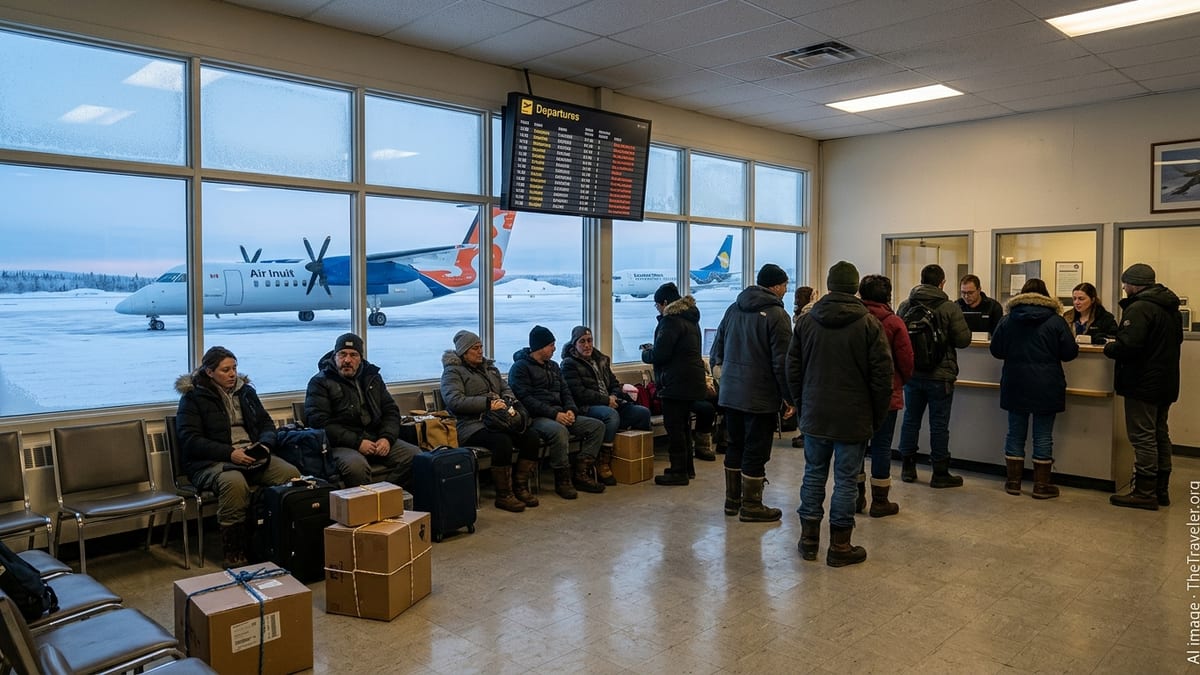
Passengers traveling through Kuujjuaq in northern Quebec are facing significant disruption after a cluster of flight cancellations and delays involving Air Inuit and Canadian North upended connections to major hubs in Quebec City, Montreal, Toronto and other destinations across Canada.
Get the latest news straight to your inbox!
Regional Hub Hit by Two Cancellations and Multiple Delays
Kuujjuaq, a critical aviation gateway for Nunavik communities, has experienced an unusual concentration of operational disruption, with publicly available flight-tracking information indicating two cancellations and seven delays affecting recent services operated by Air Inuit and Canadian North. These irregularities have reverberated across the network, complicating onward journeys for passengers heading to and from southern cities such as Montreal and Quebec City, as well as larger hubs used to reach Toronto and destinations beyond.
The pattern of disruption has been most visible on routes linking Kuujjuaq with Montreal and regional centers in Quebec, where tight schedules and limited daily frequencies make any cancellation particularly impactful. Even short delays have quickly cascaded into missed connections, overnight stays and rebookings for travelers who depend on these flights to access medical care, education, government services and work in southern Canada.
While flight interruptions are not uncommon in northern aviation, the clustering of two cancellations alongside seven notable delays within a short window has underscored how vulnerable remote communities remain to even modest shocks in the regional air system. The affected flights have included both passenger and mixed passenger-cargo services that serve as lifelines for Nunavik villages.
Weather, Operational Pressures and Tight Turnarounds
Kuujjuaq’s location on the subarctic coast of Ungava Bay exposes operations to rapidly changing weather, particularly during the late winter and early spring period. Recent national and regional weather coverage has highlighted a series of strong systems sweeping across eastern Canada in March, contributing to low visibility, blowing snow and crosswinds that can trigger schedule changes, rerouting or cancellations for smaller aircraft serving northern communities.
Industry data and historical patterns show that airlines operating in the North often work with tight turnarounds, limited spare aircraft and crews that must comply with strict duty-time regulations. When one rotation is delayed, subsequent flights in the sequence can quickly be pushed back or cancelled if crews reach regulatory limits. In an environment where there are few alternative carriers and minimal redundancy, these operational realities magnify the impact on passengers.
Publicly accessible fleet and schedule information for both Air Inuit and Canadian North indicates that they rely on a mix of turboprops and regional jets tailored for short runways and cold-weather operations. These aircraft are well suited to Kuujjuaq’s conditions but are also heavily utilized, leaving little margin when unexpected maintenance, sudden runway conditions or weather-related restrictions require an aircraft to be taken out of service.
Ripple Effects for Travelers Connecting via Montreal and Toronto
For many residents of Nunavik and northern Quebec, Kuujjuaq acts as a gateway to the broader national network, with onward connections primarily routed through Montreal and, in some cases, onward to Toronto and other Canadian hubs. When a northbound or southbound flight is cancelled or substantially delayed, travelers often miss same-day links to larger carriers operating from Montreal, forcing rebookings and extended layovers.
Recent disruptions have therefore affected not only point-to-point passengers bound for Kuujjuaq, but also those holding through-tickets or separate itineraries that include major southern cities. Publicly available consumer guidance from Canadian carriers and regulators emphasizes that misaligned itineraries can be particularly challenging when journeys combine multiple airlines, and travelers may be left to negotiate rebooking on their own if the original ticket does not guarantee protected connections.
For medical travelers, students and workers who plan trips around tightly scheduled appointments or start dates, a missed connection in Montreal or Toronto can mean lost income, rescheduled procedures or additional accommodation costs. Community discussions and regional media coverage have frequently highlighted how even a single cancellation on a northern route can add days to a journey, especially when alternative flights are fully booked or operate only a few times per week.
Passenger Rights, Rebooking and Support Measures
The recent Kuujjuaq disruptions have renewed attention on what protections are available for travelers when flights are cancelled or heavily delayed. Publicly accessible information on Canadian North’s and Air Inuit’s customer policies, as well as federal consumer regulations, outlines varying levels of assistance depending on whether a disruption is within an airline’s control or attributable to weather and other safety-related constraints.
Under the current framework for air passenger protection in Canada, travelers on eligible itineraries may be entitled to rebooking, food and accommodation in certain circumstances, especially when disruptions are categorized as within the carrier’s control. However, when interruptions are attributed to severe weather or other safety considerations, compensation requirements are more limited, often leaving passengers reliant on whatever voluntary support an airline elects to provide.
Published commentary and traveler accounts from northern regions suggest that access to timely information, meal vouchers and hotel rooms can vary significantly depending on location, time of day and the availability of local services. In communities like Kuujjuaq, where hotel capacity is limited and food options are few, airlines and local authorities may face practical challenges in providing support to large numbers of stranded passengers at short notice.
Calls for More Resilient Northern Air Connectivity
As air travel continues to serve as a critical lifeline for remote communities in Nunavik, the recent wave of cancellations and delays at Kuujjuaq has intensified ongoing debates about the resilience and reliability of northern air service. Policy discussions at the federal and provincial levels, reflected in publicly available reports and hearings, have increasingly focused on how to strengthen infrastructure, improve scheduling flexibility and ensure that carriers can better absorb operational shocks.
Analysts who follow regional aviation note that investments in runway maintenance, navigation equipment and terminal facilities can reduce weather-related disruptions, while updated fleets and additional backup aircraft may help airlines maintain service when individual planes encounter technical issues. However, these improvements require significant funding in a market where passenger volumes are modest and operating costs are high.
Community leaders and travelers have also raised the importance of clear communication when disruptions occur, citing the need for more proactive updates, clearer guidance on rights and options, and more consistent access to basic support such as meals and shelter. The latest round of irregular operations at Kuujjuaq is likely to add momentum to calls for stronger contingency planning and more robust service standards on routes that are essential not just for tourism, but for the daily functioning of northern life.