

More news on this day
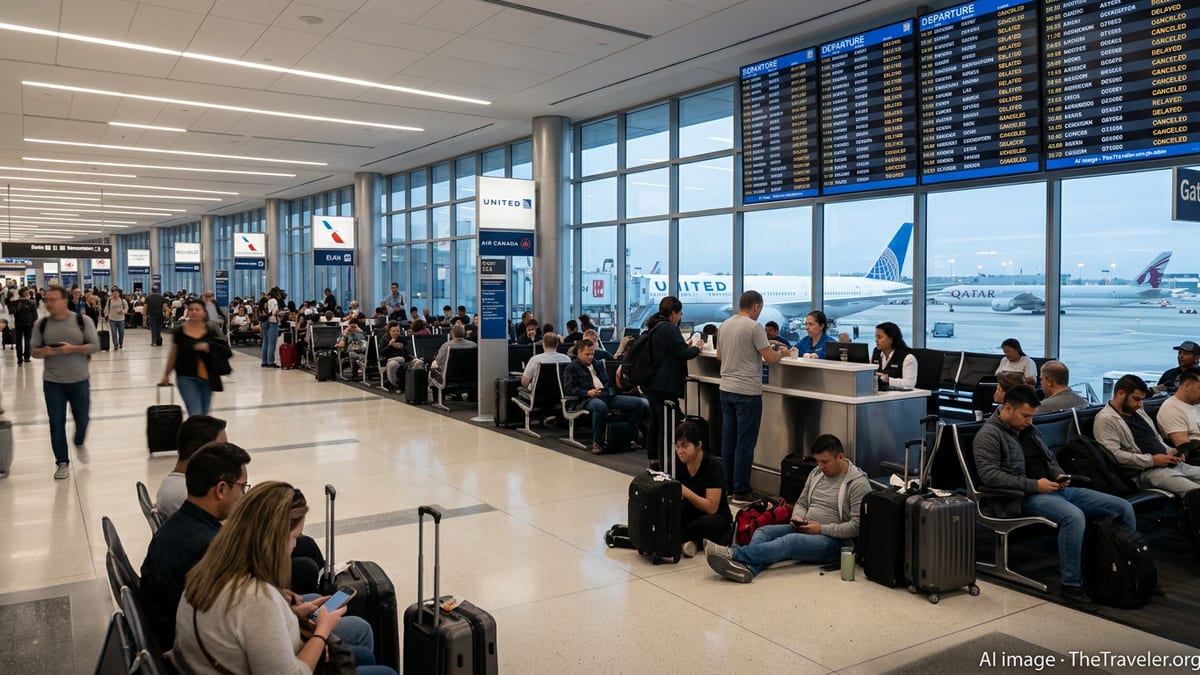
Los Angeles International Airport faced significant travel disruption on March 11 as United Airlines, Air Canada, American Airlines, El Al and Qatar Airways scrubbed multiple departures and delayed dozens more, snarling connections to major cities including Tel Aviv, Chicago, Montreal, Toronto and Aspen and stranding hundreds of passengers at one of the United States’ busiest gateways.
Get the latest news straight to your inbox!
Eight Canceled Flights Trigger Wider Delays Across Networks
Airport operations staff at Los Angeles International Airport reported that at least eight departures operated by United Airlines, Air Canada, American Airlines, El Al and Qatar Airways were suspended on Monday, setting off a chain reaction of rolling delays across the day’s schedule. While the raw number of cancellations was modest for a hub of LAX’s size, the affected flights connected to major long-haul and high-demand routes, magnifying the ripple effects throughout North American and transcontinental networks.
Several of the suspended services were long-haul departures linking Los Angeles to Tel Aviv, Toronto, Montreal and Doha, along with United and American domestic services that feed their Chicago hubs and onward connections. With aircraft and crews out of position, subsequent departures saw creeping delays, some surpassing two hours as carriers scrambled to reassign equipment and rebook travelers.
By midafternoon, departure boards at LAX’s international terminals showed a patchwork of revised departure times and gate changes, with airport agents fielding questions from frustrated travelers trying to salvage tight connections to destinations as varied as Aspen, New York, Vancouver and European capitals. Industry analysts noted that while eight cancellations are far from a full-scale meltdown, the concentration of disrupted flights on key trunk routes made the operational impact far more visible to passengers.
Carriers involved described the suspensions as precautionary and operationally driven, citing a mix of airspace constraints, crew duty-time limits and ongoing adjustments to schedules involving the Middle East and transatlantic markets. None of the airlines reported any safety incidents at LAX itself.
Tel Aviv Services Feel Strain Amid Broader Middle East Disruptions
Flights between Los Angeles and Tel Aviv were among the most heavily affected, reflecting the broader instability that has dogged Israel-bound air traffic for months. El Al’s nonstop service from LAX to Ben Gurion Airport has operated under heightened security protocols since regional tensions spiked, and Monday’s suspension of the Los Angeles departure added to a growing tally of disruptions on North American routes into Israel.
Air Canada and United, which route many Tel Aviv passengers over hubs in Toronto, Montreal, Newark and Chicago, have already been operating reduced schedules on Israel services. Monday’s LAX disruption intensified the strain on these routings, as Los Angeles passengers bound for Tel Aviv via connecting hubs faced missed onward flights and unplanned overnight stays. American Airlines, which has delayed its own planned return to Israel from New York, also saw its LAX feed into East Coast gateways constrained, narrowing options for re-accommodation.
Qatar Airways, which typically channels West Coast passengers to Tel Aviv and other regional destinations over its Doha hub, also suspended a Los Angeles departure, reflecting the patchwork of constraints facing Gulf carriers as they navigate shifting airspace restrictions and longer routings around conflict zones. Travel advisors said that many West Coast travelers heading to Israel have been forced to accept more complex itineraries, sometimes involving two or three connections and overnight layovers.
For passengers trying to reach Tel Aviv from Los Angeles on Monday, airline options quickly narrowed to a handful of remaining one-stop connections via European hubs, many of which were already heavily booked. Agents at LAX reported that some travelers chose to postpone trips entirely rather than endure extended rerouting and uncertainty over return flights.
North American Hubs From Chicago to Montreal and Toronto Affected
The disruptions at LAX extended well beyond Israel and the Middle East, impacting core North American corridors to cities such as Chicago, Montreal and Toronto. United and American lean heavily on their Chicago hubs to funnel West Coast traffic across the Midwest and onward to the East Coast and Europe, while Air Canada’s Toronto and Montreal operations serve as primary gateways for transatlantic and Middle East connections.
With select LAX departures to these hubs canceled or significantly delayed, knock-on effects included missed connections for passengers heading to secondary markets in the United States and Canada. Travelers bound for smaller destinations in the Midwest and Atlantic Canada reported being rebooked on overnight flights or next-day services, as limited remaining seat availability made same-day recovery difficult.
Air Canada’s ongoing suspension of direct Tel Aviv service, and its extended pause on Dubai flights, has already tightened capacity across its long-haul network. The carrier’s decision to suspend a Los Angeles flight on Monday further constrained options for West Coast passengers relying on Toronto and Montreal as stepping stones to Europe and the Middle East, leading to longer itineraries and elevated fares on remaining services.
Chicago-bound flyers from LAX also encountered cascading delays as disrupted early-day departures left aircraft and crews out of sequence. Some travelers described spending hours in customer service lines attempting to secure alternative routings through Denver, Houston or Dallas, illustrating how a relatively small cluster of cancellations can reverberate widely through tightly scheduled hub-and-spoke systems.
Aspen and Other Leisure Destinations See Indirect Fallout
While most attention focused on long-haul disruptions, smaller leisure markets like Aspen also felt the impact of Monday’s irregular operations. United’s regional flights that connect Aspen through Denver and, indirectly, through West Coast gateways such as Los Angeles, rely on carefully synchronized schedules to keep aircraft and crews cycling between mountain airports and larger hubs.
As mainline departures at LAX were pulled or delayed, some regional connections feeding or drawing aircraft from the West Coast experienced schedule tightening and minor delays. Passengers traveling from California to Aspen for late-season skiing reported last-minute gate changes and shorter connection times in Denver, heightening concerns about missed flights and delayed baggage.
Travel agents noted that leisure travelers are often less familiar with rebooking rules and compensation policies, making them particularly vulnerable during rolling disruptions. Families traveling on complex itineraries that bundle Los Angeles, Aspen and other Rocky Mountain destinations faced difficult choices about whether to proceed with multi-stop trips amid uncertainty over return flights routed through congested hubs.
Airline representatives stressed that safety remains the overriding priority on mountain routes, and there were no reports of compromised operations at Aspen or other regional airports. However, the day’s events underscored how even distant schedule adjustments at a major hub like LAX can send ripples into niche leisure markets.
Passengers Urged to Monitor Flights and Expect Ongoing Volatility
Across the terminals at Los Angeles International Airport, airline staff repeatedly urged passengers to monitor flight status digitally and to avoid heading to the airport without confirmed departure times. With many carriers still recalibrating schedules in response to ongoing Middle East tensions, constrained airspace and aircraft availability, travel experts warned that further short-notice changes on long-haul routes from LAX remain possible in the coming days and weeks.
Customer advocates emphasized that affected travelers should familiarize themselves with airline policies on rebooking, refunds and accommodation, particularly when disruptions are linked to broader geopolitical events rather than localized weather. In many cases, passengers whose flights were canceled on Monday were offered fee-free changes or credits, but cash refunds and hotel coverage varied by carrier and ticket type.
Frequent flyers and corporate travel managers said the latest disruptions would likely prompt yet another round of itinerary reviews, with some organizations temporarily avoiding routings that rely on Tel Aviv, Gulf hubs or tight transatlantic connections. Others are building in longer layovers at key hubs such as Chicago, Toronto and Montreal to reduce the risk of misconnecting when upstream flights from Los Angeles are delayed.
For now, travelers departing LAX are being advised to allow extra time at the airport, keep mobile notifications enabled for their bookings and maintain flexible contingency plans, especially when itineraries touch Tel Aviv, the Gulf or smaller secondary destinations that depend on smooth hub operations.