

More news on this day
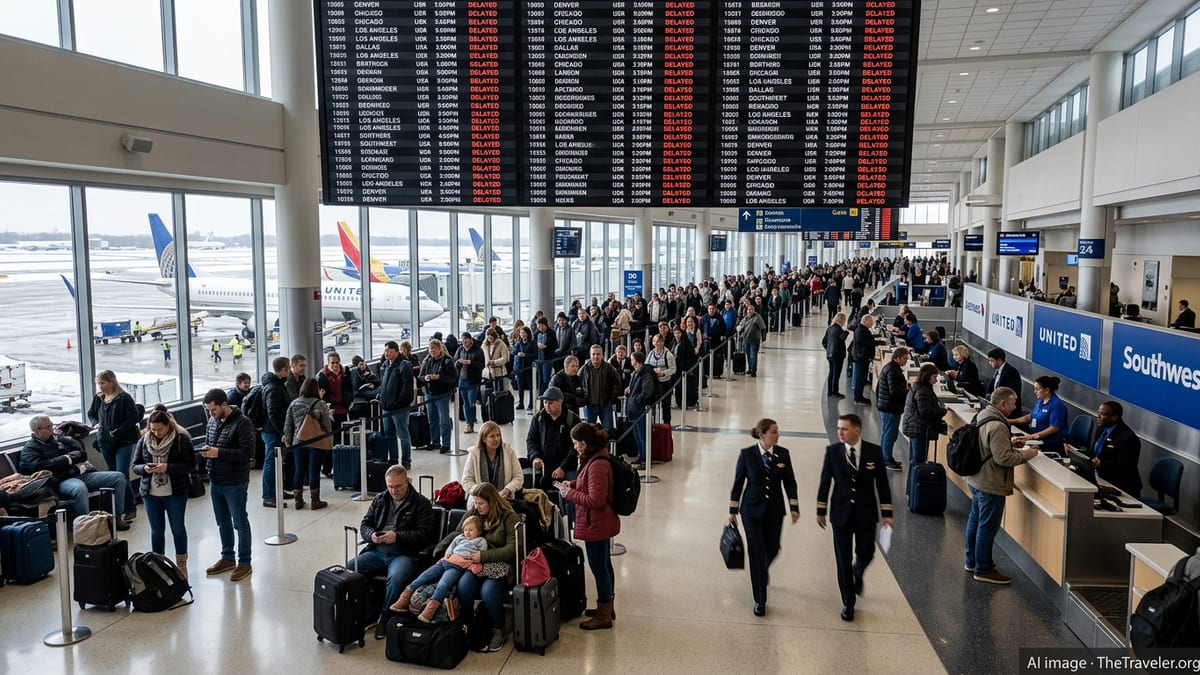
Travelers across the United States faced another day of mounting frustration on March 8 as United Airlines, Southwest Airlines and regional carrier SkyWest contended with a fresh wave of disruptions, with at least 16 cancellations and 228 delays rippling through key hubs including Denver, Chicago, Los Angeles and Dallas.
Storm Fallout Keeps Denver and Chicago Under Strain
The latest round of disruptions came on the heels of a powerful late-winter system that dumped up to a foot of snow in the Rockies and fueled lines of thunderstorms across the Midwest on March 7, leaving operations at Denver International Airport and Chicago O’Hare particularly fragile heading into Sunday. Aviation data showed Denver and Chicago among the US airports with the longest average delays, with typical departure holdups running close to or over an hour in some cases.
Denver, which already saw more than a thousand delays tied to Saturday’s snow, remained a chokepoint as airlines worked through de-icing backlogs and runway-by-runway cleanups. United and SkyWest, both heavily exposed at the Colorado hub, logged clusters of delayed departures to West Coast and Midwest cities as crews and aircraft struggled to return to normal rotations.
In Chicago, residual thunderstorms and low ceilings gave way to clearing skies, but the network damage was already done. Delayed morning departures at O’Hare and Midway cascaded into afternoon and evening schedules, affecting United and Southwest flights to Dallas, Denver and Los Angeles and forcing some passengers into missed connections and overnight stays.
Los Angeles and Dallas Feel the Knock-On Effects
While Southern California and North Texas avoided the worst of the weekend weather, both Los Angeles International Airport and Dallas–Fort Worth International Airport reported a steady drumbeat of late-arriving aircraft and schedule shuffles tied to earlier problems in Denver and Chicago. A mix of United, Southwest and SkyWest services into and out of these hubs saw delays that in some cases stretched beyond an hour.
At Los Angeles, SkyWest-operated regional flights feeding United’s network were particularly vulnerable to upstream issues. Aircraft originating in Denver and Chicago arrived well behind schedule, compressing turn times and forcing rolling delays on subsequent legs, even as local weather at the airport remained largely benign.
Dallas, meanwhile, absorbed a stream of late arrivals from the Midwest and Mountain West just as Sunday leisure traffic began to peak. Southwest flights between Chicago, Denver and Dallas Love Field were among those reporting delays, while United’s operations at Dallas–Fort Worth also showed signs of strain as aircraft and crews repositioned around earlier cancellations.
United, Southwest and SkyWest Grapple With Limited Cancellations but Widespread Delays
Although the number of outright cancellations for United, Southwest and SkyWest remained relatively modest at 16, the 228 delays they logged underscored how disruptive even a limited number of scrubbed flights can be when they are concentrated at major hubs. Each cancellation eliminated capacity on already full routes, while delayed flights created rolling congestion at gates and on taxiways.
For United, which maintains large operations in both Denver and Chicago, Sunday’s challenges were primarily about recovery: repositioning aircraft that had been held back by snow and thunderstorms and finding available crews within duty-time limits. Even when flights operated, they frequently did so behind schedule, leaving passengers racing through terminals to make tight connections.
Southwest, with its point-to-point model and major presence at Denver, Chicago Midway and Dallas Love Field, faced a different kind of network puzzle. Late turns in one city reverberated across multiple subsequent sectors, particularly on popular weekend leisure routes. SkyWest, operating regional flights on behalf of several major carriers, amplified the impact in smaller communities whose only nonstop links to large hubs ran through the affected cities.
Passengers Confront Long Lines, Tight Connections and Limited Options
For travelers, the statistics translated into crowded terminals, snaking rebooking queues and tense waits at departure boards. In Denver, passengers reported long lines at customer service counters as they sought alternatives after missed connections to Southern California, Texas and East Coast destinations when inbound United and SkyWest flights arrived late.
In Chicago and Dallas, many travelers who had planned same-day connections found themselves scrambling to secure the last remaining seats on later departures. With aircraft running nearly full at the tail end of the busy winter travel period, options to reroute via secondary hubs were limited, particularly for families and groups needing to stay together on the same itinerary.
Airlines encouraged customers to use mobile apps for rebooking and same-day standby, but those systems were also stressed as thousands of passengers attempted to change plans simultaneously. Airport agents worked to prioritize travelers with international connections and those facing long overnight delays, while warning that hotel availability near major hubs was tightening as the day wore on.
Outlook: More Bumpy Days Ahead as Weather and Staffing Collide
Industry analysts noted that the weekend’s turbulence is a reminder of how quickly conditions can deteriorate when severe weather intersects with already stretched airline and air traffic control resources. With Denver and Chicago both ranking near the top of recent delay tables, even routine storms and low ceilings can introduce significant fragility into national schedules.
As the US heads deeper into the spring storm season, operational planners at United, Southwest and SkyWest are likely to face recurring challenges balancing aggressive schedules with the need for recovery buffers. Any additional strain, whether from new weather systems, air traffic control staffing constraints or technical issues, could trigger further days in which a relatively small number of cancellations masks a much larger wave of delays.
For now, travelers connecting through Denver, Chicago, Los Angeles and Dallas are being urged to build extra time into itineraries, monitor flight status closely on the day of departure and be prepared for last-minute gate and schedule changes as airlines work to steady their networks after the latest disruption.