

More news on this day
Hundreds of travelers moving through Orlando International Airport on March 9 faced mounting frustration as a wave of delays and cancellations hit flights operated by Delta Air Lines, Spirit Airlines and Southwest Airlines, disrupting connections to New York, Chicago and several other major US cities.
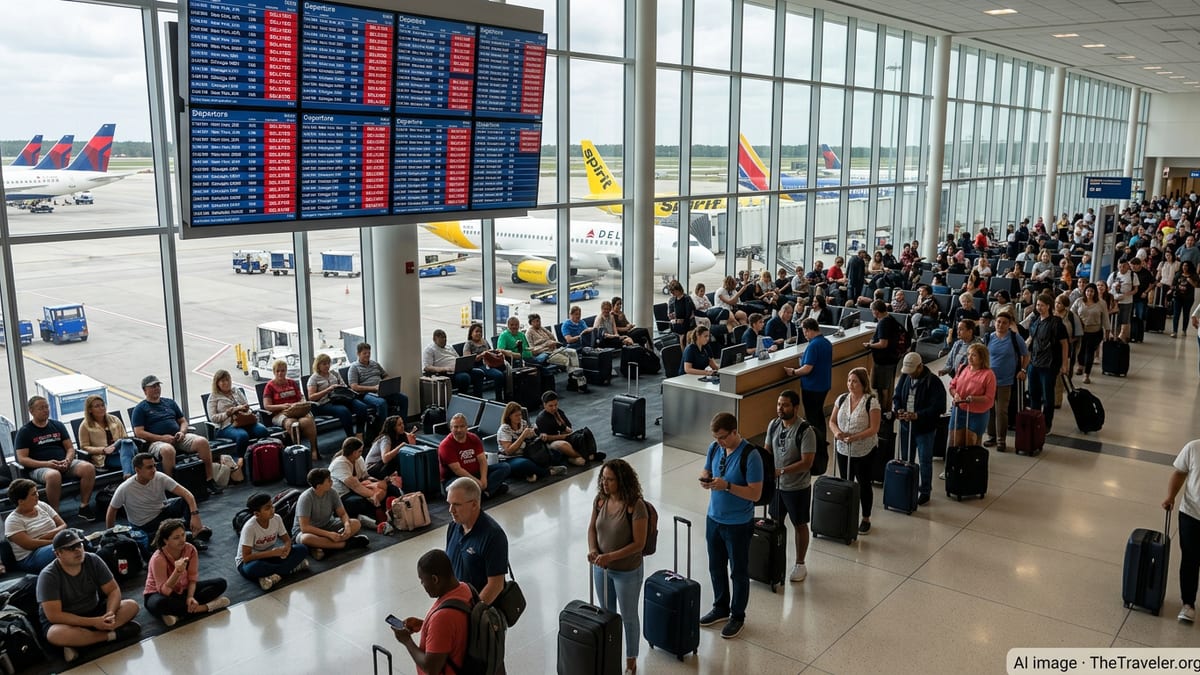
Operational Strain Pushes Delays to Triple Digits
According to same-day operational tallies, a combined 172 flight delays and 11 cancellations linked to Delta, Spirit and Southwest services in and out of Orlando International created a patchwork of schedule disruptions throughout the domestic network. While Orlando remained officially open with no formal FAA ground stop in place, the volume of delayed departures and arrivals was enough to slow traffic on key routes into the Northeast and Midwest.
The majority of affected services were short and medium-haul domestic flights, many of them high-frequency routes to major hubs. Flights to and from New York area airports and Chicago’s O’Hare and Midway were among the most disrupted, with rolling delays compounding throughout the day as late-arriving aircraft and tight turn times left little room to recover lost minutes.
Airport status data showed that Orlando’s runway operations and visibility remained within normal parameters, pointing instead to airline-side and system-wide factors. A busy post-weekend schedule, aircraft repositioning after earlier storms elsewhere in the country, and crew duty-time limits all contributed to a fragile operating environment in which relatively minor hiccups cascaded into broader delays.
While the total of 11 cancellations represented a small fraction of the day’s overall schedule at one of the nation’s busiest tourist gateways, the outsized impact stemmed from the timing of those cancellations on already crowded routes. Full flights heading into New York, Chicago and other large markets left rebooking options thin, forcing some travelers to accept overnight stays or multi-stop reroutes.
New York and Chicago Corridors Hit Hardest
The heaviest disruption was felt along Orlando’s trunk corridors to New York and Chicago, where any schedule irregularity quickly reverberates through the rest of the network. With business travelers returning from weekend stays and families wrapping up school-break trips, load factors on these routes were already high, limiting the flexibility to absorb delayed or canceled flights.
Passengers bound for New York reported a mix of creeping delays that pushed departures back in 30 to 60 minute increments and a smaller number of outright cancellations announced late in the boarding process. In several cases, inbound aircraft from previous weather-affected cities arrived so far behind schedule that crews approached their legal duty limits, forcing airlines to swap aircraft or cancel segments altogether.
Chicago-bound flights experienced similar headwinds. Earlier system-wide weather impacts in the Midwest and at connecting hubs meant that many Orlando departures to Chicago were depending on aircraft arriving from previously delayed turns. The result was a patchy schedule where one morning flight might depart close to on time, while a subsequent departure on the same route left hours late, further complicating connections for onward travelers.
The knock-on effects extended beyond the two marquee markets. Secondary cities in the Northeast and Midwest that rely on Orlando feed from these hubs also saw misaligned connections and missed onward flights, as passengers arriving late into New York or Chicago found their evening departures already closed or oversold.
Delta, Spirit and Southwest Face Mounting Passenger Frustration
For Delta, Spirit and Southwest, the trio most associated with Monday’s disruptions, the situation highlighted ongoing challenges in balancing tight schedules with operational resilience. All three carriers operate significant portfolios of point-to-point and connecting flights through Orlando, particularly on leisure-heavy routes that leave little slack during peak periods.
Delta, which ties Orlando into its broader hub system, was hit hardest where prior days’ weather and congestion at Atlanta and other key airports left aircraft and crews out of position. Even when skies were clear over central Florida, aircraft arriving from previously delayed routes frequently reached Orlando behind schedule, setting off rolling delays on subsequent departures and raising the risk of missed international and domestic connections further down the line.
Spirit, with a high concentration of leisure travelers and tight turnarounds, struggled where delays on earlier flights left ground crews and flight attendants racing the clock. Its network model, built on maximizing aircraft utilization, offers limited buffers when even modest disruptions occur, turning a single late arrival into a chain of delayed departures across multiple city pairs.
Southwest, a major player at Orlando, contended with its own backlog of late-arriving aircraft from weather-affected regions and high passenger volumes on popular routes. Despite the carrier’s point-to-point structure offering some flexibility, gate crowding and aircraft rotation constraints meant that several Orlando departures pushed back significantly behind schedule, and a handful never left the gate at all.
System-Wide Weather and Staffing Pressures Feed the Backlog
Although conditions at Orlando itself remained largely stable, the disruption was fueled by earlier storms and ongoing staffing pressures at other major airports in the national airspace system. Over the preceding weekend, weather across key hubs in the Midwest and Southeast triggered ground delay programs, long security lines and extensive schedule adjustments that rippled into Monday’s operations.
Residual congestion at airports such as Atlanta and Chicago left many flights arriving into Orlando already behind schedule. With crews often approaching their regulated duty limits after a weekend of extended workdays, airlines had to make difficult decisions about whether to press on with delayed flights or preemptively cancel and preserve remaining capacity for later in the day.
Staffing constraints among both ground handlers and security personnel added another layer of complexity. While Orlando’s checkpoint wait times remained moderate compared with some other major hubs, reports from travelers suggested that even minor slowdowns at baggage handling and boarding contributed to missed pushback windows, forcing aircraft to wait for new departure slots during peak periods.
Industry analysts noted that the day’s turmoil in Orlando fits a broader pattern in which localized issues can no longer be viewed in isolation. With aircraft and crews circulating constantly among hubs, any significant disruption in one region can shape the operational picture thousands of miles away, even after local weather has improved.
Advice for Travelers Navigating Orlando Disruptions
For passengers scheduled to fly through Orlando while airlines grapple with this latest round of disruption, travel experts recommend treating schedules as fluid and building in extra time whenever possible. Monitoring airline apps and text alerts before leaving for the airport can provide early warning of creeping delays or aircraft swaps that may affect boarding and connection times.
Travelers connecting through New York or Chicago are being urged to avoid tight layovers and, where feasible, to choose earlier departures in the day, when there is more slack in the system to accommodate rolling delays. Those whose flights are canceled may find more rebooking options if they act quickly via mobile apps or customer-service phone lines rather than waiting in long queues at airport counters.
Passengers with fixed-time commitments, such as cruises, conferences or international departures from other hubs, are also being advised to consider flying in a day early until operations stabilize. While the majority of Orlando flights are still operating, the elevated risk of multi-hour delays and isolated cancellations has made last-minute travel planning more precarious.
For now, Orlando International continues to move large volumes of travelers, but the tally of 172 delays and 11 cancellations tied to just three major carriers underscores how thin the margin for error has become. With spring travel demand building, both airlines and passengers are being reminded that even a single day of operational strain can send shockwaves across the country’s most heavily traveled routes.