

More news on this day
Travelers moving through Raleigh-Durham International Airport faced an unsettling start to the week as four flight cancellations and numerous delays involving Icelandair, Delta Air Lines, and Republic Airlines disrupted key links to Keflavik, Toronto, Frankfurt, Albany, and Atlanta.
Get the latest news straight to your inbox!
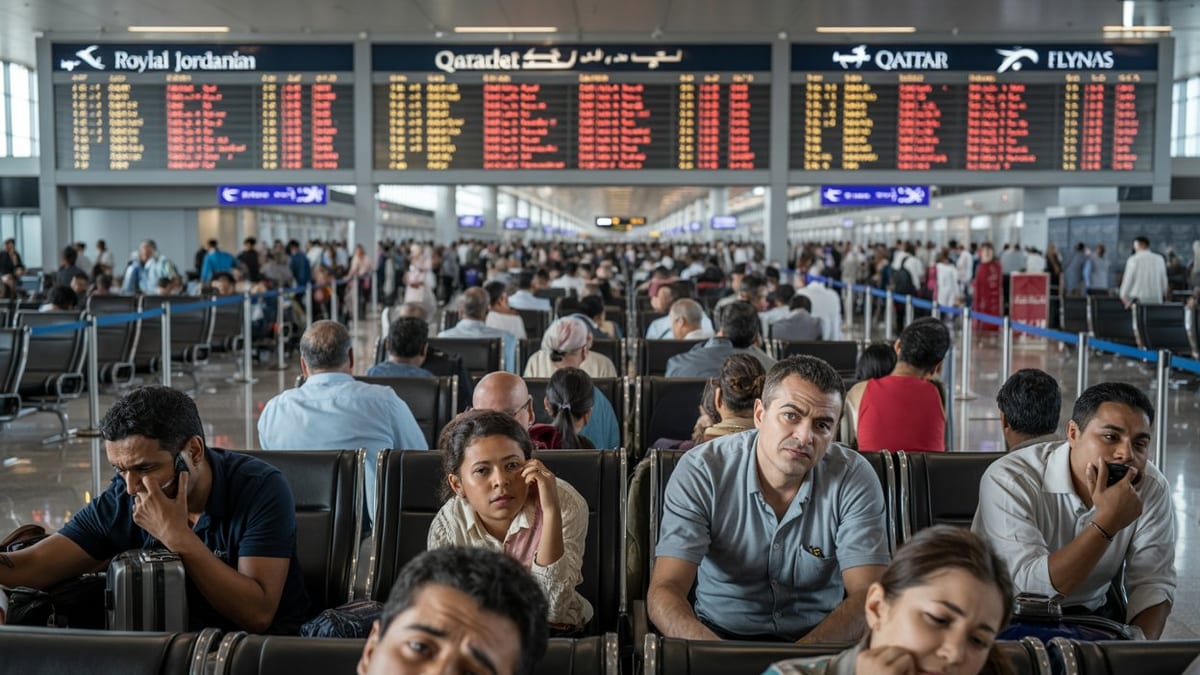
Targeted Cancellations Hit a Growing International Hub
Publicly available disruption data for early April indicates that Raleigh-Durham International Airport experienced a small but operationally significant cluster of cancellations, concentrated among services operated by Icelandair, Delta, and regional carrier Republic. While the total number of cancellations stood at four, the impact was magnified by the importance of the affected routes, which connect the Research Triangle region to major North American and European gateways.
Reports show that Icelandair’s nonstop transatlantic service linking RDU with Keflavik, a key connection point for onward travel to Europe, was among the operations facing disruption. At the same time, Delta’s high-frequency corridor between Raleigh-Durham and its main hub in Atlanta experienced schedule challenges, while Republic, which operates regional flights on behalf of larger carriers, also recorded cancellations from RDU.
These concentrated cancellations occurred against a broader backdrop of flight disruptions across the United States and Europe tied to a mix of operational pressures, weather issues, and congested airspace patterns. Raleigh-Durham’s experience formed part of a wider pattern in which medium-sized hubs have shouldered a disproportionate share of delays and cancellations when network strains emerge.
Data compiled from flight tracking platforms and aviation news outlets suggests that the RDU cancellations were not driven by a single dramatic incident, but rather by a confluence of scheduling constraints, knock-on delays from other airports, and tight aircraft utilization across the involved airlines’ networks.
Ripple Effects Reach Keflavik, Toronto, Frankfurt, Albany, and Atlanta
The disruptions at RDU quickly rippled out across several major cities, interrupting journeys to and from Iceland, Canada, Germany, and other parts of the United States. Keflavik, a central hub for transatlantic itineraries, saw its connectivity with Raleigh-Durham temporarily reduced, complicating itineraries for travelers using Icelandair to reach destinations across Europe.
Toronto and Frankfurt, both central nodes in their respective regions, were also listed among cities affected by the RDU-related delays and cancellations. Publicly accessible route and schedule data show that these cities sit at the heart of complex international networks, so even limited disruption on a feeder route such as RDU can cascade into missed connections, rebookings, and altered travel plans well beyond the original point of departure.
Closer to home, links to Albany and Atlanta, critical domestic gateways for business and connecting traffic, experienced knock-on effects. Delta’s Atlanta hub, already characterized in broader U.S. reporting as one of the most impacted airports by delays on busy travel days, had to absorb additional schedule pressure as RDU flights departed late or were scrubbed entirely. Regional services involving Albany similarly faced schedule instability, amplifying the sense of uncertainty for passengers connecting through smaller markets.
These interconnected disruptions highlight how modern airline networks function as finely balanced systems in which a handful of cancellations at a mid-sized airport can reverberate through hubs and spokes thousands of kilometers away.
Icelandair, Delta, and Republic Under Strain Amid Wider Network Pressures
The latest RDU disruptions come as Icelandair, Delta, and Republic navigate a demanding operating environment shaped by strong travel demand, shifting weather patterns, and tight aircraft and crew availability. Recent coverage of flight performance across North America and Europe indicates that Icelandair has faced recurring pressure on its Keflavik-centered network, with storms and high winds in the North Atlantic region periodically forcing wide-scale schedule adjustments.
Delta, one of the largest carriers serving Raleigh-Durham, continues to balance its extensive domestic and international operations at a time when major hubs such as Atlanta and New York have periodically reported elevated levels of delays and cancellations. Industry analyses show that on high-traffic days, even modest staffing or air traffic control constraints can translate quickly into rolling delays across Delta’s system.
For Republic, which typically operates as a regional feeder under brand arrangements with larger U.S. airlines, the challenge is often one of tight rotations and limited spare aircraft. When disruptions occur at a hub or along a route system, regional operators have less room to maneuver equipment and crews, which can lead to concentrated pockets of cancellations such as those observed at Raleigh-Durham.
Aviation observers note that this three-way combination at RDU – a long-haul specialist, a global network carrier, and a regional partner – illustrates how different business models can all be exposed to the same external forces, from weather volatility to airspace management initiatives.
Passengers Confront Missed Connections and Rebooking Challenges
For travelers on the ground at RDU, the immediate consequences of the four cancellations and surrounding delays were missed connections, extended time in terminals, and the stress of rearranged itineraries. Those booked on Icelandair services to Keflavik faced the risk of losing carefully coordinated onward flights to destinations across Europe, often involving nonrefundable hotels or tours that are difficult to reschedule at short notice.
Passengers heading to or from Toronto and Frankfurt encountered similar complications. Both cities serve as key connection points for transatlantic journeys, and disruptions on RDU services can mean repositioned itineraries, overnight stays, or complex reroutings via alternate hubs. Travelers bound for domestic points such as Albany or Atlanta, many of whom rely on tight connecting windows, also had to navigate rebookings and revised arrival times.
In response to recurrent disruption episodes across North America and Europe, consumer advocates and travel experts have consistently encouraged passengers to monitor airline apps closely, maintain updated contact details in bookings, and build additional buffer time into itineraries, particularly when traveling through weather-prone regions or during busy holiday periods.
Recent guidance circulating through travel industry publications additionally urges passengers to familiarize themselves with airline policies around compensation, meal vouchers, and overnight accommodation in the event of cancellations or long delays, recognizing that the specific remedies available can vary depending on the cause of the disruption and the jurisdiction involved.
Broader Pattern of Spring Travel Volatility
The situation at Raleigh-Durham fits into a wider spring pattern in which airports across the United States, Canada, and Europe have reported periodic spikes in cancellations and delays. Data compiled by aviation analytics firms for early April highlight several days where storm systems, strong winds, and congested routes combined to disrupt operations from Atlanta and New York to Keflavik, Reykjavik, Dublin, London, and Frankfurt.
Recent reporting describes hundreds of cancellations and thousands of delays in single-day tallies across the U.S. system, with carriers such as Delta, American, United, and various regional partners all absorbing operational strain. Parallel coverage from European and transatlantic markets points to Icelandic and northern European hubs as particular pressure points, given their exposure to fast-changing weather patterns and their role as bridges between continents.
For the Research Triangle’s growing base of business and leisure travelers, the latest wave of disruptions at RDU underscores both the advantages and vulnerabilities of its expanding air service portfolio. New and upgraded routes to transatlantic and Canadian gateways have increased connectivity, but they also tie local passengers more closely to global networks that are, at times, highly sensitive to weather and operational shocks far beyond North Carolina.
As airlines continue to adjust spring and summer schedules, observers suggest that travelers departing from secondary hubs like Raleigh-Durham may see periodic refinements to departure times and frequencies. While such changes are often designed to improve reliability in the long term, the short-term effect can be heightened volatility on certain days, as seen in the four cancellations and series of delays now affecting connections from RDU to Keflavik, Toronto, Frankfurt, Albany, and Atlanta.