

More news on this day
Air travel in and out of Italy faced fresh turbulence on April 6, 2026, as Rome and Milan airports reported significant delays and cancellations, colliding with jet fuel limits and mounting strike threats to create a difficult day for passengers across the country and beyond.
Get the latest news straight to your inbox!
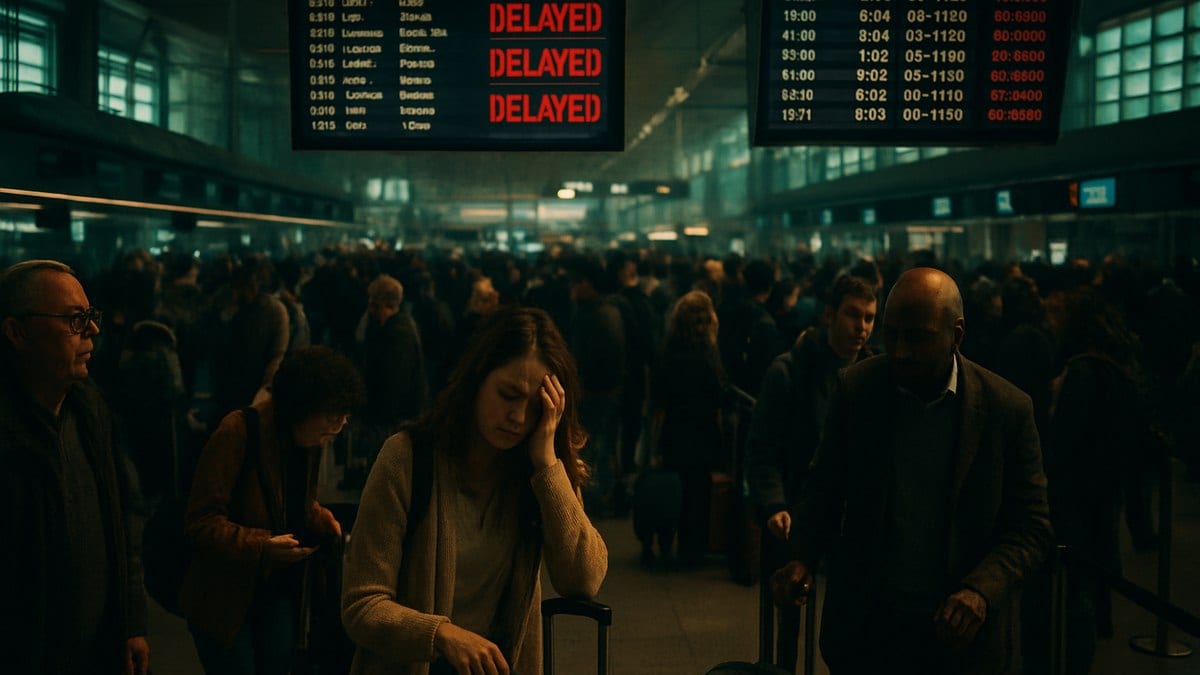
Delays and Cancellations Hit Key Italian Gateways
Reports from airport-monitoring services and travel industry outlets on April 6 indicate that Rome Fiumicino and Milan Malpensa experienced a sharp spike in operational disruption, with hundreds of passengers affected by missed connections, rolling delays and short-notice cancellations. Flight status boards through the afternoon showed a steady buildup of late departures on both domestic and international routes serving Italy’s two busiest air hubs.
Coverage from travel trade media described at least 271 delayed flights and more than a dozen cancellations across Malpensa and Fiumicino, affecting carriers such as ITA Airways, Lufthansa and British Airways on routes linking Italy with London, Paris, New York and other major cities. While many aircraft eventually departed, the knock-on effects meant crowded terminals, rebooked itineraries and extended waits at customer service desks.
The disruption unfolded at the start of an important spring travel window, when business traffic overlaps with early holiday demand. Publicly available timetable data for April 6 showed pressure on some of the busiest city pairs in the Italian market, including Rome to Milan, compounding the sense of instability for passengers trying to move between the country’s political and financial capitals.
Travel commentary noted that the pattern of scattered, short-notice schedule changes rather than a single mass cancellation event made it harder for travelers to plan around the disruption, particularly for those with onward connections beyond Italy.
Fuel Rationing and Capacity Strains in Northern Italy
The problems in Rome and Milan are unfolding against a broader backdrop of mounting fuel supply concerns at Italian airports. Industry analysis published over the preceding weekend detailed temporary jet fuel caps at several northern hubs, including Milan Linate, Venice Marco Polo, Treviso and Bologna, following official notices issued in early April that instructed airlines to manage kerosene loads more conservatively.
According to these reports, the restrictions are tied to tensions affecting fuel flows from the Middle East, prompting at least one major supplier to limit uplift volumes through April 9. While airport operators have stressed that other fuel providers continue to function, the caps are adding a new layer of complexity for airlines scheduling short-haul and medium-haul operations in and out of northern Italy.
Analysts quoted across European travel media in recent days have warned that, even if immediate shortages are avoided, tighter controls on fuel can translate into altered routings, tech stops or payload restrictions, which in turn raise the risk of day-of-travel disruption. For passengers transiting hubs such as Milan, this environment increases the likelihood of schedule changes appearing with little warning, especially when combined with already dense spring timetables.
Some aviation-focused outlets have also underlined that carriers are drawing on established risk-management tools, such as fuel hedging and flexible capacity deployment, to keep most flights operating. However, the events of April 6 show that even partial constraints at a handful of airports can ripple outward to affect travelers across Italy when schedules are already tight.
European Weather and Airspace Challenges Add to the Chaos
April 6 also saw a wider pattern of flight disruption across Europe, which indirectly fed into the difficulties facing Rome and Milan. Published coverage from regional news sources described a combination of adverse weather conditions and airspace management issues that slowed traffic at airports in several countries, with delays reported in Norway, the United Kingdom, the Netherlands, Denmark, Switzerland, Ireland, Austria and Greece.
Travel reports focusing on Athens underlined that services to and from major European hubs, including Rome, were among those affected. For Italian airports, the effect was twofold: incoming flights from already congested European airspace arrived late, and aircraft scheduled to depart Rome or Milan for those same hubs faced tighter turnaround windows and potential crew duty-time constraints.
Industry observers noted that Europe’s interconnected hub network meant local issues, such as thunderstorms or temporary flow restrictions in one region, quickly spilled over into neighboring airspace. For passengers flying between Rome, Milan and northern European cities on April 6, this translated into a higher incidence of knock-on delays, with some connections missed even when departures from Italy itself were only marginally late.
By early evening, monitoring platforms still showed patchy punctuality on several Rome and Milan routes, reflecting the time it can take for schedules to recover once morning disruptions propagate through the network.
Looming National Strike Raises Fears of Further Disruption
The immediate difficulties on April 6 arrived just as Italian travelers were being warned to brace for more turbulence later in the week. Travel advisories and planning guides published the same day highlighted a four-hour national airport strike scheduled for Friday, April 10, involving multiple transport unions and expected to affect operations across the country.
These notices suggest that passengers flying into or out of Italy around that date, particularly through Rome and Milan, may face additional cancellations or retimed services as airlines adjust schedules in anticipation of the work stoppage. Previous nationwide strikes have led carriers to thin out timetables in advance, a tactic that can reduce chaos on the day but often leaves travelers scrambling to rearrange itineraries.
Consumer-focused briefings are already advising travelers to reconfirm flights, monitor airline notifications and consider alternative rail options on key domestic corridors such as Milan to Rome and Bologna to Venice. For those adjusting plans in response to the April 6 disruption, the prospect of another wave of operational stress later in the week may add urgency to decisions about rebooking or rerouting.
The convergence of fuel caps at northern airports and industrial action on the horizon has prompted some analysts to caution that Italy’s aviation system could experience an unusually bumpy spring, even if underlying passenger demand remains strong.
What Travelers Through Rome and Milan Should Expect Next
In the wake of the April 6 flight chaos, travel experts writing for consumer outlets recommend that passengers treat schedules involving Rome Fiumicino, Milan Malpensa and Milan Linate as potentially fluid over the coming days. Fuel supply policies remain in force at several northern airports through at least April 9, while the planned April 10 strike is expected to trigger further timetable revisions.
Public information from airline and airport channels suggests that carriers are prioritizing core trunk routes and long-haul services, sometimes at the expense of thinner regional connections. This may mean that travelers bound for smaller Italian or European cities via Rome or Milan encounter more frequent changes than those on high-demand routes such as Rome to London or Milan to New York.
Passenger rights advocates drawing on European regulations stress that travelers affected by cancellations or long delays within the European Union may be eligible for assistance, rerouting and, in some circumstances, financial compensation. Guidance appearing in travel media encourages passengers to keep detailed records of disruption and to submit claims directly through airline channels if they believe they qualify.
For now, those with upcoming itineraries through Rome and Milan are being urged by travel commentators to allow extra time between connections, keep a close eye on flight status updates and remain flexible about routing. The events of April 6 underline how quickly external pressures on fuel supply, weather and labor relations can intersect to create a difficult day for air travel in Italy’s busiest skies.