

More news on this day
Travel across Canada and parts of the United States was disrupted after a wave of flight cancellations and delays at Toronto Pearson International Airport, where 39 flights were reportedly cancelled and at least 210 more were delayed across multiple airlines, affecting connections to Vancouver, Montreal, Calgary, New York and other major destinations.
Get the latest news straight to your inbox!
Ripple Effects Across Canada’s Busiest Hub
Publicly available flight-tracking data and media coverage on Friday indicated that operations at Toronto Pearson were heavily strained, with a concentration of delays and cancellations across both domestic and transborder routes. Air Canada and its regional partners, including Jazz Aviation, were among the most affected, alongside WestJet, Porter Airlines and U.S. regional carriers such as Republic Airways and Endeavor Air operating on behalf of major American airlines.
The 39 cancellations and 210 delays translated into thousands of disrupted journeys, as many of the affected flights were key trunk services linking Toronto with Vancouver, Montreal and Calgary, as well as high-frequency links to New York–area airports. Reports indicated that knock-on effects were quickly felt at onward hubs, where aircraft and crews arrived out of position and subsequent departures departed late or were removed from schedules.
Operational data showed that the disruption was not isolated to one terminal or one carrier, underscoring the vulnerability of complex hub operations when multiple factors converge. With Toronto Pearson serving as Canada’s largest connection point for both domestic and international travel, relatively modest absolute numbers of cancellations and delays can still translate into very broad network impacts.
Weather, Congestion and Operational Strains Combine
The latest disruption followed a difficult winter for North American aviation, during which major storms brought record snowfall and high winds to parts of Canada and the United States. Recent weather systems in Ontario and Quebec have added pressure on airport operations, from de-icing backlogs and reduced runway capacity to congestion in terminal and airside traffic flows.
Reports from recent weeks have highlighted how heavy snowfalls and strong crosswinds can force airports such as Toronto Pearson and Montreal–Trudeau to temporarily reduce arrivals and departures, causing delays that cascade through the day. When aircraft are held on the ground waiting for de-icing or for a departure slot, they often arrive late at their next destination, shrinking turnaround windows and pushing later flights beyond their scheduled times.
Operational briefings and aviation analysis also point to ongoing staffing and resource challenges across the industry, including air traffic control capacity, ground handling teams and maintenance personnel. Even when conditions improve, the combination of tight schedules and limited spare capacity means airlines can struggle to recover quickly, especially at a large hub where a single runway constraint or weather cell can affect dozens of flights in a matter of hours.
Air Canada, WestJet, Porter and U.S. Regionals Hit Key Routes
According to flight-status boards and tracking platforms, Air Canada and its regional affiliate Jazz saw a series of delayed departures from Toronto to Vancouver, Montreal and Calgary, along with transborder services to New York and other U.S. cities. These routes form the backbone of the carrier’s network and are widely used by both business and leisure travelers making onward international connections.
WestJet also recorded a number of delayed and cancelled flights at Toronto Pearson, particularly on high-demand Western Canada routes. Industry watchers noted that when large domestic services are disrupted, airlines often prioritize long-haul international operations, which can mean trimming or consolidating short-haul frequencies where rebooking options are more plentiful.
Porter Airlines, which has expanded rapidly at Toronto Pearson in addition to its long-standing operation at Billy Bishop Toronto City Airport, was also affected by the congestion. Meanwhile, U.S.-based regional operators Republic Airways and Endeavor Air, which fly under the banners of major American carriers on routes between Toronto and hubs such as New York and other northeastern cities, reported delays that echoed back into their domestic networks.
Knock-On Disruptions for Vancouver, Montreal, Calgary and New York
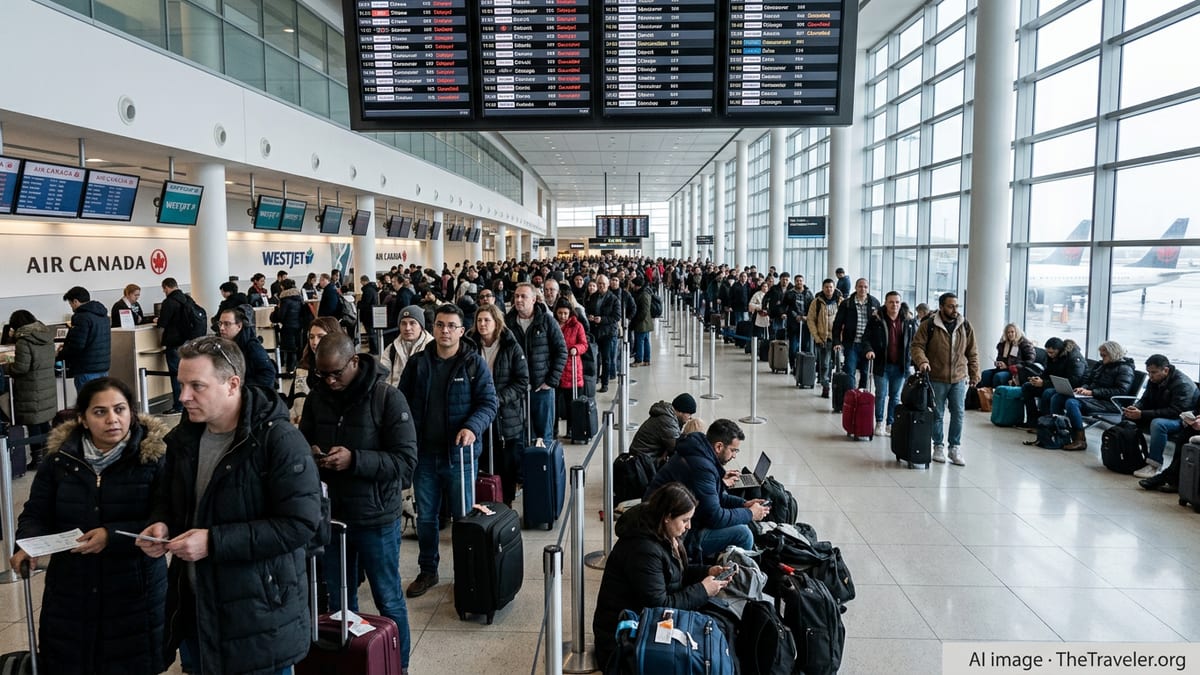
The immediate impact for travelers in Toronto was evident in crowded departure halls, extended waits at gates and shifting departure times on information displays. However, the disruption quickly radiated outward, with airports in Vancouver, Montreal and Calgary reporting late arrivals from Toronto and altered departure times on return services.
In Vancouver, one of Canada’s main gateways to Asia-Pacific, late inbound aircraft from Toronto compressed ground times and forced some departures to be pushed back. In Montreal, where transatlantic services depend heavily on feed from Toronto and other Canadian cities, delays to connecting passengers increased pressure on rebooking and accommodation resources.
Transborder routes between Toronto and New York–area airports were also affected, complicating connections for travelers heading on to U.S. domestic flights or international services via American hubs. Aviation analysts noted that when a major Canadian hub experiences heavy delays, U.S. networks can feel secondary effects as aircraft rotations are adjusted, crews reach duty-time limits and certain frequencies are consolidated.
Passengers Face Long Waits and Limited Alternatives
For passengers, the disruption translated into missed connections, extended time in terminals and, in some cases, overnight stays. Publicly available guidance from airlines and regulators underscores that rebooking options depend on factors such as seat availability, whether a disruption is considered within the airline’s control and the jurisdictional rules that apply on specific routes.
Travel advisories published in recent weeks have encouraged passengers flying during periods of operational strain to build longer connection times, monitor flight status frequently through airline channels and consider earlier departures when a critical onward connection is involved. Consumer information from regulators also stresses the importance of knowing compensation and care entitlements, particularly on flights covered by Canada’s Air Passenger Protection Regulations, U.S. Department of Transportation rules or European Union protections.
With Toronto Pearson continuing to serve as a dense connecting hub, industry observers expect airlines to refine schedules, adjust staffing plans and update contingency playbooks as they navigate the remainder of the busy travel season. For now, the latest wave of 39 cancellations and 210 delays serves as another reminder that even routine weather and operational challenges can cascade into major travel headaches when they converge at one of North America’s most critical aviation nodes.