

More news on this day
Amsterdam Airport Schiphol faced a fresh wave of disruption on March 5, with at least 27 flight cancellations and more than 100 delays affecting services by El Al, KLM, Etihad Airways, Qatar Airways, Emirates and other major carriers, unsettling one of Europe’s busiest aviation hubs.
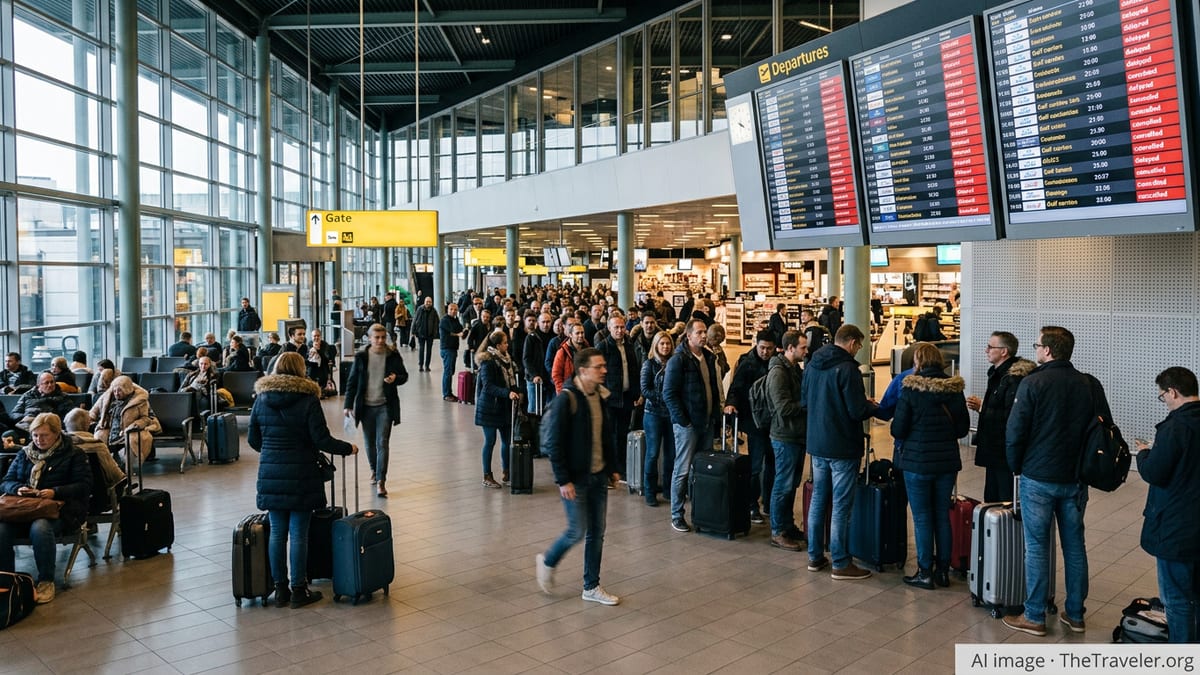
Schiphol Hit by Wave of Cancellations and Delays
Operational data from European flight tracking services on Thursday indicated that Schiphol was among the hardest hit airports in the region, recording dozens of cancellations and well over 100 delayed departures and arrivals. Long haul and regional services were both affected, with schedules repeatedly revised throughout the day as knock on effects spread across airline networks.
While precise tallies fluctuated as airlines retimed services or reinstated previously grounded flights, industry analysts said at least 27 flights were ultimately cancelled at Schiphol, alongside a triple digit number of delays. Departures to key intercontinental destinations in the Middle East, Asia and North America were particularly vulnerable as carriers grappled with congested routings and disrupted aircraft rotations.
The latest disruption comes at a sensitive moment for Schiphol, which has faced repeated operational challenges in recent seasons, ranging from severe winter weather to staffing shortages and infrastructure constraints. Passengers arriving at the airport on Thursday encountered crowded departure halls, long queues at customer service desks and departure boards dominated by red delay and cancellation notices.
Global Airspace Restrictions Ripple Into the Netherlands
A significant driver of Thursday’s disruption was the ongoing closure or restriction of key airspace corridors across parts of the Middle East. Authorities in several countries have tightened limits on civilian overflights in recent days, forcing airlines to reroute long haul services around affected regions. These extended routings add flying time, strain crew duty limits and reduce the number of aircraft cycles carriers can operate in a single day.
For Schiphol, a major European gateway for traffic between North America, Europe, the Middle East, Africa and Asia, these changes have had immediate knock on effects. Flights that would normally route efficiently across the Middle East and western Asia are now operating longer journeys over Central Asia or the Arabian Sea, narrowing schedule buffers and increasing the likelihood of late arrivals that cascade into missed connections and delayed onward services.
Industry observers say that as airlines adjust to the altered airspace environment, hubs like Amsterdam are particularly exposed. Their strength as connecting platforms, which depends on tight transfer banks and coordinated arrival waves, can become a vulnerability when large numbers of inbound aircraft are delayed or forced to divert, overwhelming ground operations and stretching available slots.
Major Airlines Scramble to Protect Key Routes
Among the carriers experiencing disruption at Schiphol on Thursday were KLM, El Al, Emirates, Etihad Airways and Qatar Airways, all of which operate important long haul links from the Dutch hub. KLM, the airport’s largest operator, reported a significant number of delayed services and several cancellations as it reworked rotations for widebody aircraft and sought to preserve core trunk routes to North America, Asia and Africa.
Gulf carriers Emirates, Etihad and Qatar Airways, which connect Amsterdam with their hubs in Dubai, Abu Dhabi and Doha respectively, were also affected as their broader Middle East networks adjusted to airspace closures and constrained capacity at home airports. Operational data indicated that some departures were retimed by several hours, while a handful of services were cancelled outright, forcing passengers to rebook on later flights or alternative routings via other European gateways.
El Al services linking Schiphol with Tel Aviv faced additional complexity amid volatile conditions in Israeli airspace and intermittent capacity constraints at Ben Gurion Airport. Travel agents in the Netherlands reported that some passengers were proactively rebooked onto indirect routings via other European cities when nonstop options were suspended or heavily delayed, further adding to pressure on the wider regional network.
Thousands of Passengers Face Missed Connections and Overnight Stays
The immediate impact of the disruption was felt most acutely by passengers transiting through Schiphol, many of whom saw carefully planned connections evaporate as inbound flights arrived late or were cancelled altogether. With several long haul departures retimed or removed from the schedule, travelers bound for destinations in Asia, the Gulf and southern Africa faced uncertain itineraries and, in many cases, involuntary overnight stays in the Netherlands.
Airport hotels around Schiphol quickly filled as airlines arranged accommodation and meal vouchers for eligible passengers whose journeys could not be completed the same day. In terminal buildings, long lines formed at airline service counters and transfer desks as travelers sought rebooking options, refunds or updated information on their flights. Those holding separate tickets for onward travel, including low cost intra European segments, were often left particularly exposed to missed connections.
Despite the strain, airport authorities said core infrastructure at Schiphol continued to function safely, with air traffic control, security screening and ground handling teams working at maximum capacity. However, staff representatives warned that prolonged irregular operations could lead to crew shortages and further knock on delays if recovery measures were not carefully phased over the coming days.
What Travelers Through Amsterdam Should Expect Next
With airspace restrictions in the Middle East not expected to ease immediately, aviation analysts say travelers passing through Amsterdam in the coming days should be prepared for continued volatility in departure and arrival times. Airlines have begun to pad schedules and adjust rotations in an effort to restore resilience, but the combination of longer routings, limited spare aircraft and crowded European skies leaves little margin for additional shocks.
Passengers scheduled to travel to or from Schiphol are being urged to monitor their flight status closely in the 24 hours before departure, use airline mobile apps where available, and allow extra time for transfers, particularly when connecting between non aligned carriers or separate tickets. Those headed to long haul destinations are also being advised to pack essential medication and overnight items in hand luggage, given the heightened risk of unplanned stopovers.
Consumer groups in the Netherlands have reminded travelers that flights departing from Amsterdam, or operated by European carriers, generally fall under EU261 passenger rights rules, which set out entitlements to care and, in certain circumstances, financial compensation for long delays and cancellations. However, they caution that extraordinary circumstances such as sudden airspace closures can limit eligibility for compensation, even when airlines must still provide meals, refreshments and accommodation.
For now, Schiphol finds itself once again at the center of a complex global aviation puzzle, as geopolitical tension and constrained airspace reverberate through airline timetables. With major carriers including El Al, KLM, Etihad, Qatar Airways and Emirates working to stabilize their operations, passengers can expect a period of continued uncertainty before normality gradually returns to one of Europe’s key international gateways.