

More news on this day
Operations at Hartsfield-Jackson Atlanta International Airport were significantly disrupted today, with publicly available data indicating 271 flight delays and 35 cancellations affecting major carriers including Delta Air Lines, Virgin Atlantic, Air Canada and Frontier Airlines, and disrupting connections to destinations across the United States, England, Japan, Mexico and Spain.
Get the latest news straight to your inbox!
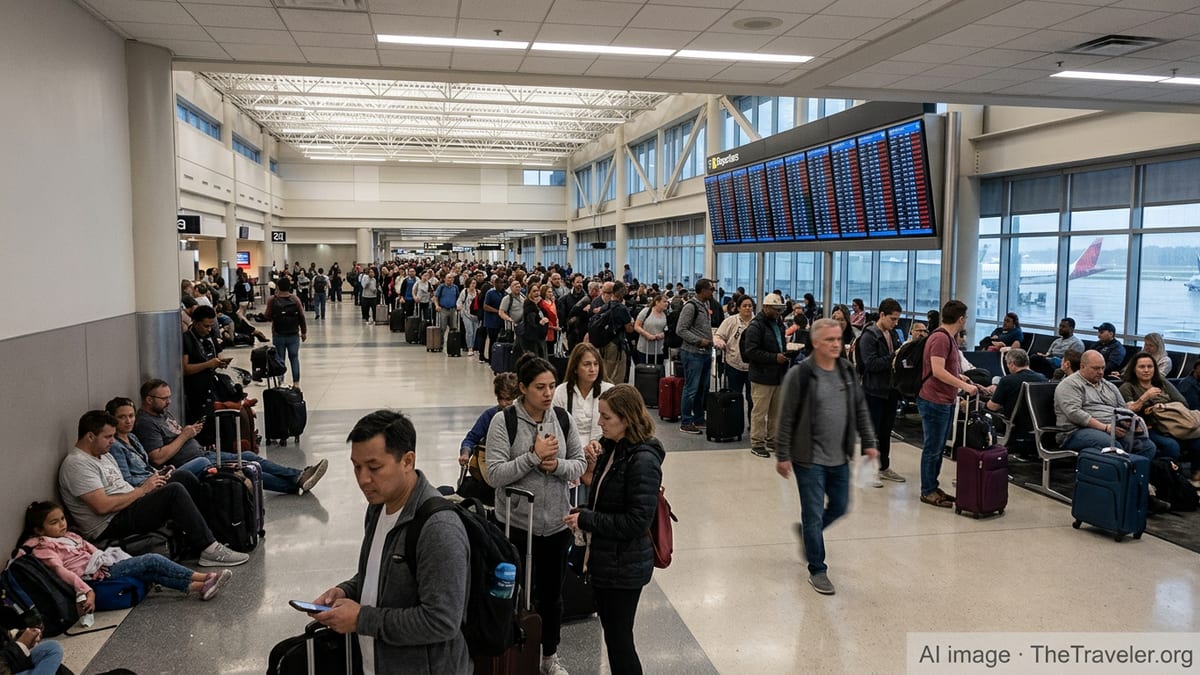
Busy Global Hub Sees Another Day of Strain
Hartsfield-Jackson Atlanta International Airport, consistently ranked among the world’s busiest hubs, experienced measurable strain as delays and cancellations rippled across its domestic and international networks. Tracking services show that the combined total of 306 affected flights translated into extended waits at gates, rebookings and missed onward connections for thousands of travelers.
The impact was most visible on carriers with large operations in Atlanta. Delta Air Lines, which uses Hartsfield-Jackson as its primary hub, saw a notable share of the disruption, while partner and competitor airlines were also affected to varying degrees. Virgin Atlantic and Air Canada, which both operate key transatlantic and transborder routes from Atlanta, reported schedule changes that complicated long-haul journeys.
Frontier Airlines and other low-cost operators were not spared, with delayed departures affecting leisure travelers heading to U.S. vacation markets and Latin American gateways. The combination of mainline, regional and budget carriers involved meant that both business and holiday traffic faced interruptions throughout the day.
Although Hartsfield-Jackson is designed to absorb high traffic volumes, any spike in disruptions can quickly cascade through its tightly scheduled operation. Past federal data on systemwide performance shows that when large hubs experience elevated delay percentages, knock-on effects are often felt at airports nationwide.
Wide Geographic Impact Across Five Countries
The day’s disruption in Atlanta extended beyond the United States, touching a broad geographic footprint that included England, Japan, Mexico and Spain. Long-haul flights to and from London and other major European gateways were particularly sensitive to delays, given limited daily frequencies and tight connection windows.
Routes linking Atlanta with Mexico and Spain, often popular with both vacationers and visiting friends and relatives traffic, also experienced schedule shifts that complicated cross-border plans. Travelers heading to coastal resorts or major cities faced rebookings, overnight stays or rerouted itineraries as airlines attempted to rebalance aircraft and crews.
Transpacific services involving Japan felt additional pressure because of their length and tightly regulated crew duty times. Even minor delays at departure can force updated crew assignments, equipment swaps or altered routings, which in turn contribute to further congestion at the hub. Published operational data from previous months indicates that such long-haul sectors are particularly vulnerable when system reliability dips.
Within the United States, knock-on delays spread to secondary and regional airports served via Atlanta. Passengers traveling on multi-leg itineraries found that a late arrival into Hartsfield-Jackson often meant missing onward flights, especially to smaller cities with limited daily service.
Multiple Carriers, Shared Challenges
The list of airlines affected at Hartsfield-Jackson underscores how disruptions at a single major hub can quickly become a shared industry challenge. Delta Air Lines carried a substantial portion of the delayed and cancelled flights, reflecting its position as the dominant operator in Atlanta and a primary connector between domestic and international markets.
Virgin Atlantic’s joint services with Delta on transatlantic routes from Atlanta meant that schedule changes did not just affect point-to-point travelers but also those connecting from across the United States to England and beyond. Adjustments to departure times from Atlanta can create further timing complications at overseas hubs, where arrival banks feed European and Middle Eastern connections.
Air Canada’s flights between Atlanta and Canadian cities added another layer to the day’s complexity, touching itineraries that combine U.S. and Canadian segments with ongoing journeys to Europe and Asia. Frontier’s role as an ultra-low-cost carrier amplified the impact on price-sensitive leisure travelers, who often have fewer alternative options once a flight is cancelled or heavily delayed.
Industry statistics released in recent federal consumer reports highlight how even generally reliable carriers can face sudden spikes in delays and cancellations during periods of operational stress. On such days, performance gaps between airlines tend to narrow, as shared infrastructure constraints and crowded airspace limit the ability of any single carrier to fully recover its schedule.
Weather, Congestion and System Limitations
While specific contributing factors to today’s 271 delays and 35 cancellations at Hartsfield-Jackson varied from flight to flight, recent reporting on similar disruption days across the United States points repeatedly to a mix of weather, air traffic congestion and broader system limitations. Moderate storms, low clouds or strong winds around peak operating periods can quickly reduce runway capacity, forcing controllers to meter departures and arrivals.
National data from the U.S. Department of Transportation’s air travel consumer reports show that so-called national aviation system issues, including non-extreme weather and airspace constraints, regularly rank among the leading causes of delays. When combined with airline-controlled factors such as crew availability and aircraft maintenance schedules, the margin for on-time performance at powerhouse hubs like Atlanta can shrink rapidly.
Recent multi-airport disruption reports in the national media have also highlighted vulnerabilities in staffing levels, particularly in air traffic control and ground operations. Even when severe weather is not present, a thin staffing margin can slow recovery once a wave of delays begins. This pattern has been visible at several large hubs over the past year, where modest storms triggered outsized ripple effects.
Analysts tracking operational reliability note that while investment in technology and infrastructure has improved efficiency over the long term, the interconnected nature of modern airline networks means that a problem at one airport can still echo across continents. The broad international footprint of flights affected out of Atlanta today is a fresh example of that systemic exposure.
What Travelers Can Expect in the Short Term
For passengers moving through Hartsfield-Jackson in the hours following the disruptions, publicly available tracking information suggests that residual delays are likely to persist as airlines work to reposition aircraft and crews. Even as cancellation counts stabilize, late-arriving jets and out-of-sequence crews can leave gaps in the schedule well into the evening.
Travelers connecting in Atlanta are likely to experience longer lines at rebooking counters and customer service touchpoints as affected passengers seek alternative flights to the United States, England, Japan, Mexico and Spain. Historically, recovery from similar high-disruption days has often taken a full operating cycle, meaning that some itineraries may not normalize until the following day.
Industry observers recommend that passengers keep a close eye on airline apps and airport information displays when traveling through major hubs on days with elevated delay counts. Past disruption events at Atlanta and other large airports show that gate changes, rolling delays and equipment swaps can occur with limited notice as operations teams try to restore network balance.
With spring and summer travel periods approaching, the situation in Atlanta serves as a reminder of how fragile high-volume air traffic flows can be. As airlines and airports adjust staffing, technology and scheduling strategies, days featuring several hundred delays and dozens of cancellations at single hubs remain an ongoing challenge for the global air travel system.