

More news on this day
Travelers moving through Dallas-Fort Worth International Airport faced another day of uneven operations as 14 flight cancellations and 44 delays disrupted schedules on Friday, rippling across domestic routes and long-haul services linking the United States with the Middle East, Mexico and Europe.
Operations Strained at One of America’s Busiest Hubs
The latest round of disruptions at Dallas-Fort Worth International Airport, one of the largest connecting hubs in the United States, added new pressure to an already stretched aviation system at the tail end of a volatile winter for air travel. While the figures are modest compared with major storm or outage days, the 14 cancellations and 44 delays recorded on Friday highlight how even limited disruptions at a mega-hub can cascade through far-flung networks.
Airport and airline data indicated that the irregular operations were spread throughout the day, rather than confined to a single burst of bad weather or an extended ground stop. Departures to key domestic markets in the central and eastern United States, including Chicago, Atlanta and New York, were among those affected, as were connections to leisure destinations in Mexico and transatlantic gateways in Europe.
The timing of the disruption posed particular challenges for connecting passengers who rely on Dallas-Fort Worth as a mid-continent pivot point. With banks of flights arriving from smaller U.S. cities and departing onward to international destinations, even short delays risked missed connections and forced rebookings, swelling customer service lines at peak periods.
Wide Mix of Airlines Impacted, From Regional to Global Carriers
Operational records show that the day’s 14 cancellations and 44 delays did not fall on a single dominant carrier, but were split among a mix of airlines that range from regional operators such as SkyWest to low cost and long-haul international brands including Spirit, Emirates and Korean Air. This pattern reflects the complex role Dallas-Fort Worth plays as both a domestic connector and an international gateway.
SkyWest, which flies regional jets on behalf of major U.S. airlines, saw several of its departures adjusted or scrubbed, affecting passengers booked on codeshare itineraries who may not realize they are flying on a regional partner rather than a mainline carrier. Those cancellations reverberated on short-haul routes to cities across Texas and neighboring states, where alternative frequencies can quickly fill up.
Spirit Airlines customers encountered additional waits on high demand domestic routes and flights to Mexican beach destinations, compounding frustration for leisure travelers heading into or out of the peak winter getaway period. For budget-conscious passengers with tightly timed hotel bookings and ground transfers, even a few hours of delay can carry outsize costs.
Emirates and Korean Air, which rely on Dallas-Fort Worth as part of broader transcontinental networks, also faced schedule adjustments. Disruptions on these long-haul services can be particularly disruptive, as equipment and crew rotations are tightly choreographed across multiple continents and time zones. A delayed widebody departure from Texas can lead to missed onward connections in Dubai, Seoul or European hubs for travelers coming from or heading to secondary cities.
Routes Spanning the U.S., Middle East, Mexico and Europe Affected
The flight list out of Dallas-Fort Worth on Friday illustrated the global reach of even a localized disruption. In addition to a heavy slate of domestic flights, the airport fields daily and near daily services that stretch in one direction toward Mexico’s resort cities and industrial centers, and in the other toward European and Middle Eastern hubs that funnel passengers onward to Africa and Asia.
Passengers bound for Mexico reported delays on departures to popular coastal destinations, as well as to business centers that depend on cross border travel for manufacturing and energy sectors. Longer screening lines and reissued boarding passes added to congestion at departure gates used by airlines specializing in U.S. to Mexico traffic.
On the transatlantic side, delayed departures to European cities tightened already narrow connection windows at major hubs. Travelers with itineraries that combined a Dallas-Fort Worth flight with onward services into smaller European markets faced a higher risk of overnight misconnects, particularly where late evening arrivals leave few same day alternatives.
Long-haul services linking North Texas to the Middle East, including flights operated by Emirates, felt the knock on effects of both local schedule changes and a wider regional disruption in Middle Eastern airspace. For some passengers, this meant extended flying times and rerouting across alternative corridors, turning already lengthy journeys into daylong odysseys.
Recent Weather and Global Geopolitics Add Pressure
The latest difficulties at Dallas-Fort Worth come on the heels of a punishing winter for aviation in North America. A sprawling late January winter storm snarled operations across dozens of airports, including hubs in Texas, the Midwest and the Northeast, prompting thousands of cancellations and leaving airlines with weeks of schedule recovery work. Residual crew imbalances and aircraft out of position have left networks more vulnerable to smaller day to day disruptions.
At the same time, the global route map has been reshaped in recent days by a major geopolitical shock in the Middle East. Airspace closures and sharply reduced operations at key Gulf hubs have forced airlines such as Emirates and other regional carriers to pare back schedules, reroute long haul flights and juggle aircraft assignments. When those changes intersect with localized issues in the United States, the combined effect is felt by travelers in departure lounges from Dallas to Doha and beyond.
Aviation analysts note that hub airports like Dallas-Fort Worth sit at the intersection of these pressures. They must absorb bad weather that sweeps across central parts of the country, contend with occasional infrastructure and equipment constraints, and serve as the North American endpoint for long haul carriers dealing with overseas disruption.
For airlines, every irregular day now tests the resilience of post pandemic staffing levels, information technology systems and customer service channels. With many carriers still operating close to peak utilization of crews and aircraft, margin for error remains thin when several stressors emerge at once.
Passengers Face Long Lines, Limited Options and Calls for More Resilience
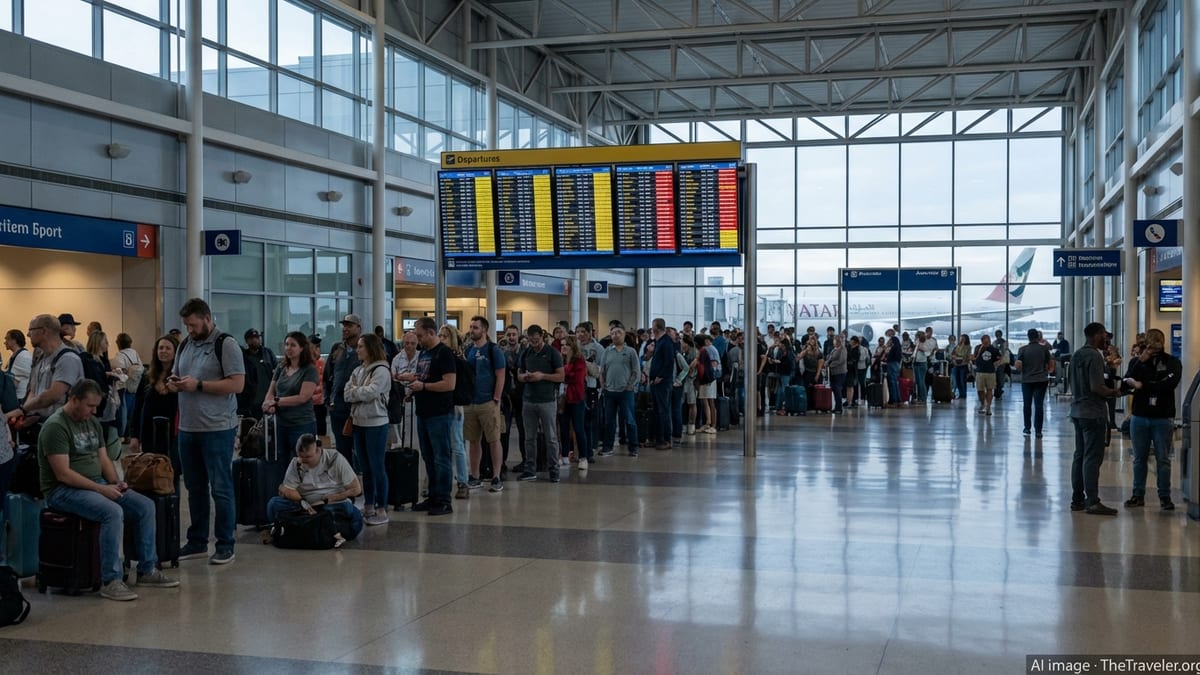
Inside the terminals, the day’s 14 cancellations and 44 delays manifested in familiar scenes for regular travelers through Dallas-Fort Worth. Departure boards flickered with updated times, and lines grew at gate podiums and transfer desks as passengers sought earlier seats, hotel vouchers or rerouted itineraries.
Some travelers were able to rebook through alternative hubs such as Atlanta, Chicago or Miami, though that often meant longer total journey times or overnight connections. Those flying on lower cost carriers or regional affiliates had fewer alternatives, especially on thinly served routes where there may be only one or two daily frequencies.
Consumer advocates argue that the pattern at Dallas-Fort Worth and other major airports underscores the need for greater investment in infrastructure, staffing and technology that can reduce the scale of knock on effects from relatively modest operational problems. They point to recurring episodes of stress at key hubs as evidence that the system remains brittle in the face of both predictable winter weather and surprise geopolitical shocks.
For now, airlines operating at Dallas-Fort Worth are focused on working through backlogs, repositioning crews and aircraft, and restoring schedules in advance of the busy spring break period. With travel demand expected to remain strong in the coming weeks, the performance of North Texas’s primary gateway will be closely watched by both the industry and millions of passengers whose trips depend on the smooth functioning of this critical hub.