

More news on this day
Travelers at Houston’s George Bush Intercontinental Airport faced a fresh wave of disruption today as a cluster of flight cancellations and widespread delays involving United Airlines and regional partners SkyWest and Mesa, along with Qatar Airways and Air Canada, rippled through major domestic and international routes.
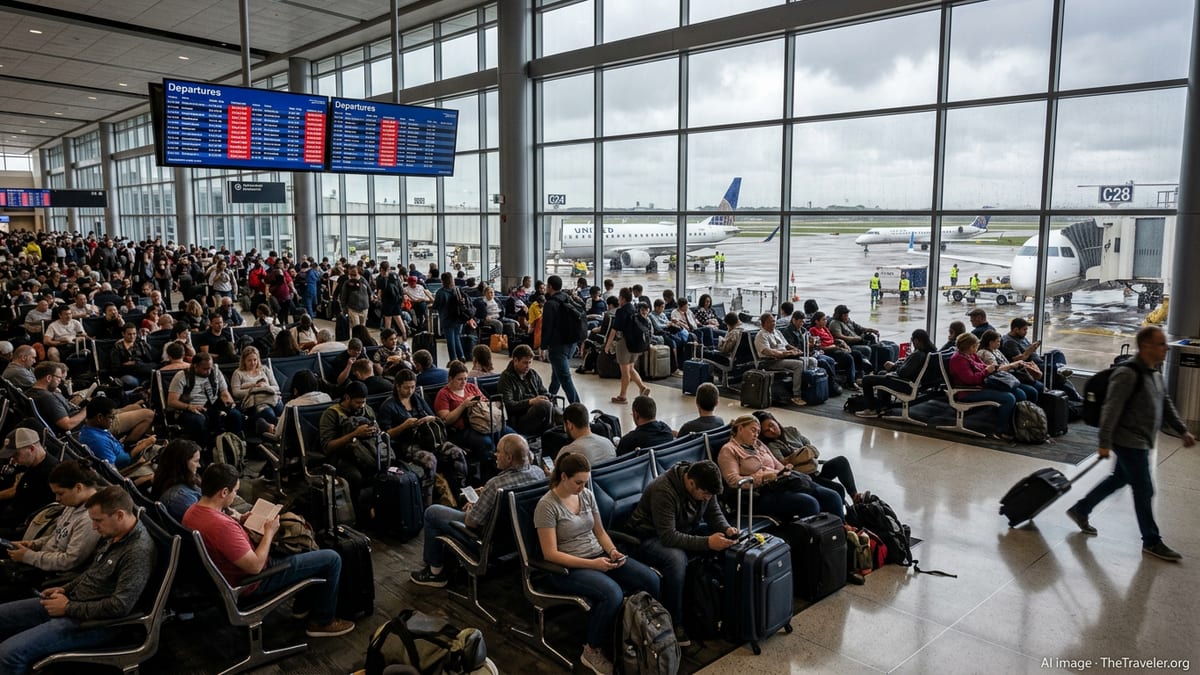
Cluster of Cancellations Hits Major Domestic and International Routes
Operational data and airline status boards at Houston Bush Intercontinental indicated a total of 10 flight cancellations concentrated across United and its regional affiliates, SkyWest and Mesa, as well as select Qatar Airways and Air Canada services. While the number may appear modest in isolation, the impact was magnified by the airport’s role as a primary connecting hub, particularly for United.
Routes to popular leisure and connection-focused destinations such as Aspen, Milwaukee and Salt Lake City were among the hardest hit on the domestic side, all typically fed by regional jets operated under the United Express banner. Internationally, passengers booked on long haul services toward Doha and onward connections on Qatar Airways, as well as select Air Canada links to Canadian hubs, encountered a mix of outright cancellations and multi hour delays.
The disruption built gradually through the morning before becoming highly visible by midday, as departure boards in multiple terminals showed strings of delayed and canceled flights. Passengers arriving on time for afternoon and evening departures often discovered that inbound aircraft or crew were out of position, leaving them facing missed connections and extended airport stays.
While total cancellations remained below levels seen during nationwide weather events, the concentration of scrapped flights in a relatively tight window at a single hub meant that rebooking options, especially to smaller markets such as Aspen and regional Midwest cities, quickly became scarce.
Weather, Congested Skies and Operational Strains Combine
Houston Bush Intercontinental is no stranger to disruption, with its location on the Gulf Coast making it vulnerable to severe thunderstorms, low ceilings and rapidly changing wind and visibility conditions. Recent federal data and local aviation reports highlight how fast moving systems can trigger ground stops and flow control restrictions, which cascade into delays and missed slots throughout the day.
Today’s turmoil appears to fit that pattern, with periods of unstable weather in the region coinciding with air traffic control metering programs that slowed departures and arrivals into Houston and other major hubs. When traffic is throttled, airlines lean heavily on their schedule padding and spare aircraft, but once a few early rotations are lost, regional operations to smaller markets are often the first to be trimmed.
Operational strain is exacerbated by tight crew scheduling across regional partners such as SkyWest and Mesa, which operate high frequency, short haul services on behalf of United out of Houston. Even minor disruptions can trigger crew timing issues, forcing airlines to cancel flights when pilots or flight attendants reach their regulated duty limits before repositioning can be arranged.
For carriers such as Qatar Airways and Air Canada, which operate only a handful of daily frequencies at Houston, a delayed or diverted inbound aircraft can mean long gaps before another plane and crew are available, converting what might have been a delay into a cancellation that cascades through their global networks.
Travelers Bound for Aspen, Salt Lake City, Newark and Doha Feel the Impact
The knock on effects were felt most acutely by travelers headed to connection dependent destinations. Passengers booked from Houston to Aspen reported that the cancellation of a single regional jet effectively wiped out same day options, since alternate routings typically require a combination of Denver or other mountain hubs that were themselves operating near capacity.
In Salt Lake City and Milwaukee, where United and its partners run a limited schedule compared with larger focus cities, canceled flights left travelers weighing whether to accept next day itineraries or seek refunds and switch carriers. Those holding nonrefundable tickets or award reservations had to navigate busy customer service lines, phone queues and app rebooking tools at the same time.
On the long haul side, disruptions on United’s links to Newark created headaches for international passengers who rely on that corridor to connect to Europe and the East Coast. Misaligned connections at Newark potentially turned overnight journeys into day long marathons, as transatlantic departures waited for late arriving feeders or left without them, forcing rebookings 24 hours later.
For those booked on Qatar Airways’ Houston to Doha service, a delay or cancellation can be especially consequential, since that flight functions as a bridge to a vast network across the Middle East, Africa and Asia. Travelers connecting onward to destinations such as Mumbai, Johannesburg or Bangkok may find that missing the Houston departure unravels complex, multi segment itineraries.
Airlines Scramble With Waivers, Rebookings and Limited Options
As the scale of the disruption became clear, United and its regional operators began issuing limited travel waivers for affected routes, allowing some passengers to change dates or routings without incurring additional fees. However, with aircraft and crews stretched across the network and many peak time flights already fully booked, finding open seats on the same day remained a challenge.
Airline staff at Houston Bush Intercontinental worked to rebook customers through alternate hubs such as Denver, Chicago O’Hare and Washington Dulles, but those options often added extra flight segments and hours of travel time. Travelers heading to smaller destinations had fewer alternatives, sometimes being offered connections via entirely different regions of the country or overnight hotel stays at their own expense.
Qatar Airways and Air Canada adopted similar approaches, encouraging customers to use digital tools for rebooking where possible while deploying additional ground staff at check in and transfer desks in Houston. Nonetheless, lines at service counters in the international terminals grew through the afternoon as passengers sought paper boarding passes, baggage rerouting and answers about missed onward flights.
Some travelers shared reports of long waits on the tarmac and in the terminal, along with frustrations over sparse or changing information about departure times. Others noted that gate agents worked continuously to provide updates and standby options, highlighting the tension between operational complexity and front line communication on a day of rolling delays.
What Passengers Flying Through Houston Should Do Next
For travelers with upcoming itineraries through Houston Bush Intercontinental, aviation analysts and consumer advocates recommend building extra buffer time into connections, especially when relying on regional jets or late night bank departures. Connecting windows of 60 minutes or less can quickly feel tight when departure holds, taxi delays and deicing operations accumulate minutes on either end of a flight.
Experts also advise monitoring flights through airline apps and push notifications starting at least 24 hours before departure. Subtle schedule changes, gate swaps or downgraded aircraft are often early indicators that an airline is juggling resources behind the scenes. Checking in early can sometimes unlock more rebooking options if a flight is proactively canceled.
For those already at the airport when cancellations occur, seeking assistance simultaneously through multiple channels can improve odds of a favorable outcome. Using self service tools in the app or website while waiting in line to speak with an agent allows passengers to grab scarce seats the moment they appear. In some cases, asking politely about routings via alternate hubs or nearby airports can surface creative options.
While today’s turmoil at Houston Bush Intercontinental stands out for its mix of cancellations and long delays involving United, SkyWest, Mesa, Qatar Airways and Air Canada, it also reflects a broader pattern in modern air travel in which localized weather and operational issues can ripple rapidly through tightly scheduled global networks.