

More news on this day
Travelers passing through St. Louis Lambert International Airport on March 7 faced mounting disruption as at least 16 flights were canceled and 99 delayed, with knock-on effects rippling across key domestic routes to New York, San Francisco, Dallas, Houston, Boston and other major hubs.
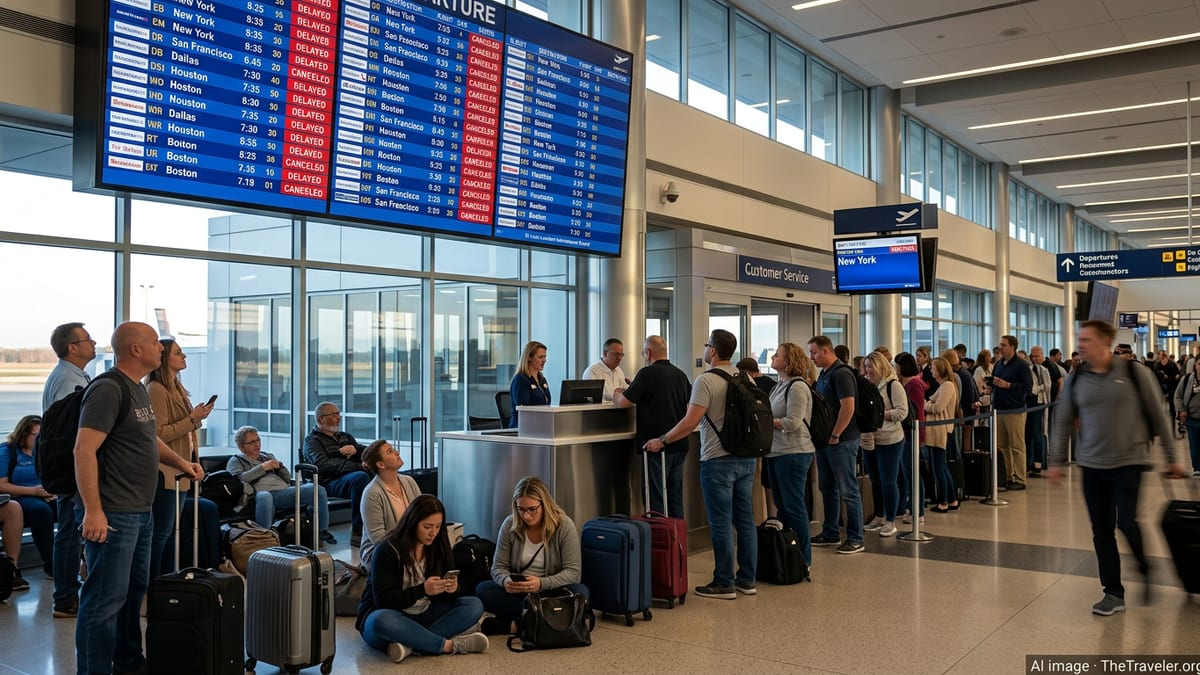
Delays Mount Across Major U.S. Hubs
The operational strain at St. Louis Lambert fed into a broader pattern of congestion across the United States air network, with disrupted departures and late-arriving aircraft triggering rolling delays on Saturday. Flights operated by Delta Air Lines, American Airlines, Southwest Airlines, SkyWest and other carriers reported schedule changes on routes touching New York, San Francisco, Dallas, Houston and Boston, complicating travel plans for business and leisure passengers alike.
Connections through large coastal airports such as New York and San Francisco were particularly vulnerable, as any delay in an inbound segment from St. Louis narrowed connection windows and raised the risk of missed onward flights. Travelers connecting through Dallas and Houston also reported extended waits at gates, with some itineraries requiring last-minute rebooking as aircraft and crews were repositioned.
The busy late winter travel period, with families returning from school breaks and business travel ramping up ahead of spring, added to the strain. Airlines worked to prioritize aircraft for routes with the highest passenger loads, leaving some secondary and regional services more exposed to cancellations and multi-hour delays.
Delta, American, Southwest and Regionals Under Pressure
Mainline carriers, including Delta and American, shouldered a significant share of the operational pressure at St. Louis Lambert, where both airlines serve as key connectors to their national networks. Delays on morning and midday departures cascaded into the afternoon schedule, as aircraft arrived late from previous legs and required additional ground time for servicing and crew changes.
Southwest, the dominant carrier at Lambert for many domestic routes, experienced a series of delays on point-to-point services, complicating plans for travelers who rely on the airline’s frequent flights to reach cities such as Chicago, Denver, Tampa and Dallas. Passengers reported creeping departure times, with flights initially pushed back by minutes eventually departing more than an hour behind schedule.
Regional operators such as SkyWest, which flies on behalf of major network carriers, were particularly exposed to the ripple effects. Because these airlines rely on tight aircraft rotations to connect smaller cities through midwestern hubs like St. Louis, a delay on an early leg can disrupt several subsequent departures. As a result, a single schedule disruption can impact communities far beyond Missouri, from smaller Great Lakes airports to secondary markets in the South and Mountain West.
Weather, Congestion and Crew Logistics Cited
While no single cause was immediately identified for the full scope of Saturday’s disruption, a combination of factors contributed to the operational challenge. Airlines pointed to lingering weather issues on parts of the East Coast and in the South, where storms earlier in the week had already tightened aircraft and crew availability. Those knock-on effects left schedules less resilient when additional delays emerged.
Air traffic congestion at major hubs, particularly in the busy Northeast corridor, added further complexity as controllers managed heavy traffic volumes. Even modest holding patterns or ground stops at key airports such as New York and Boston could push tightly timed schedules at St. Louis out of alignment, especially for flights timed to maximize connections.
Operational logistics also played a role. Airline unions and safety protocols require strict adherence to crew duty-time limits, meaning that even a relatively small delay can force a change of pilots or flight attendants if it would push them beyond allowable working hours. Locating replacement crews on short notice, especially at mid-continent hubs that rely on carefully planned rotations, often meant longer gate holds or, in some cases, outright cancellations.
Passengers Face Long Lines and Changing Itineraries
Inside St. Louis Lambert, the effect of the disruptions was visible in crowded departure halls, long queues at customer service counters and heavily used airline mobile apps. Passengers reported standing in line to rebook itineraries while simultaneously refreshing digital boarding passes to track shifting departure times.
Those traveling on multi-leg itineraries were especially affected as missed connections forced same-day rerouting through alternative hubs such as Chicago, Atlanta or Denver. Some travelers opted to accept overnight stays when no viable same-day options remained, while others turned to nearby airports in search of last-minute alternatives.
Airport concessionaires, including cafes and quick-service restaurants, saw sustained demand as travelers waited out delays. Staff at St. Louis Lambert worked to manage crowding around gate areas and to keep passengers informed through public address announcements and updated departure boards, but the fast-changing nature of the disruptions made it difficult to provide certainty about departure times.
What Travelers Can Do If Their Flight Is Affected
With disruptions affecting multiple carriers at St. Louis Lambert, travel advisers urged passengers to stay proactive. Checking flight status frequently on airline apps or text alerts remained the most reliable way to catch early signs of schedule changes, particularly for those with tight connections through cities such as New York, Dallas or Houston.
Experts also recommended arriving at the airport earlier than usual to allow extra time for check-in, security screening and potential itinerary changes. For passengers facing cancellations, documenting expenses for meals, ground transportation or unexpected overnight stays can be important if an airline later offers vouchers or reimbursements under its customer service policies.
Travelers with flexible plans were encouraged to consider rebooking to off-peak departure times or even shifting travel to later dates if their itineraries allowed. As airlines work to stabilize schedules and reposition aircraft and crews following Saturday’s disruptions, flight operations at St. Louis Lambert are expected to gradually normalize, but passengers connecting through the airport should anticipate the possibility of lingering delays over the coming days.