

More news on this day
Dozens of flights were cancelled and hundreds delayed at Toronto Pearson International Airport in a fresh wave of disruption that rippled across Canada and into major U.S. cities, tangling travel plans for thousands of passengers in one of the busiest late-winter travel periods.
Get the latest news straight to your inbox!
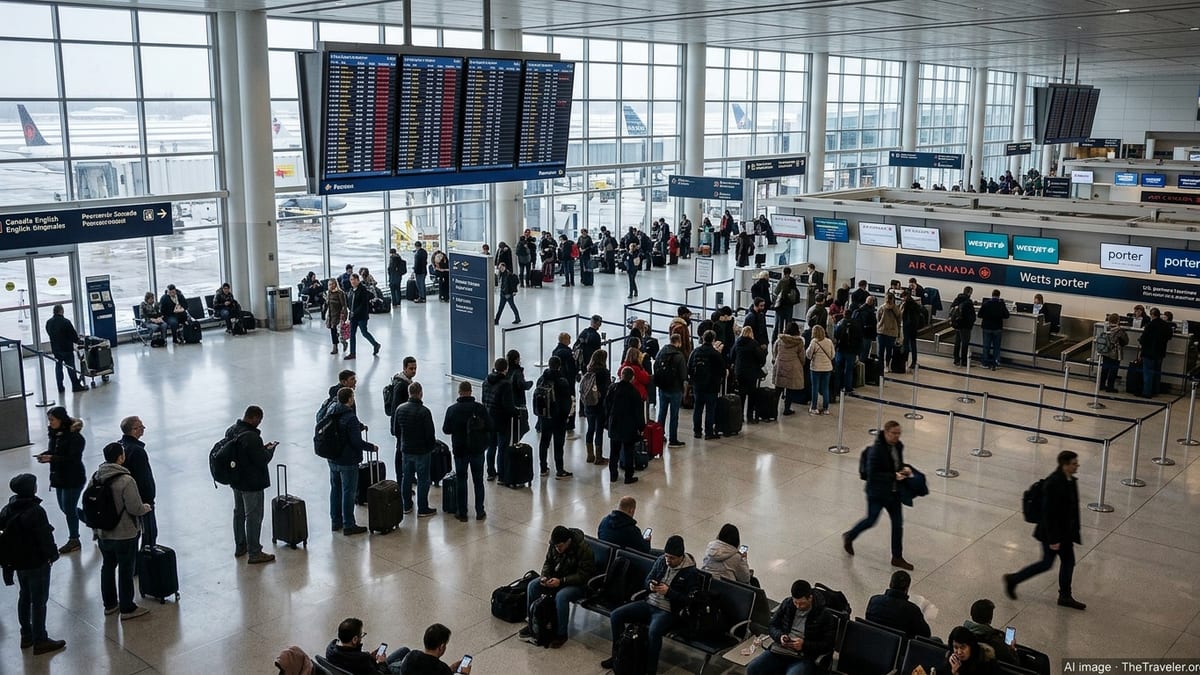
Toronto Pearson Records Dozens of Cancellations and Over 200 Delays
Operational data compiled from flight-tracking platforms and airport status reports indicates that Toronto Pearson logged 39 cancelled departures and arrivals alongside approximately 210 delayed flights over the course of a single day. The disruption affected both domestic and transborder operations, with aircraft stuck in extended ground holds and turnaround times stretching far beyond normal schedules.
The latest disruption comes as Toronto continues to face a volatile late-winter pattern, where fast-changing weather, runway and de-icing constraints, and tight aircraft rotations leave little room for recovery when problems emerge. Published coverage notes that Pearson has repeatedly been among Canada’s most delay-prone airports during recent storm systems, with even modest operational setbacks quickly cascading through the network.
On the day in question, the combined impact of delays and cancellations translated into a sizeable portion of Pearson’s daily movements being affected in some way. Even services that ultimately operated close to schedule frequently departed from different gates than planned, or with aircraft substitutions, creating additional complexity for connecting travellers.
Passenger experiences shared on social platforms and in local media reports described long queues at check-in and security, packed departure lounges, and busy airline service counters as travellers attempted to rebook or find alternative routings through other Canadian hubs.
Multiple Carriers Hit, From National Flagships to Regional Partners
The disruption at Toronto Pearson did not impact a single airline but instead spread across much of the Canadian and transborder carrier landscape. Publicly available flight-status data shows that Air Canada and its regional affiliate Jazz Aviation faced the largest absolute number of affected flights, reflecting their extensive schedule from Pearson to cities across Canada, the United States, Europe and the Caribbean.
WestJet, operating a mix of domestic and holiday-focused routes from Toronto, also recorded a series of delays and a smaller but significant number of cancellations. Reports indicate that some WestJet services to Western Canada departed hours behind schedule, compressing already tight evening bank connections at Calgary and Vancouver.
Porter Airlines, which has expanded rapidly at Toronto’s main hub alongside its long-standing presence at Billy Bishop Toronto City Airport, also appeared among the impacted carriers, with several flights to Ottawa, Montreal and Atlantic Canada running late. U.S.-based regional operators Republic Airways and Endeavor Air, which operate under major U.S. airline brands on cross-border routes into Pearson, saw their operations affected as well, particularly on services linking Toronto with key American hubs.
The breadth of carriers affected highlights the interdependent nature of Toronto Pearson’s role in North American aviation. When irregular operations set in, both Canadian travellers and international passengers connecting through codeshare and alliance networks can find their plans disrupted, even if their journeys begin far from Toronto.
Ripple Effects for Vancouver, Montreal, Calgary, New York and Beyond
As cancellations and long delays accumulated at Pearson, knock-on effects spread quickly to other major Canadian airports. Flights between Toronto and Vancouver, Montreal and Calgary were among the hardest hit, with aircraft and crews arriving late from Ontario and then departing late or being swapped onto different routes. Published accounts of similar recent events at Pearson show that a single bank of delayed arrivals can disrupt onward rotations for an entire afternoon and evening.
On the Toronto to Vancouver corridor, one of Canada’s busiest domestic routes, delayed eastbound aircraft arriving from Western Canada struggled to turn around on time for their return journeys. Travellers on both sides of the country reported missed connections to secondary cities and last-minute overnight stays when evening departures could no longer be accommodated within crew duty limits.
Montreal and Calgary also experienced secondary disruption as aircraft scheduled to operate multiple short-haul segments in a day arrived late from Pearson, shortening turnaround windows and forcing airlines to prioritise certain flights over others. Some carriers appeared to consolidate lightly booked services or reroute passengers via alternative hubs to keep their networks moving.
Transborder routes linking Toronto with New York and other Northeast U.S. cities, which already operate in congested airspace, faced additional strain. Delayed departures from Toronto risked losing takeoff slots at busy American airports, leading in some cases to further ground holds and re-sequencing on arrival.
Weather, Congestion and Tight Schedules Create a Fragile System
While the specific combination of factors behind this disruption varied by flight and carrier, publicly available information points to a familiar mix: shifting late-winter weather systems, heavy congestion at peak travel times, and the tightly optimised schedules that major airlines use to maximise aircraft utilisation. When snow, freezing precipitation or strong winds move through southern Ontario, even temporary reductions in runway capacity or the need for extended de-icing can quickly slow the flow of traffic.
Analyses of recent Canadian flight disruption events from aviation data firms and travel-news outlets emphasise that Toronto Pearson’s role as a primary hub magnifies the impact of any operational slowdown. A delay of just 30 to 45 minutes on an early-morning wave of flights can leave aircraft and crews out of position for the rest of the day, particularly when airlines are operating near full capacity during busy periods.
Staffing levels across ground handling, security screening, and air traffic management also play a role. Reports on Canada’s broader aviation performance in the last year suggest that while staffing has improved since the pandemic recovery phase, occasional shortages or high absenteeism during weather events can still limit an airport’s ability to recover quickly once conditions start to improve.
The result is a system in which passengers feel the effects not only in Toronto, but in distant cities whose on-time performance depends on aircraft originating at Pearson. Travellers may depart a clear-sky airport only to discover that their connection is disrupted due to de-icing delays or runway constraints several provinces away.
What Travellers Are Being Advised to Do Next Time
In the wake of the latest wave of disruption, consumer and travel-advisory outlets are again emphasising practical steps for passengers using Toronto Pearson and other major Canadian hubs during volatile periods. Guidance typically includes building extra buffer time into itineraries, especially when connecting between domestic and international flights, and avoiding tight layovers that leave little room for delay.
Passengers are also encouraged to monitor flight status closely through airline apps and airport information pages, as schedules can change multiple times over the course of a day during irregular operations. Same-day adjustments, such as moving to earlier departures when weather is forecast to deteriorate later, can sometimes reduce the risk of becoming stranded.
Travel rights have been another focus of recent coverage. Under Canada’s Air Passenger Protection Regulations, airlines must provide specific forms of assistance and, in some cases, compensation when flights are delayed or cancelled for reasons within their control. When disruptions are linked primarily to severe weather or air traffic management restrictions, entitlements may be more limited, but carriers are still expected to communicate clearly and provide rebooking options as capacity allows.
For now, the latest instance of major disruption at Toronto Pearson serves as another reminder that even on days without headline-grabbing storms, Canada’s busiest hub can quickly become a chokepoint. Travellers planning journeys through Toronto, Vancouver, Montreal, Calgary or key U.S. connections such as New York may benefit from treating the late-winter season as a higher-risk period and planning their trips accordingly.