

More news on this day
Travelers moving through Daniel K Inouye International Airport in Honolulu are facing a fresh wave of disruption as a cluster of Hawaiian and Alaska Airlines operational issues has led to the suspension of seven flights and at least 101 delays, affecting connections across Hawaii and major mainland hubs such as New York and Dallas–Fort Worth.
Get the latest news straight to your inbox!
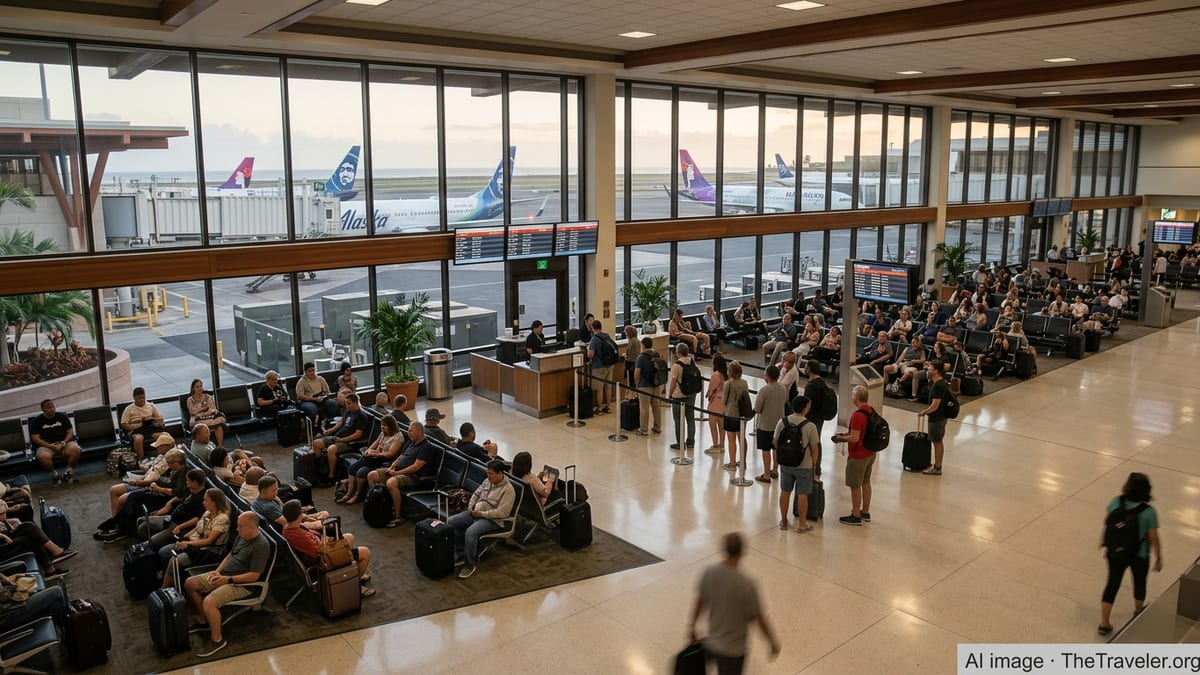
Widespread Disruptions Centered on Honolulu
Publicly available flight-tracking data and traveler reports indicate that Daniel K Inouye International Airport has become the focal point of a new round of schedule disruptions involving Hawaiian-branded and Alaska-operated services. The latest wave includes the suspension of seven flights and a reported 101 delays, rippling through Honolulu and out to neighboring island airports and key mainland gateways.
The pattern emerging across the network shows Honolulu as both an origin and connection pressure point. As delays stack up on long-haul and inter-island routes, downstream departures are pushed back or canceled entirely. Travelers bound for or connecting through Honolulu report extended waits at gates, missed onward connections and last-minute rebookings onto alternate services.
These disruptions are unfolding against the backdrop of the ongoing integration of Hawaiian operations into Alaska Air Group, with Honolulu serving as a primary hub. While the carriers continue to publish separate schedules, the shared operational backbone means that mechanical issues, crew availability problems or weather-related constraints on one part of the network can quickly cascade across multiple routes.
Recent discussion in airline and traveler forums describes significant knock-on effects when a single widebody or key long-haul rotation is taken out of service. Once an aircraft is grounded or a crew times out, inter-island legs and transpacific sectors that depend on that capacity often experience rolling delays, contributing to the high count of affected flights reported in the latest disruption.
Island Airports Feel the Strain: Kailua-Kona and Hilo
While Honolulu remains the central choke point, island airports such as Kailua-Kona and Hilo are also experiencing pressure from the current wave of disruption. Publicly accessible flight-status records show multiple late departures and arrivals on routes linking these airports with Honolulu and the mainland, tightening already busy schedules and leaving less time for recovery between turns.
For travelers on inter-island itineraries, delays on a single Honolulu leg can mean missed connections onward to Kailua-Kona or Hilo. Reports from recent trips describe passengers arriving hours behind schedule, with some overnighting unexpectedly when there are no remaining same-day departures. This has placed additional demand on limited hotel capacity near island airports, especially during peak visitor periods.
Operationally, the smaller island airports have less spare capacity when flights run late. Ground handling teams, gates and check-in resources are often optimized for tightly spaced schedules. When an inbound flight from Honolulu is significantly delayed, outbound service can be pushed into late-evening slots, leading to a build-up of waiting passengers and longer lines at counters and security checkpoints.
Observers note that the reliance on a hub-and-spoke model centered on Honolulu magnifies the impact on rural and resort communities served by Kailua-Kona and Hilo. Even when local weather is calm, delays triggered by equipment or staffing issues at other points on the network can leave island travelers facing extended uncertainty over departure times.
Mainland Hubs Affected: New York and Dallas–Fort Worth
The latest disruptions are also being felt thousands of miles from Hawaii at major mainland hubs, notably New York and Dallas–Fort Worth. Publicly available information shows long-haul services linking these airports with Honolulu experiencing rolling delays and short-notice schedule changes, affecting both Hawaii-bound tourists and residents returning to the islands.
Travelers on recent New York routes have described day-long waits as flights scheduled for morning or afternoon departure slid into late-night or next-day operations, with equipment swaps and crew-time limitations adding to the complexity. In some cases, disruptions on eastbound legs out of Honolulu have forced passengers to reroute through West Coast gateways, extending overall journey times significantly.
At Dallas–Fort Worth, a key connecting point for passengers coming from or heading to the central and eastern United States, the impact of delays is amplified by tight connection windows. When Hawaii-bound departures leave late or arrive well past their scheduled time, passengers can miss onward domestic or international flights, in turn placing extra pressure on rebooking desks and standby lists.
Airline industry analysts observing the situation point out that long-haul routes to and from Hawaii are particularly vulnerable when there is limited backup capacity. Widebody aircraft and suitably qualified crews are not easily substituted at short notice, so any technical or staffing issue that affects a single aircraft type can echo across several days of flying.
Merger Integration and Operational Complexity
The disruptions come at a sensitive moment in the integration of Hawaiian-branded services into Alaska Airlines’ operating framework. Public corporate filings and airline communications have outlined a staged process in which flight operations, crew scheduling, maintenance and passenger systems are gradually being aligned under a single certificate and platform.
As that integration advances, the combined network has grown more complex. Routes once operated independently by each carrier are now interwoven, with joint schedules and shared fleets. Analysts note that while the merger promises longer-term efficiencies and expanded options for travelers, the transition period can expose operational weak spots, especially when demand is high or weather and air-traffic constraints tighten available capacity.
Recent traveler accounts from across the system describe confusion about whether disrupted flights are being handled under Alaska or Hawaiian rules, particularly around vouchers, rebooking options and loyalty-program credit. This can add to frustration when delays stretch into many hours or when flights are canceled after passengers have already reached the airport.
Publicly accessible guidance from consumer advocates stresses that, regardless of branding, the operating carrier is generally responsible for assistance when disruptions are within the airline’s control. However, the ongoing shift of Hawaiian-coded flights into Alaska’s infrastructure appears to be creating a learning curve for both travelers and frontline staff as policies and processes are standardized.
What Travelers Can Do Amid Continuing Volatility
With operational conditions at Daniel K Inouye International Airport and across the Hawaiian and Alaska networks remaining fluid, travel experts recommend that passengers build additional flexibility into their plans. Publicly available consumer guidance suggests allowing longer connection times when routing through Honolulu, particularly when onward flights involve mainland hubs such as New York or Dallas–Fort Worth.
Travelers are also encouraged to monitor flight status closely via airline apps and airport departure boards, especially in the 24 hours before departure. Because delays can shift quickly as crews and aircraft reposition, proactive checks may reveal rerouting opportunities or earlier flights before gate areas become crowded.
Some consumer-rights resources highlight the importance of understanding each carrier’s policies on rebooking and refunds in the event of significant delays or cancellations. While specific options vary by fare type and route, passengers on heavily disrupted itineraries may be able to request changes that better align with their schedules, particularly when arrival times slip by several hours.
As Hawaiian and Alaska continue integrating their operations, observers expect periods of elevated volatility to persist, especially during peak travel seasons and severe-weather windows. For now, the latest set of seven flight suspensions and more than one hundred delays underscores the extent to which a single busy hub such as Honolulu can shape the travel experience for passengers across multiple states and island communities.