

More news on this day
Travelers moving through China’s busy domestic aviation network faced significant disruption as a wave of 30 flight cancellations and 707 delays hit Shanghai Hongqiao, Nanjing Lukou International Airport, and Chengdu Tianfu, leaving passengers stranded across key transport hubs during one of the year’s heavier travel periods.
Get the latest news straight to your inbox!
Major Hubs Grapple With Concentrated Disruptions
Shanghai Hongqiao, Nanjing Lukou International Airport, and Chengdu Tianfu collectively handle hundreds of daily domestic movements, making any cluster of cancellations and delays highly disruptive. Publicly accessible flight-monitoring dashboards for China showed an unusual spike in disrupted operations across these three airports, with a combined 30 cancellations and 707 delayed departures and arrivals logged within a short window.
These hubs play critical roles in China’s broader aviation network. Shanghai Hongqiao serves as a primary business gateway for the Yangtze River Delta, Nanjing Lukou connects regional centers across eastern China, and Chengdu Tianfu functions as a major transfer point for routes spanning central and western provinces. Heavy reliance on connections through these airports meant that delays often cascaded onward to secondary cities.
Because flights at the three airports are tightly banked into peak morning and evening waves, even limited cancellations had knock-on effects. Aircraft and crews arriving late from earlier sectors struggled to be turned around on schedule, contributing to a chain of rolling delays that extended into later departures and arrivals throughout the day.
The disruption also underscored how interlinked China’s domestic air routes have become. Passengers booked on itineraries involving two or more segments were particularly exposed, as even short delays at Hongqiao, Nanjing, or Chengdu Tianfu were enough to cause missed connections and difficult rebooking scenarios.
Passengers Face Long Queues, Missed Connections, and Uncertain Plans
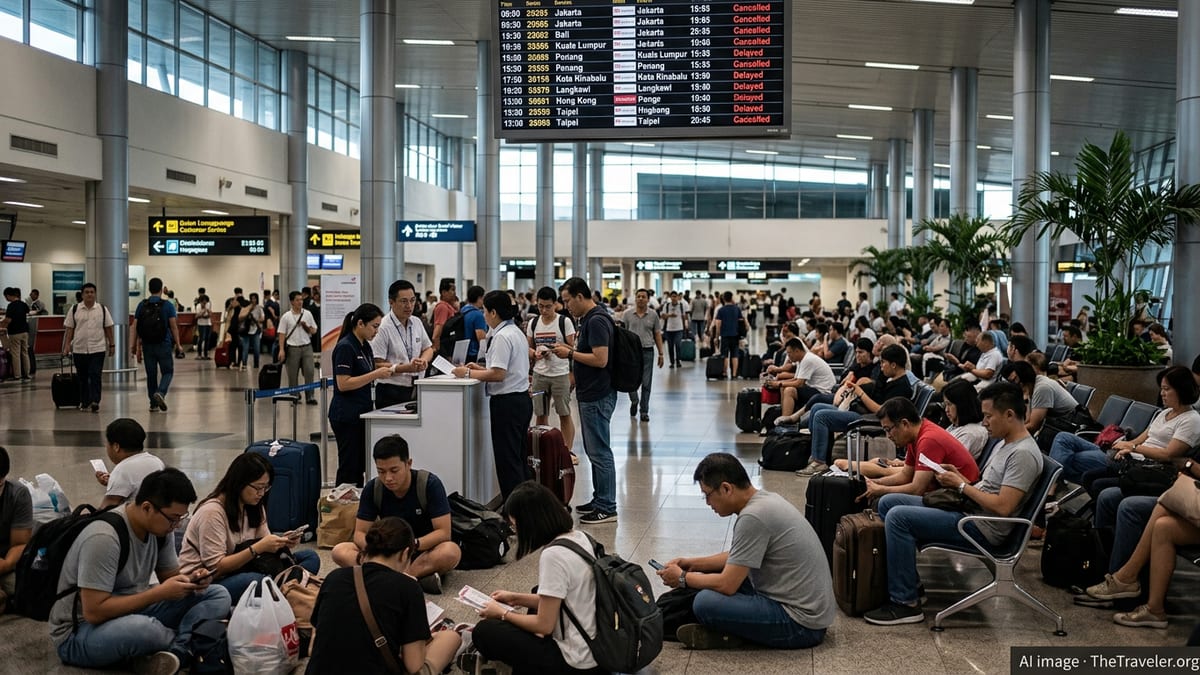
As cancellations and delays accumulated, passengers at all three airports encountered crowded departure halls, long check in lines, and congested customer service counters. Social media posts and traveler reports described queues stretching across terminal floors and passengers waiting extended periods for updated departure times or alternative routing options.
At Shanghai Hongqiao, disruptions were especially challenging for travelers relying on tight connections between regional flights and high speed rail services located in the adjoining railway station complex. Missed or heavily delayed flights upended carefully planned transfers, forcing some passengers to purchase new rail tickets or make last minute accommodations in the city.
In Nanjing and Chengdu, where many journeys involve onward connections to smaller cities, rebooking options were more limited. Travelers reported concerns about reaching business appointments and family gatherings, as later flights were heavily booked and same day alternatives were not always available. Some passengers opted to abandon their air itineraries in favor of long distance rail or overnight buses when it became clear that scheduled flights would not operate as planned.
For those already on board aircraft, extended tarmac waits added to the frustration. Taxi out delays and holding patterns near destination airports contributed to overall disruption, with arrival times slipping well beyond original schedules and forcing missed hotel check ins and late night arrivals into unfamiliar cities.
Operational Pressures and Weather Among Likely Contributing Factors
Publicly available aviation data for China shows that the country’s air traffic volumes have steadily rebounded, while capacity, staffing and airspace constraints continue to put pressure on on time performance at major hubs. Shanghai Hongqiao and Chengdu Tianfu in particular operate within some of the country’s busiest air corridors, where congestion can rapidly translate into delays.
On the day of the disruption, regional weather patterns likely compounded the strain. Thunderstorms, low clouds, and shifting wind conditions commonly affect eastern and southwestern China at this time of year, leading to temporary ground stops, reduced arrival rates, and aircraft being routed around storm systems. When combined with tight scheduling, these factors can significantly reduce the flexibility available to airport operators and airlines.
Maintenance requirements and aircraft rotation issues may also have contributed. Airlines serving these hubs often run high utilization schedules, with individual aircraft operating multiple short haul sectors per day. A late arriving aircraft, an unexpected technical inspection, or a crew duty time limit can quickly cascade, resulting in cancellations when no spare aircraft or fresh crews are available.
Industry analyses of past disruption events across Chinese airports indicate that these operational and weather related factors frequently intersect. When even a small number of flights are canceled outright, the remaining schedule becomes more vulnerable to minor delays, leading to the kind of widespread lateness that passengers experienced at Hongqiao, Nanjing Lukou, and Chengdu Tianfu.
Domestic Travel Demand Highlights Vulnerabilities in the Network
The turmoil at the three airports comes at a time when domestic air travel in China remains robust, driven by renewed business travel and a strong appetite for leisure trips between major cities and regional destinations. High booking levels across key trunk routes, while positive for airlines’ load factors, leave limited space to absorb passengers from canceled flights.
Travel industry observers note that China’s domestic air network has become more reliant on a small set of powerful hubs, magnifying the impact of any local disruption. Shanghai, Nanjing, and Chengdu function as transfer points for dozens of smaller markets, so schedule instability in these cities quickly affects passengers who may never actually pass through them but depend on aircraft and crews routed through the hubs.
The current disruption has renewed discussion among analysts about balancing capacity between aviation and rail. High speed rail already provides a resilient alternative on many routes linking Shanghai, Nanjing, and cities within several hundred kilometers, but medium haul sectors into western China still depend heavily on air links, leaving travelers exposed when major airports in the region experience operational stress.
These events have also underscored the importance of contingency planning for travelers, including allowing extra connection time on complex itineraries and maintaining flexible booking options where possible. For many passengers affected by the recent wave of cancellations and delays, the experience served as a reminder of how quickly high volume networks can seize up when conditions deteriorate.
Guidance for Affected Travelers and Future Trips
While passengers affected by the disruption have had to navigate crowded terminals and limited seat availability, publicly accessible airline and airport advisories stress the importance of monitoring real time flight information and checking in online where possible to avoid additional delays at the airport. Many carriers operating from Shanghai Hongqiao, Nanjing Lukou, and Chengdu Tianfu allow travelers to modify bookings through apps or customer service hotlines during irregular operations.
Consumer advocates point out that, although China’s regulatory framework differs from compensation regimes in regions such as the European Union, passengers can still pursue remedies such as fee free ticket changes, refunds for canceled segments, and assistance with reaccommodation when flights do not operate as scheduled. Travelers are encouraged to retain boarding passes, receipts, and written notices of disruption to support any subsequent claims.
For upcoming trips, travel planners recommend building additional buffer time into itineraries that rely on connections through China’s busiest hubs, particularly during peak holiday periods or seasons prone to storms and low visibility. Where high speed rail provides a viable substitute for short haul flights, some passengers may find it more reliable to pair rail segments with longer haul air travel routed through less congested times of day.
Although operations at Shanghai Hongqiao, Nanjing Lukou, and Chengdu Tianfu typically normalize after major disruption days, the latest wave of cancellations and delays has once again highlighted the sensitivity of China’s domestic aviation network to surges in demand and adverse conditions, and the human impact when hundreds of flights are thrown off schedule with little warning.