

More news on this day
Thousands of air travelers across the United States faced disrupted plans today as more than 120 flights were cancelled and over 350 were delayed, snarling operations at major hubs including Boston, New York, Chicago and Charlotte and affecting carriers from regional operators to Frontier, Alaska, Southwest and Delta.
Get the latest news straight to your inbox!
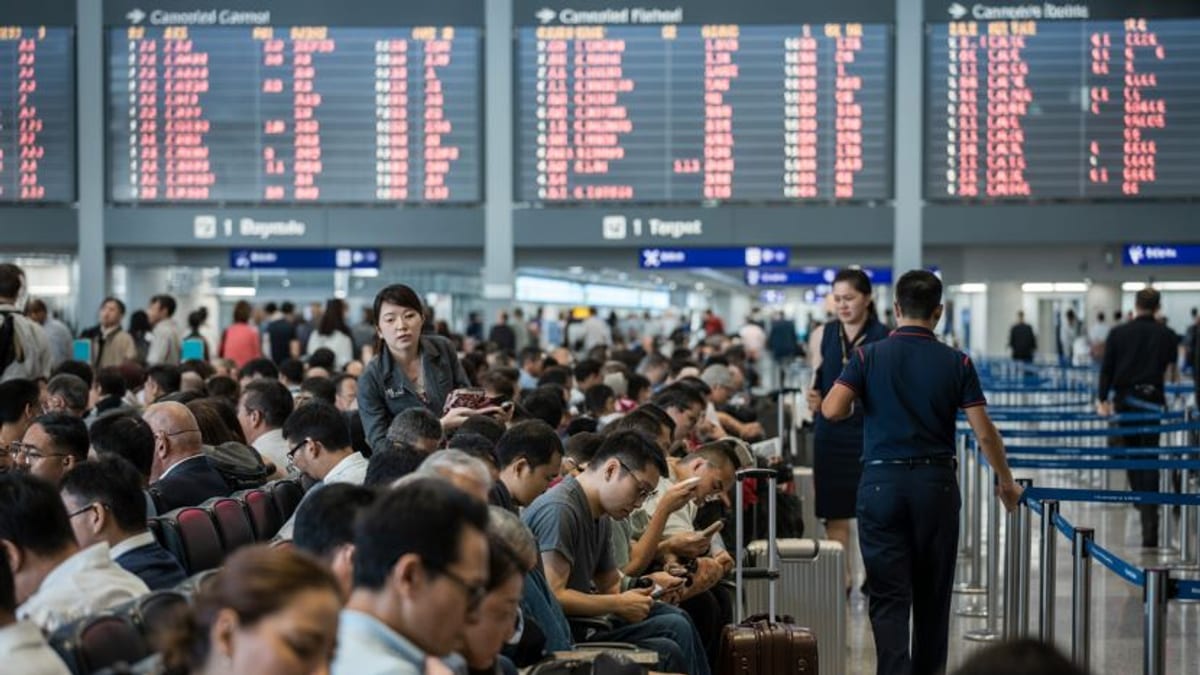
Image by Travel And Tour World
Nationwide Ripple Effects From Concentrated Cancellations
Publicly available tracking data indicates that at least 123 flights were cancelled and roughly 360 delayed across the United States today, a relatively modest disruption in percentage terms that nonetheless translated into thousands of stranded or heavily inconvenienced passengers. The impact was magnified by the fact that many of the affected departures and arrivals were clustered at busy coastal and Midwestern hubs where aircraft, crew and connections are tightly scheduled.
Regional operators flying under brands such as Republic, which serves as a feeder carrier for larger airlines, accounted for a noticeable share of the cancellations. When regional flights are removed from the schedule, the disruption often cascades through the network, breaking onward connections and leaving travelers with fewer same-day alternatives on popular routes.
Although the raw numbers are far below the most severe disruption days seen during major winter storms or historic meltdowns, the pattern of today’s operations reflects an industry still operating with thin buffers. Once a handful of early flights are delayed or cancelled, subsequent rotations can quickly fall behind, creating rolling delays across multiple cities for the rest of the day.
Travel data comparisons with recent months show that overall cancellation rates remain well below the worst spikes recorded during early 2026 winter weather and past holiday meltdowns, yet the average delay per disrupted flight has been creeping upward, extending the amount of time passengers spend waiting in terminals or on tarmacs.
Major Hubs From Boston To Charlotte Hit Hard
Boston, New York, Chicago and Charlotte emerged as some of the most disrupted points in the national network, according to live airport status dashboards and airline operational summaries. At Boston Logan, travellers reported rolling delays throughout the morning that pushed back departures across multiple carriers and shrank connection windows for onward flights to the Midwest and West Coast.
In the New York area, congestion across the region’s airports contributed to extended taxi times and airborne holding, which in turn forced some carriers to trim schedules or consolidate lightly booked flights. When aircraft and crew fail to arrive on time into these tightly controlled airspace corridors, even small schedule changes can have outsized knock-on effects during peak periods.
Chicago’s dual role as a central connection point and weather-sensitive hub added another layer of complexity. While today’s conditions were more manageable than the large winter events that have swept the region in recent months, lingering operational constraints and aircraft repositioning from earlier storms left some airlines with limited flexibility to recover from new delays.
Charlotte, a key connecting node for traffic up and down the East Coast and into the Southeast, experienced a mix of late arrivals and short-notice cancellations. Because many flights at the airport are banked to support tight connections, even a modest deterioration in on-time performance can leave hundreds of passengers missing onward legs in a short span of time.
Frontier, Alaska, Southwest, Delta And Partners Struggle To Stay On Time
Today’s disruption touched a wide cross-section of airlines, with ultra-low-cost and full-service carriers alike confronting schedule pressure. Frontier, which recent analyses have highlighted as having one of the higher delay rates among major U.S. carriers, appeared again among the airlines posting a notable number of late or cancelled flights, underscoring the challenges of running lean operations with limited spare aircraft.
Alaska Airlines, which generally posts strong on-time performance in federal statistics, was not immune. Public dashboards showed a mix of short and extended delays on key transcontinental routes, illustrating how congestion at large East Coast airports can ripple into carriers whose primary bases are in the Pacific Northwest and Alaska.
Southwest and Delta, two of the country’s largest domestic operators, also reported cancellations and delays within their extensive networks. For Southwest, which is still working to rebuild traveler confidence after its widely publicized December 2022 meltdown, any fresh disruption draws heightened attention, even when the absolute number of cancelled flights is relatively limited compared with the size of its schedule.
Delta’s mainline and regional partners likewise faced pockets of difficulty, particularly on feeder routes operated by contract carriers. Aviation data from recent months shows that regional operations often bear a disproportionate share of cancellations when airlines seek to protect long-haul and high-demand trunk routes, a pattern that appeared again in today’s schedule adjustments.
Weather, Congestion And Tight Scheduling Create A Fragile System
While no single nationwide weather catastrophe defined today’s disruption, a combination of lingering seasonal systems, localized storms and high winds in several regions contributed to operational strain. In recent weeks the national network has already absorbed multiple intense winter and early spring events, and today’s scattered difficulties highlight how long the aftershocks of those storms can linger in the form of displaced aircraft and crew.
Aviation analysts note that the U.S. system is particularly vulnerable when airlines run close to capacity with limited slack in both planes and personnel. When crews time out under federal duty rules because of rolling delays, carriers have few options to substitute fresh teams, especially at smaller outstations served only a few times per day.
Air traffic control constraints added another layer. Heavily trafficked corridors in the Northeast and Midwest are operating near saturation during peak hours, and any combination of low clouds, strong winds or spacing requirements quickly translates into miles-in-trail restrictions and reduced arrival rates. Those bottlenecks, in turn, force airlines to delay or cancel flights even when the weather at origin or destination appears manageable to travelers on the ground.
Federal statistics published in recent months show that although the share of delays directly attributed to airlines has edged down from pandemic-era highs, weather and national aviation system factors now account for a larger proportion of disruptions. Today’s pattern of scattered cancellations and broad, moderate delays fits squarely within that trend.
What Travelers Are Experiencing And How To Respond
Across social media and consumer forums, travelers described early-morning cancellations with limited rebooking options, long queues at customer-service desks, and frustration with incomplete or changing information in airline apps. Even when passengers eventually secured new itineraries, many reported losing full days of vacation, missing important business meetings, or facing unexpected overnight stays in hub cities.
Consumer advocates point to the U.S. Department of Transportation’s online dashboard comparing airline cancellation and delay policies as a key tool for assessing what assistance may be available when disruption strikes. The dashboard summarizes which carriers offer meal vouchers, hotel accommodations or complimentary rebooking in various scenarios, including when delays are deemed within the airline’s control.
Travel planning advice derived from recent data emphasizes building in longer connection times, especially when connecting through congestion-prone hubs like New York or Chicago, and favoring morning departures that are less exposed to the cumulative effects of a long day of operational challenges. Nonstop flights, while sometimes more expensive, also reduce the number of points of failure when the system comes under stress.
For travelers caught up in today’s problems, experts recommend documenting expenses, monitoring airline notifications closely and, when possible, using mobile apps or websites rather than airport queues to request rebooking. With the busy spring and summer travel seasons approaching, today’s disruptions serve as another reminder that even on days without headline-grabbing meltdowns, the margin between a smooth trip and a cascading delay can be thinner than many passengers realize.