

More news on this day
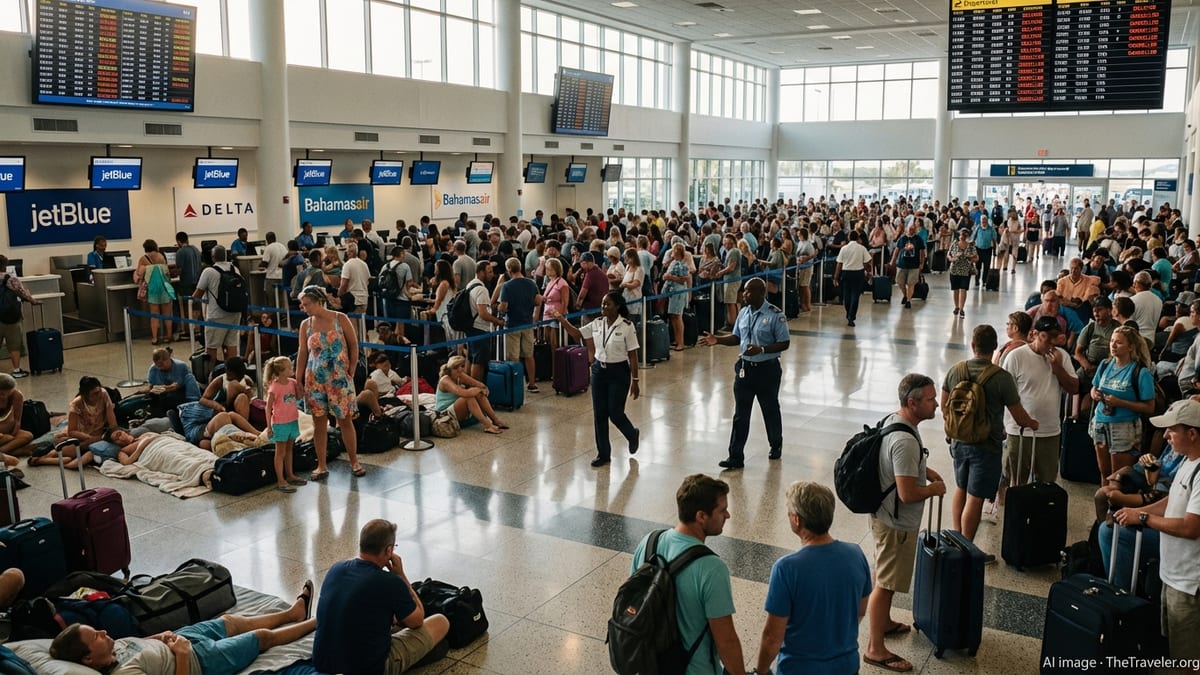
Travelers moving through Nassau’s Lynden Pindling International Airport faced a difficult weekend as at least 11 flight cancellations and multiple rolling delays involving JetBlue, Delta, Bahamasair and other carriers disrupted some of the Bahamas’ busiest routes and left frustrated passengers scrambling for options.
Major Bahamas Gateway Brought to a Standstill
Lynden Pindling International Airport, the primary gateway to Nassau and the wider Bahamian archipelago, experienced an unusual burst of disruption as airlines scrubbed departures and pushed back scheduled takeoffs throughout the day. By Saturday afternoon, airport data and operational reports pointed to at least 11 cancellations alongside a growing list of delayed flights touching key markets in Florida, the U.S. Northeast and several family islands.
The disruptions were concentrated among high‑frequency leisure and visiting‑friends‑and‑relatives routes, particularly services linking Nassau with Miami, Fort Lauderdale and major East Coast hubs. These corridors handle a large share of the country’s inbound tourism traffic and also feed onward connections to islands such as Freeport, Exuma and Eleuthera, amplifying the effect of each cancelled or delayed flight.
Operational tracking showed knock‑on impacts building through the afternoon rotation, with turn‑around aircraft arriving late from U.S. airports already struggling with congestion and weather‑related slowdowns. That left Nassau’s schedule increasingly compressed and forced carriers to reshuffle or consolidate flights, triggering further delays and a wave of gate‑area announcements that kept passengers on edge.
While total cancellations at Lynden Pindling remained modest compared with major U.S. hubs, the airport’s role as a central connecting point for the Bahamas meant each lost or late departure reverberated across the island chain. Travel agents in Nassau and resort concierges reported a sharp uptick in urgent rebooking requests and last‑minute room extensions as visitors realized they would not be leaving on schedule.
JetBlue, Delta and Bahamasair Among the Hardest Hit
JetBlue, Delta and Bahamasair were among the carriers most visibly affected, according to live flight‑status boards and airline communications. JetBlue, a key player on Nassau routes from Fort Lauderdale, Orlando, New York and Boston, saw a combination of outright cancellations and rolling delays after inbound aircraft encountered constraints and congestion at U.S. airports earlier in the day.
Delta, which funnels Bahamas‑bound travelers through Atlanta and New York, also reported delayed departures and extended ground times in Nassau as crews and aircraft arrived behind schedule. Even single disruptions on high‑demand flights linking Nassau with Atlanta can cascade, given how many passengers on those services are relying on tight connections to and from other U.S. cities.
Bahamasair, the national flag carrier, faced a different but equally disruptive challenge. The airline is a lifeline for inter‑island travel and operates many of the services connecting Nassau with out islands such as Marsh Harbour, North Eleuthera and San Salvador. When a Nassau departure is cancelled or delayed, there are often no immediate alternatives, particularly late in the day, making it difficult for residents and visitors to salvage their plans.
Other carriers serving Nassau, including major U.S. leisure airlines and regional operators, reported smaller pockets of disruption tied to the same wider issues affecting the network. Airport observers noted that some delays were measured in short, incremental pushes of 30 to 60 minutes, while others stretched into several hours as aircraft and crew repositioning lagged behind the published schedule.
Ripple Effects from U.S. and Caribbean Weather and Congestion
The turbulence at Lynden Pindling did not arise in isolation. Over the past several days, travelers across North America and the Caribbean have contended with a series of weather systems and congestion events that have triggered thousands of delays and scores of cancellations, particularly at busy Florida gateways such as Fort Lauderdale and Miami. Those airports act as major feeders for Nassau and other Bahamian destinations.
Operational data from U.S. tracking services on Saturday pointed to significant traffic snarls at Fort Lauderdale–Hollywood International Airport, where major airlines including JetBlue, Delta, Spirit and Southwest recorded more than two hundred delays and a cluster of cancellations. Because many Nassau flights rely on aircraft and crews cycling through these Florida hubs, disruption in the U.S. quickly migrated into the Bahamas schedule.
Weather‑related challenges in the wider Caribbean, including lingering instability tied to earlier storm systems and seasonal frontal boundaries, also played a role. In recent months, hurricanes and strong tropical disturbances have forced carriers such as Bahamasair, JetBlue and others to cancel or significantly adjust regional operations, leaving little slack in schedules when ordinary day‑to‑day disruptions occur.
Air traffic control programs designed to manage congestion at crowded U.S. airspace choke points have further compressed timetables. When flight volumes are throttled, departures to and from key hubs may be spaced out, creating gaps in the system that ripple down to smaller but heavily tourism‑dependent airports like Nassau. On days when staffing and weather combine to tighten capacity, carriers often prioritize certain trunk routes, increasing the likelihood that leisure‑oriented services will be delayed or consolidated.
Passengers Face Long Lines, Thin Information and Mounting Costs
For travelers caught up in the Nassau disruptions, the most visible impacts were on the ground. By early afternoon, lines had formed at airline service counters across Lynden Pindling’s international terminal as passengers sought rebooking options, hotel vouchers and clarity about when they might realistically expect to depart.
Families with young children, resort guests heading home after weeklong stays and residents trying to connect through Nassau to out islands described a familiar mix of uncertainty and fatigue. Many had already navigated delays at departure airports in the United States or elsewhere in the Caribbean only to be confronted with fresh schedule changes after landing in the Bahamas.
Travel agents and hotel front desks reported scrambling to accommodate unexpected extended stays. While some resort properties near Nassau had available rooms for stranded guests, others were close to full with weekend arrivals, forcing visitors to shift hotels or accept rooms far from the airport. For independent travelers who had already checked out or exhausted their vacation budgets, the added costs of nights in Nassau, meals and transport quickly mounted.
The thin information environment typical of cascading disruption events also contributed to traveler frustration. Airline apps and online flight‑status tools sometimes lagged behind actual gate conditions, and automated text alerts failed to reach all passengers. Those without international roaming or reliable airport Wi‑Fi were especially dependent on sporadic announcements over the public‑address system and overworked front‑line staff.
Key Routes and Island Communities Disproportionately Affected
While the 11 cancellations at Lynden Pindling represented a small fraction of the airport’s overall schedule, their impact was magnified by the specific routes involved. Flights between Nassau and major Florida cities such as Miami and Fort Lauderdale are not only high‑volume tourism corridors, they are also essential links for Bahamian residents seeking medical care, education or business travel in the United States.
Similarly, disruptions on Nassau’s regional routes can isolate smaller island communities. Bahamasair and other carriers provide critical air bridges to destinations that lack frequent or reliable ferry service, particularly during the winter tourist season when demand peaks. A single cancelled flight may mean that residents miss medical appointments, workers cannot report for duty at hotels and visitors are unable to reach pre‑booked lodges or bonefishing camps.
Onward connections from Nassau to other Caribbean islands were also affected, especially for travelers relying on same‑day links to Jamaica, the Dominican Republic and Turks and Caicos. With aircraft and crew out of position, some of those itineraries unraveled entirely, forcing passengers to choose between lengthy re‑routing through distant hubs or overnight stays in Nassau.
Tour operators catering to multi‑island cruise‑and‑stay packages faced a logistical tangle as they tried to keep itineraries intact. Staff on the ground worked to shift excursions, adjust airport transfers and negotiate flexible check‑in times with partner hotels, but many guests still saw carefully planned trips compressed into fewer days on their intended islands.
How Airlines and the Airport Responded On the Day
Airline and airport representatives spent much of the day focused on managing the operational fallout. At Lynden Pindling, ground handling teams were tasked with turning late‑arriving aircraft as quickly as possible, while also coping with increased passenger volumes in waiting areas and at service counters.
JetBlue and Delta encouraged customers to monitor flight‑status tools and mobile apps closely and directed affected travelers to rebooking portals, allowing some changes to be made without additional fees. For heavily disrupted routes, carriers began proactively re‑accommodating passengers onto later flights with available seats, or onto services via alternate hubs where feasible.
Bahamasair, with its mandate to serve smaller islands alongside core Nassau routes, leaned on its customer‑service channels and local airport offices to communicate schedule changes. The airline also reminded passengers traveling between islands to arrive at the airport early and to keep contact information updated so that last‑minute adjustments could be relayed quickly.
Airport management at Lynden Pindling coordinated with carriers and handling agents to ease congestion at peak times, deploying additional staff to security lanes and check‑in areas where possible. Food and beverage outlets inside the terminal reported brisk business as delayed passengers sought meals and refreshments, but some also struggled to meet demand during the longest delay windows.
What Stranded Travelers Can Do Right Now
For passengers still facing uncertainty around departures from Nassau, travel experts recommend a methodical approach. Using airline mobile apps or websites to confirm flight status remains the most reliable first step. Many carriers will permit same‑day changes within a limited window during disruption events, even for lower‑fare tickets that are normally more restrictive.
When digital tools fall short, seeking assistance through multiple channels can improve the odds of securing a workable alternative. That may include airport service desks, phone hotlines and, where available, online chat services. Travelers are also advised to keep boarding passes, receipts and records of communications, which can be important later when requesting refunds or compensation where applicable.
Those whose plans involve onward connections or time‑sensitive activities, such as cruises or wedding ceremonies in the out islands, may need to make contingency arrangements quickly. Travel advisors suggest contacting hotels, tour operators and cruise lines as soon as delays or cancellations appear likely, both to alert them to potential late arrivals and to explore any flexibility on check‑in times or excursion dates.
Experts also point to the value of travel insurance, particularly policies that cover trip interruption, additional accommodation expenses and missed connections. While not all travelers hold such coverage, those who do may be able to recoup some of the unexpected costs that come with a disrupted departure from Nassau.
Questions Over Resilience on a Heavily Travel‑Dependent Archipelago
The events at Lynden Pindling raise renewed questions about the resilience of air travel networks serving small island states that rely heavily on tourism. The Bahamas has worked in recent years to expand capacity and upgrade facilities at its main gateway, yet the combination of external shocks and tight airline schedules continues to leave the system vulnerable to sudden strain.
Industry analysts note that the increasing frequency of severe weather events across the Atlantic basin, coupled with crowded U.S. airspace and rising demand for leisure travel, has narrowed the margin for error on key routes to destinations like Nassau. Even relatively modest storms or staffing issues at large U.S. hubs can now have outsized effects on smaller airports downstream.
Some aviation observers argue that closer coordination between airlines, tourism authorities and airport operators could help smooth recovery when disruptions strike. That might include pre‑agreed protocols for sharing information with hotels and tour providers, as well as contingency plans for moving stranded guests to accommodation near the airport or consolidating lightly loaded flights more efficiently.
For now, travelers heading to or from the Bahamas are being urged to build extra time into their itineraries, particularly during peak weekends and seasons when traffic is heaviest. The latest bout of travel turmoil at Lynden Pindling International Airport serves as a reminder that even a relatively small number of cancellations and delays can ripple widely across an island nation so closely tied to its skies.