

More news on this day
Travelers passing through New York’s LaGuardia Airport on March 20 faced a difficult day of flying as publicly available tracking data showed at least five flight cancellations and more than 80 delays affecting services operated by Air Canada, JetBlue, Spirit Airlines, and other carriers across key routes to Boston, Chicago, Toronto, and major U.S. hubs.
Get the latest news straight to your inbox!
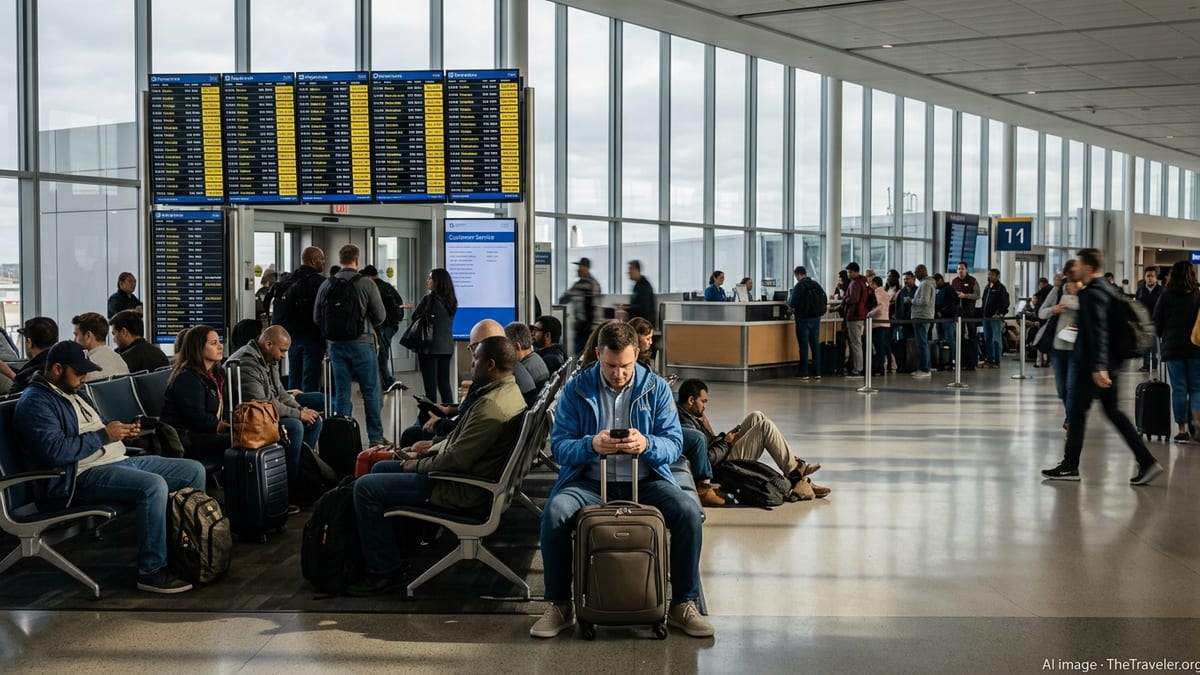
Stormy Week Leaves LaGuardia Operations Strained
The latest disruption at LaGuardia comes on the heels of a volatile week of weather and air traffic constraints across the eastern United States. A powerful storm system that swept through parts of the Midwest and East Coast earlier in the week triggered flow-control programs and delay initiatives at multiple major airports, including those serving New York City. As operations attempted to rebound, residual congestion and equipment repositioning left airline schedules fragile.
Airport performance reports and real time tracking platforms for March 20 indicated that LaGuardia struggled to absorb these knock-on effects. While the number of outright cancellations remained relatively limited, with at least five departures or arrivals scrubbed from the schedule, extended ground delays and airborne holding patterns pushed the total delay count into the dozens and then beyond 80 as the day progressed.
Historic data for LaGuardia show that the airport is especially vulnerable to ripple effects from regional storms and national airspace constraints because of its short runways, high traffic density, and limited room for schedule recovery. When strong weather systems affect connecting hubs such as Chicago or disrupt air traffic flows along the busy Northeast Corridor, flights into and out of LaGuardia often face tight sequencing and reduced arrival rates.
On March 20, those sensitivities translated into a prolonged period of irregular operations that left many travelers facing missed connections, rebookings, and extended waits both in terminals and on the tarmac.
Air Canada, JetBlue, Spirit Among Carriers Most Visible in Delays
Among the airlines most visibly affected were Air Canada, JetBlue, and Spirit, each of which maintains a significant presence at LaGuardia or on routes that feed into the New York market. Flight status boards and tracking services showed delays accumulating across a mix of domestic and cross border flights, particularly those linking LaGuardia with Boston Logan, Chicago’s main airports, and Toronto.
JetBlue, which operates a dense network of short haul flights in the Northeast, appeared prominently in the day’s disruption picture, with several services experiencing departure pushes and extended arrival delays. These high frequency routes are especially susceptible when air traffic control programs reduce the flow of arrivals into New York, as even modest restrictions can quickly cascade across an airline’s tightly timed schedule.
Spirit Airlines, known for its point to point low cost model, also contended with rolling delays on LaGuardia services that connect to major leisure and outbound markets. Publicly available information suggested that a combination of aircraft and crew positioning challenges contributed to the difficulty of bringing operations back on time once the initial wave of delays took hold.
Air Canada, meanwhile, faced disruptions on cross border flights linking Toronto and other Canadian gateways with LaGuardia. Because international services often operate within stricter customs and immigration windows, even moderate departure or arrival slippages can complicate gate assignments and turnaround times, further tightening operational margins.
Ripple Effects Across Routes to Boston, Chicago, Toronto, and Major U.S. Cities
The impact of LaGuardia’s operational strain was felt far beyond New York. Tracking data and published coverage indicated that flights connecting LaGuardia with Boston, Chicago, Toronto, and other major U.S. cities experienced a mix of late departures, airborne holding, and schedule revisions throughout the day. In many cases, aircraft departing from outstations were held on the ground to avoid lengthy queues upon arrival into the congested New York airspace.
Routes between LaGuardia and Boston were among those showing elevated delay averages, reflecting heavy traffic in the Northeast corridor and tight spacing requirements in congested terminal airspace. Similar patterns appeared on flights to and from Chicago, where recent severe weather and ground stops earlier in the week had already placed stress on network reliability.
Services to Toronto and other Canadian cities also encountered interference, particularly when aircraft and crews were cycling between multiple U.S. and Canadian airports already under various weather or flow-control advisories. Each new delay in one city increased the risk of subsequent disruptions downline, contributing to the 82 delay count associated with LaGuardia services on March 20.
As the day went on, some carriers adjusted by consolidating lightly booked flights, altering aircraft assignments, and offering voluntary rebooking options. Even so, the cumulative effect remained visible in extended wait times, crowded gate areas, and shifting departure boards across LaGuardia’s terminals.
Passengers Confront Long Waits, Tight Connections, and Uncertain Timelines
For travelers, the operational challenges translated into a day marked by uncertainty. With relatively few outright cancellations compared with the high volume of delays, many passengers had flights that technically remained scheduled but departed significantly later than planned. This pattern is common on busy days at constrained airports, where airlines aim to operate as much of the schedule as possible even at adjusted times.
Those connecting onward through Chicago, Toronto, or other large hubs were particularly exposed. Missed connections can quickly multiply when aircraft arrive late into hub airports that already have limited slack in their schedules. Rebooking options may involve rerouting through alternate cities or accepting next day departures, especially for peak time flights that are already heavily booked.
At LaGuardia itself, extended dwell times led to crowding at security checkpoints, gate seating areas, and concession spaces, as passengers remained in the terminal longer than anticipated. Real time updates through airline apps, airport displays, and third party trackers played a central role in helping travelers navigate shifting departure estimates, even as those estimates sometimes changed repeatedly in short succession.
Travel advisories issued earlier in the week for the broader Northeast and Mid Atlantic regions had encouraged passengers to allow extra time and monitor flight status closely. The March 20 disruption at LaGuardia underscored the continuing value of those precautions as storm related ripple effects persisted across the network.
Looking Ahead: Spring Travel Meets a Fragile Air Network
The LaGuardia disruptions are unfolding at the start of the busy spring travel period, when leisure demand typically rises and airlines operate fuller schedules with fewer spare aircraft and crews. Industry data and recent consumer reports highlight how even localized weather or equipment issues can produce large scale knock on delays when the national airspace system is already operating near capacity.
In recent months, federal performance reports and airport construction outlooks have noted continuing infrastructure and staffing constraints at several key facilities, including New York area airports. These structural factors limit the ability of the system to absorb unexpected shocks, whether from fast moving storm complexes, short notice airspace restrictions, or technical issues at radar and navigation centers.
For travelers planning to pass through LaGuardia and other major hubs in the coming days, publicly available guidance continues to emphasize several practical steps. These include checking flight status repeatedly in the 24 hours before departure, building in longer connection times where possible, and remaining flexible about routing options if disruption levels spike again.
As airlines and airports work through the fallout from this week’s storms and operational challenges, the experience at LaGuardia on March 20 illustrates how quickly a handful of cancellations and a cluster of delays can cascade into a difficult day for thousands of passengers across New York, Boston, Chicago, Toronto, and other major cities.