

More news on this day
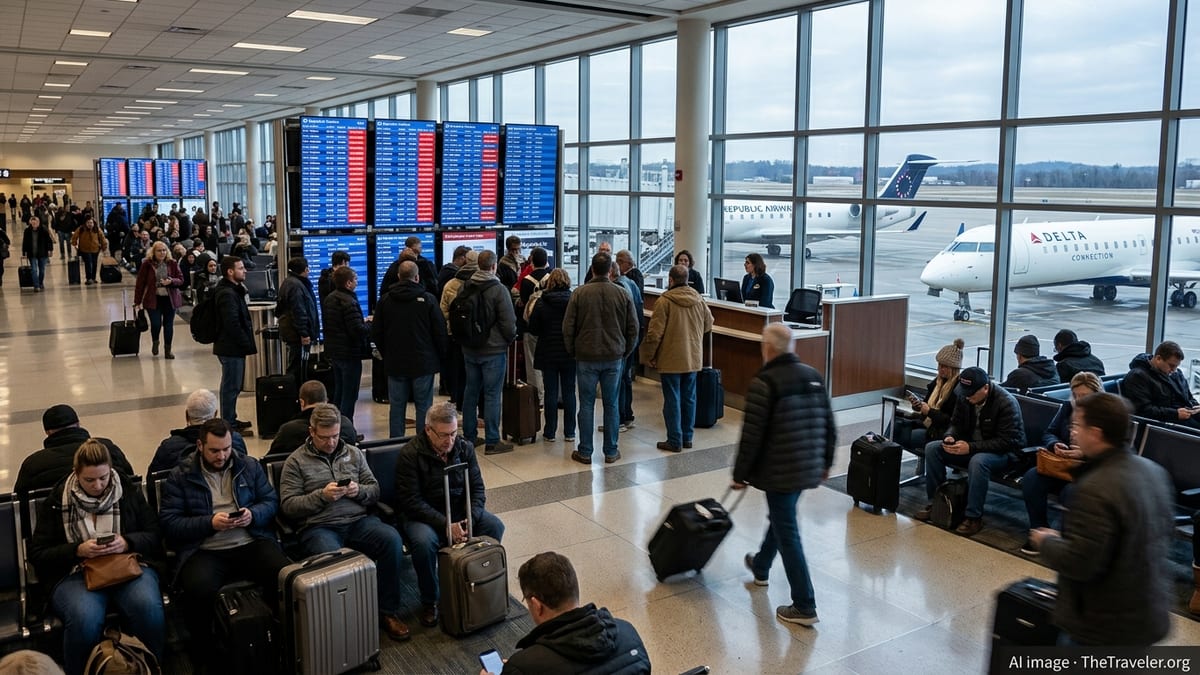
Travelers at Pittsburgh International Airport faced mounting frustration as regional carriers Republic Airways and Endeavor Air suspended around 10 flights and reported numerous delays, disrupting links to major destinations including New York, Austin, Nashville, Charlotte and the Washington area.
Get the latest news straight to your inbox!
Regional Cancellations Ripple Across Major Routes
Publicly available flight-tracking data and airline status boards on March 26 indicate that regional carriers operating as Republic Airways and Endeavor Air scrubbed approximately 10 departures and arrivals at Pittsburgh International Airport, with additional services experiencing significant delays. The disruptions were concentrated on short and medium haul routes typically marketed under major airline brands but flown by regional partners using smaller jets.
Impacted routes included flights connecting Pittsburgh with New York area airports, Austin, Nashville, Charlotte and Washington area hubs. These links are central to the airport’s domestic network, providing both point to point service and onward connections for business and leisure travelers. When multiple regional flights are removed from the schedule on the same day, the impact can cascade through later departures and connections.
Operational data for Pittsburgh International show that the airport relies heavily on regional affiliates such as Republic Airways and Endeavor Air, which fly under the banners of larger carriers and connect Pittsburgh to key hubs. Industry reports on the airport’s airline mix describe a system in which several mainline brands depend on regional jets to maintain frequency to cities like New York, Washington, Charlotte, Nashville and Austin. The latest disruption therefore hit a particularly sensitive segment of the network.
While the exact share of the daily schedule affected at Pittsburgh remains limited compared with a broad weather shutdown, the concentration of cancellations in a short time window created visible congestion in gate areas and at customer service counters. Passengers attempting to rebook onto later flights often faced limited seating because regional aircraft on these routes typically operate with fewer seats than mainline jets.
Passengers Face Missed Connections and Overnight Stays
Reports from travelers and live status boards indicated a familiar pattern that has become more common during concentrated regional airline disruptions. When early departures to hub cities are canceled or heavily delayed, passengers with tight onward connections can quickly find themselves facing missed flights and lengthy waits for alternatives.
At Pittsburgh International, the suspension of multiple regional departures in a single day forced many travelers bound for New York, Washington and other hubs to seek rebooking on later services. With regional schedules often built around a limited number of daily flights per route, available seats on subsequent departures can disappear quickly, particularly on popular business corridors such as Pittsburgh to New York and Pittsburgh to Washington.
Travelers heading to leisure destinations via connecting hubs also felt the effects. Flights routed through Charlotte and Austin serve as key links to southern and western markets. When those feeder flights are removed or delayed, missed connections can cascade into overnight stays at intermediate airports or the need to abandon trips entirely. Some passengers turned to ground transport or alternative airports once it became clear that same day options were scarce.
Industry analysts have noted in recent months that regional carriers in particular have been vulnerable to staffing pressures and schedule adjustments, leaving less slack in the system. When irregular operations occur, it can be more difficult to find replacement aircraft, crews or seats for affected passengers on regional routes than on busier mainline corridors.
Broader Strain on Regional Airlines and Hub Connectivity
The disruption at Pittsburgh International reflects broader strains in the regional aviation sector, where carriers such as Republic Airways and Endeavor Air operate a large share of domestic connectivity for major U.S. airlines. Industry data show that these operators link mid-sized cities like Pittsburgh to key hubs in New York, Washington, Charlotte and other markets, often with multiple daily frequencies.
Recent aviation statistics and industry coverage have highlighted elevated cancellation and delay rates among some regional carriers across the United States, particularly during peak travel periods or in the wake of weather events. While many of these issues are tied to short term operational challenges, they also point to longer term concerns about pilot availability, aircraft utilization and the financial pressures facing regional operators.
For airports such as Pittsburgh, the reliability of regional partners is critical to maintaining competitive connectivity. Domestic route maps published by Endeavor Air and Republic Airways show Pittsburgh linked into a web of Delta, American and United branded flights that extend to New York, Washington, Charlotte, Nashville and other cities. Any concentrated disruption within this web can weaken the appeal of connecting over Pittsburgh compared with larger hubs.
Aviation observers note that airlines have been recalibrating regional networks over the past several years, trimming marginal routes while strengthening high demand corridors. Temporary suspensions or schedule reductions on regional routes can therefore have lasting effects if they prompt passengers to shift their travel habits toward alternative airports or competing carriers that offer more stable schedules.
Guidance for Affected Travelers at Pittsburgh International
For travelers caught in the latest round of disruptions at Pittsburgh International, the immediate focus has been on securing new itineraries and clarifying revised arrival times. Publicly accessible airline channels and mobile applications have been central tools for passengers seeking up to date information as regional operators adjust their schedules.
Travel advisors typically recommend that when multiple flights on a single route are suspended, passengers consider flexible routing options, including connections through alternative hubs or, where practical, departures from nearby airports with stronger mainline service. In the case of Pittsburgh, that can include examining itineraries through different hub cities if the originally planned connection, such as New York or Charlotte, has limited remaining capacity.
Passengers with essential same day travel often turn to mixed-mode solutions, such as combining air travel with rail or rental cars, particularly on routes within driving distance like Washington or some parts of the New York region. While such options can be more time consuming and expensive, they can provide greater certainty when airline schedules remain fluid.
The situation at Pittsburgh International underscores the value of monitoring flight status closely on the day of departure, especially for early morning and late evening flights that have fewer backup options. Travelers who build additional buffer time into itineraries, especially when connecting through multiple hubs, may be better positioned to absorb sudden cancellations or delays by regional partners.
Implications for Pittsburgh’s Role in the U.S. Air Network
Despite the day’s disruptions, Pittsburgh International remains a key node in the U.S. air transportation network, supported by a roster of mainline and regional carriers that link the region to major business and leisure markets. Airport planning documents and financial disclosures describe a strategy of diversifying airline partnerships to reduce reliance on any single carrier while expanding point to point options.
However, the heavy role of regional airlines in connecting Pittsburgh to hubs such as New York, Washington, Charlotte, Nashville and Austin means that operational instability at those partners can quickly translate into visible disruption for travelers. Episodes involving multiple cancellations in a short span of time may prompt renewed scrutiny of schedule resilience, aircraft allocation and backup planning on core routes.
Analysts following the airport sector suggest that maintaining robust regional connectivity will remain a priority for Pittsburgh as competition intensifies among mid-sized metropolitan areas for nonstop service to major hubs. The latest round of cancellations by Republic Airways and Endeavor Air highlights both the importance and the vulnerability of these regional links, particularly on routes where travelers have limited alternatives.
As airline networks continue to evolve, travelers using Pittsburgh International may see further adjustments in regional schedules, aircraft types and frequencies. For now, the suspension of multiple flights and the resulting delays serve as a reminder of how quickly localized operational issues can ripple outward, affecting passengers across a wide swath of destinations from New York and Washington to Nashville, Charlotte and Austin.