

More news on this day
Passengers at Washington’s Reagan National Airport faced another day of travel disruption on Sunday as at least 41 flights were canceled and 194 delayed, rippling across major domestic routes and complicating connections at hubs from Atlanta and Chicago to Dallas and Boston.
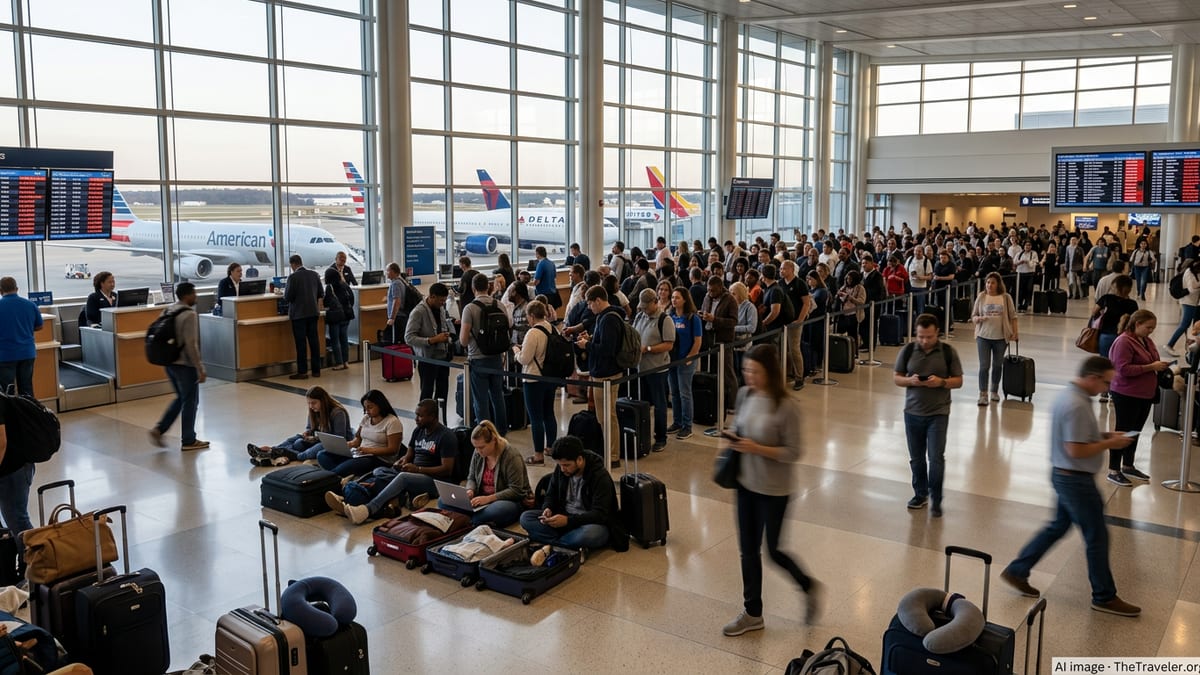
Major Carriers Feel the Strain
The disruptions at Ronald Reagan Washington National Airport involved a wide cross section of U.S. carriers, from legacy giants American Airlines, Delta Air Lines and United Airlines to low cost operators such as Southwest. Regional affiliates including PSA Airlines, which flies under the American Eagle brand, were also heavily represented on the list of affected services.
American, the dominant carrier at Reagan National, saw a series of cancellations and rolling delays on key business routes to major cities including Boston, Chicago and Dallas, squeezing already tight Sunday evening schedules. United and Delta reported scattered cancellations and extended delays on departures to their respective hubs, further amplifying system wide congestion as aircraft and crews fell out of position.
Southwest and other point to point operators were not spared, with delays building through the afternoon on flights to cities such as Nashville, Chicago and Denver. Many of these services relied on aircraft arriving late from other disrupted airports, underscoring how quickly problems at a few key hubs can radiate throughout the national network.
By early evening, departure boards across the concourses at Reagan National showed waves of red and amber status updates, signaling a difficult end to the weekend for leisure travelers returning home and business passengers trying to position for Monday morning meetings.
Weather and System Congestion Combine
The turmoil in Washington came as part of a broader pattern of operational stress across the U.S. aviation system this weekend. Stormy conditions and low clouds over parts of the Midwest and Southeast earlier in the weekend prompted ground stops and flow control programs at several large hubs, including Chicago O’Hare, Denver and Atlanta, with knock on effects that were still evident on Sunday.
While conditions around the nation’s capital improved through the day, the lingering imbalance of aircraft and crews created a bottleneck at Reagan National. Delayed inbound flights led to late outbound departures, which in turn forced airlines to consolidate lightly booked services and cancel others outright when crews hit duty time limits.
Air traffic controllers in the busy Washington terminal area were also managing heavy flows into nearby Baltimore/Washington International and Washington Dulles, where weather related and volume related delays have been reported in recent days. The combined traffic loads meant even modest holding patterns and minor runway configuration changes could translate into longer wait times on the ground at Reagan National.
Aviation analysts note that Reagan National, constrained by its compact footprint and strict perimeter rules, has limited room to absorb irregular operations. When schedules are already tight, a day of national turbulence elsewhere can easily translate into dozens of disrupted flights in and out of the airport on the Potomac.
Passengers Face Missed Connections and Long Lines
For travelers, the statistics on cancellations and delays translated into long lines at ticket counters, crowded gate areas and packed customer service phone queues. Families returning from spring break trips reported missing evening connections in Atlanta and Charlotte after their departures from Washington left more than an hour behind schedule.
Business travelers on shuttle style routes between Washington, New York and Boston described departure boards that shifted repeatedly as estimated times were pushed back in small increments throughout the afternoon. Some opted to switch to Acela trains or regional rail services in an effort to salvage their Monday morning plans.
Inside the terminal, gate agents worked to rebook stranded passengers onto remaining seats later in the evening or on early Monday departures, but options were increasingly limited as load factors climbed and irregular operations continued at downline hubs. Travelers facing overnight delays scrambled for last minute hotel rooms across Northern Virginia as airlines issued meal and lodging vouchers in line with their individual policies.
Security and check in areas, while not overwhelmed, experienced periodic surges as delayed passengers remained in the terminal for hours beyond their original departure times. Airport staff deployed additional wayfinding personnel and ramped up announcements urging travelers to monitor airline apps and status boards for real time updates.
Airlines Respond with Waivers and Schedule Adjustments
Several major carriers serving Reagan National responded to the day’s turbulence by issuing limited travel waivers, allowing affected passengers to rebook to flights on nearby dates without change fees or fare differences in designated fare classes. American, Delta and United all adjusted evening bank schedules to prioritize core routes with the highest concentrations of connecting travelers.
Regional operators such as PSA Airlines worked in tandem with their mainline partners to reposition aircraft and crews where possible, in some cases operating ferry flights to ensure that early Monday morning departures would start the day with equipment in place. However, airline operations managers cautioned that some residual delays were likely to persist into Monday as the network recovered.
Industry observers noted that some carriers also proactively trimmed late night departures from Reagan National and other East Coast airports to avoid crews timing out mid rotation. While this strategy protected operational integrity for the following day, it increased the number of Sunday passengers forced to accept overnight stays or reroutes through alternate hubs.
Customer service teams, both in person and via call centers, remained under intense pressure as passengers sought compensation, alternate routings and clarity about their rights. Airlines reiterated standard guidance urging travelers to use mobile apps and text alerts as the fastest means of securing available seats during widespread disruption.
Wider Impacts Across the U.S. Network
The situation at Reagan National reflected a national picture in which thousands of flights have been delayed or canceled over the weekend, particularly at weather sensitive and high volume hubs. Disruptions at airports in Atlanta, Chicago, Dallas, Denver and New York fed directly into problems in Washington, where many itineraries either originate or terminate in those cities.
Travelers booked on multi leg journeys found that even when their departure from Reagan National operated close to schedule, downstream connections were jeopardized by earlier storms or congestion. A delayed inbound aircraft from the Midwest could cascade into late departures from Washington, which then arrived behind schedule in southern or western markets, perpetuating the cycle.
Analysts say the weekend’s chaos highlights the fragility of tightly banked schedules and the dependence of regional carriers such as PSA on the operational health of their mainline partners. Because these airlines operate feeder routes into major hubs, any disruption at those hubs quickly reverberates through smaller spokes, including high demand business markets served from Reagan National.
With the busy spring travel period gathering pace, both airlines and regulators are likely to scrutinize the weekend’s events for lessons on staffing, schedule resilience and communication. For the thousands of passengers who spent Sunday evening in limbo at Reagan National and airports across the country, the focus remained far more immediate: simply finding a seat on a plane that would eventually get them where they needed to go.