

More news on this day
Travelers moving through San Francisco International Airport on March 11 faced mounting disruption as at least 96 flights were delayed and 11 cancelled, snarling connections on United Airlines, Delta Air Lines, American Airlines and other major carriers and leaving frustrated passengers rebooking plans across the United States and beyond.
Get the latest news straight to your inbox!
Knock-on Effects Hit Major U.S. Carriers
The latest wave of disruption at San Francisco International Airport, one of the country’s busiest hubs, rippled across multiple domestic and international routes on Tuesday. Operational constraints in the national airspace system, combined with unsettled coastal weather and tight schedules, meant that even brief slowdowns translated quickly into longer waits at gates and crowded customer-service lines.
United Airlines, which operates a significant hub at San Francisco, appeared to bear a large share of the impact as delays accumulated through the morning and afternoon. Delta Air Lines and American Airlines also reported pushed-back departure times on key transcontinental and regional services, while several smaller and regional carriers saw their schedules compressed as aircraft and crews fell out of position.
With 96 flights delayed and 11 outright cancellations, the disruption level was significant enough to affect thousands of passengers in and out of San Francisco. For many, the delays were relatively modest, amounting to an extra 30 to 90 minutes on the ground. For others, particularly those facing cancellations on already full routes, the fallout included missed connections, overnight hotel stays and last-minute itinerary changes.
Airport officials urged travelers to monitor airline notifications closely and to arrive early, warning that knock-on effects could continue into the evening as carriers worked to reposition aircraft and crews. Passengers were also encouraged to use airline mobile apps and self-service kiosks rather than relying solely on in-person counters, where queues built rapidly once cancellations were announced.
Weather, Airspace Constraints and Tight Schedules Contribute
While San Francisco avoided the kind of severe storm that occasionally shuts down coastal airports in winter, a combination of low clouds, periods of reduced visibility and ongoing capacity constraints in the broader airspace system meant the airport could not operate at full efficiency throughout the day. The airport’s intersecting runway configuration is particularly sensitive to marginal weather, requiring air-traffic controllers to reduce arrival rates when visibility and ceiling deteriorate.
When arrival capacity is cut, even temporarily, airlines often respond by slowing departures from up-line airports to avoid excessive holding patterns in the skies above the Bay Area. That in turn drags departure boards across the network into the red, especially at hubs such as San Francisco that rely heavily on tight connection banks and aircraft that turn quickly between flights.
Carriers have also been operating with relatively lean spare capacity following a busy winter and early spring travel period. Aircraft utilization remains high, and many fleets have limited slack to absorb unplanned delays. Once a few flights are pushed back in the morning, the cumulative effect can cascade throughout the day, leaving little room to recover before the evening rush.
Industry analysts noted that San Francisco has seen repeated bouts of disruption over the past two years whenever weather, construction or national airspace issues intersect with peak travel days. Tuesday’s pattern, they said, fit a familiar template where no single catastrophic event occurs but multiple smaller constraints combine to create substantial delays.
Passengers Face Long Lines, Missed Connections and Rising Costs
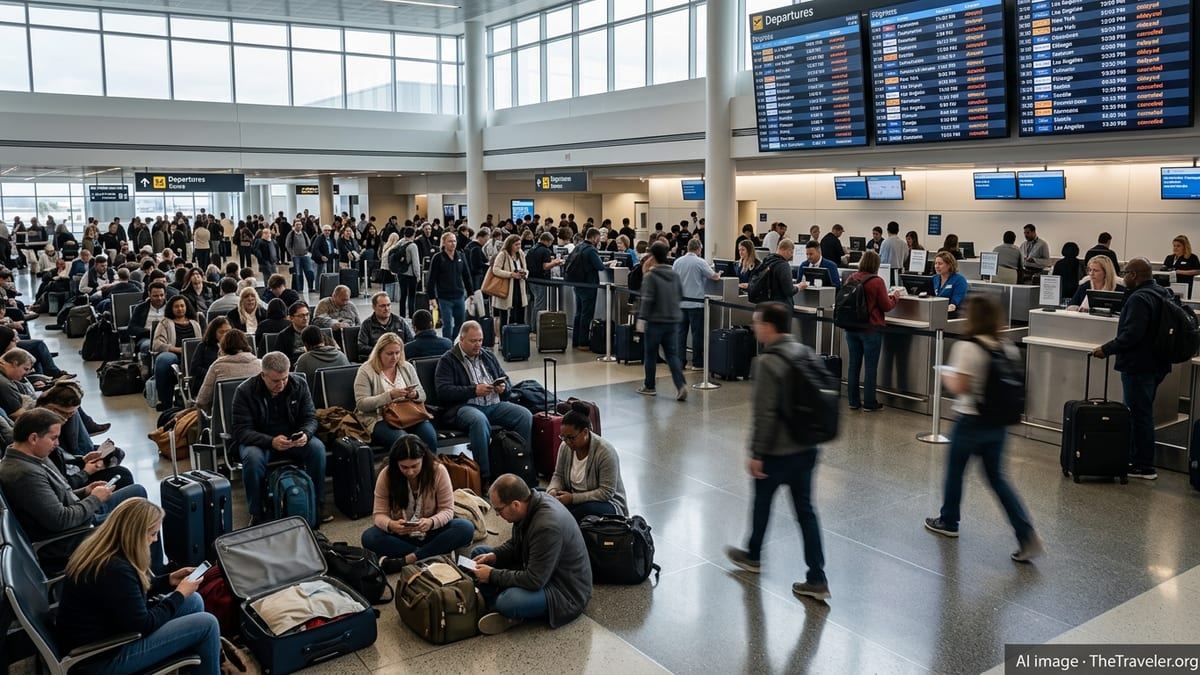
Inside the terminals, the disruption translated into long lines at customer-service counters and boarding gates, as well as fully occupied seating areas where travelers waited out revised departure times. For some, the experience was limited to an extra hour waiting at the gate or on board an aircraft. For others, particularly those with international connections or onward journeys through other congested hubs, the delays had more serious consequences.
Passengers connecting from United, Delta and American flights in San Francisco reported scrambling to rebook missed onward services, in some cases being rerouted through alternate hubs such as Los Angeles, Denver or Dallas. With aircraft already heavily booked in the spring travel period, options for same-day alternatives were often limited, driving some travelers to accept overnight stays or extended layovers.
Travel advisors say such disruption can also lead to higher out-of-pocket costs for passengers. While airlines typically provide assistance in cases of widespread operational disruption, not every delay or cancellation triggers automatic hotel or meal vouchers, particularly when carriers attribute problems to broader system or weather issues. Many travelers turn to travel insurance policies or premium credit card protections to recoup unexpected expenses.
Families, business travelers and visitors heading to and from the Bay Area alike were affected. At the same time, rideshare pick-up points and ground transportation services saw fluctuating surges as passengers abandoned delayed flights or adjusted arrival times, adding another layer of unpredictability to an already strained airport ecosystem.
Advice for Travelers Passing Through SFO
Travel experts recommend that anyone scheduled to fly through San Francisco in the coming days take practical steps to reduce the risk of major disruption. Chief among these is to keep contact details up to date with airlines and booking platforms, enabling real-time alerts if schedules change. Airline mobile apps remain one of the fastest ways to receive gate changes, delay notifications and digital boarding passes.
Whenever possible, travelers with critical same-day commitments are advised to choose earlier departures, which tend to offer more rebooking options if things go wrong later. Building longer connection times into itineraries, especially when changing terminals or carriers at San Francisco, can create a useful buffer against knock-on delays that cascade across the network.
Passengers should also pay close attention to fare rules when booking, as more flexible or refundable tickets can prove valuable on days when disruption strikes. While such fares are typically more expensive upfront, the ability to change flights without heavy penalties can offset costs when widespread delays or cancellations occur.
Finally, airport and airline representatives emphasize the importance of allowing extra time for security screening and check-in during periods of irregular operations. Even when flights are delayed, queues for security and bag drop can lengthen as large numbers of passengers arrive early or adjust their plans, meaning a comfortable margin of time at the airport remains essential.
Broader Questions Over Resilience in U.S. Air Travel
The disruption at San Francisco International Airport comes against a backdrop of intensifying debate over the resilience of the U.S. air-travel system. A series of weather events, airspace restrictions and localized staffing shortages in recent years has underscored how vulnerable busy hubs can be to even modest disturbances.
Airlines have invested heavily in new aircraft and technology, and airports have worked to expand gates and improve airside operations. Yet rising passenger volumes and a tightly stretched network mean that, on busy days, relatively small reductions in capacity can trigger measurable delays and cancellations.
San Francisco’s role as a major gateway for both domestic and transpacific travel means that any operational turbulence there quickly reverberates far beyond the Bay Area. Delayed departures from the airport can lead to late arrivals at secondary cities, impacting travelers who may never set foot in California but whose itineraries depend on aircraft and crews cycling through the hub on time.
As airlines, regulators and airport authorities examine the latest bout of disruption, many observers argue that further investment in infrastructure, staffing and system redundancy will be needed to shield travelers from the most severe impacts of inevitable day-to-day operational challenges. For now, however, passengers at San Francisco International Airport are once again confronting the all-too-familiar reality of modern air travel: when the system falters, even briefly, the human impact is immediate.