

More news on this day
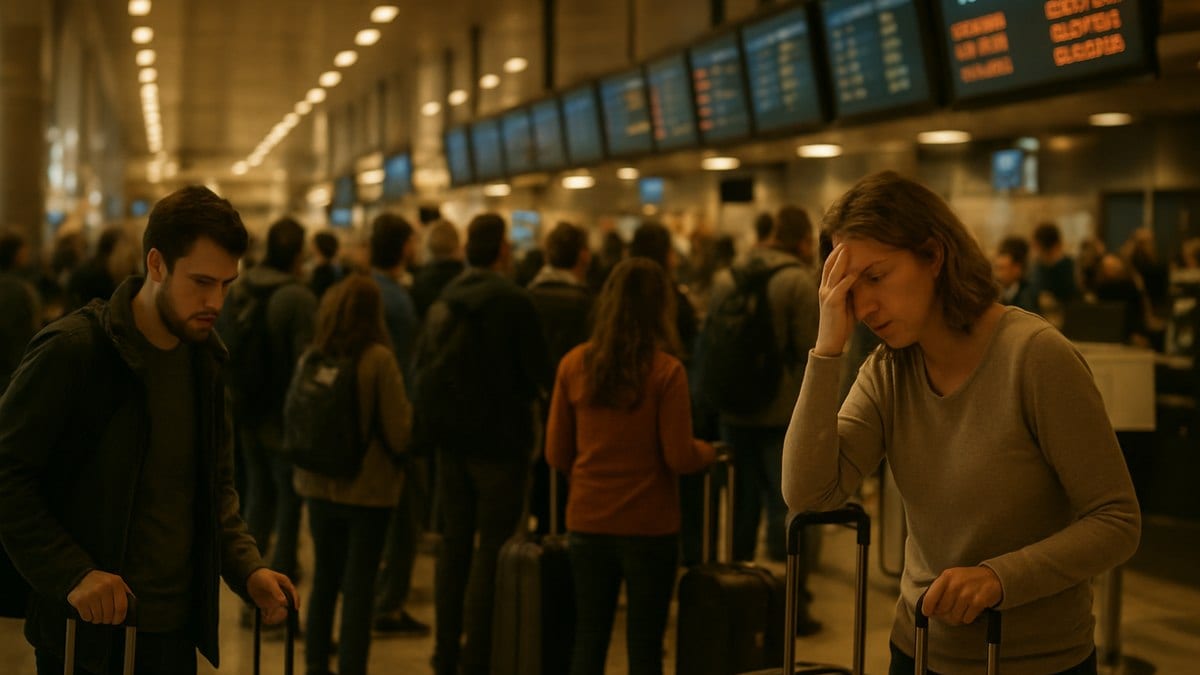
More than 500 air passengers have been left sleeping in terminals or searching for last minute rooms across France’s busiest airports after a wave of delays and cancellations linked to new EU border checks and wider disruption across Europe.
Get the latest news straight to your inbox!
Paris and Riviera Hubs Bear the Brunt
Disruption reports compiled over the weekend indicate that Paris Charles de Gaulle, Paris Orly and Nice Côte d’Azur have seen the heaviest concentration of stranded travellers, with several hundred passengers still waiting for rebooked connections as of Sunday. While daily traffic continues to move, pockets of travellers whose flights were cancelled late in the day or who missed onward connections have been forced to remain airside overnight or seek accommodation in nearby hotels.
Publicly available flight tracking and airport status dashboards show clusters of delayed and cancelled departures from French hubs dating back to Friday, particularly on short haul routes to other European capitals and Mediterranean destinations. These schedule changes have cascaded through the network, leaving aircraft and crews out of position and constraining options for same day rebooking.
Reports from passenger rights platforms describe families and solo travellers caught between terminals, some with paper boarding passes repeatedly reissued as airlines adjust departure times. While most long haul services have so far departed, missed connections onto regional flights within France and to neighboring countries have amplified the number of travellers left in limbo.
Operational statements published by several European carriers highlight the pressure on customer service desks at Charles de Gaulle and Orly, where lines have formed for rebooking assistance, meal vouchers and hotel referrals. In many cases, automated rebooking via airline apps has filled remaining seats, leaving late arriving customers with limited choices until additional capacity is added.
New EU Border System Adds Pressure at French Gateways
The timing of the disruption coincides with the full activation of the European Union’s Entry/Exit System on 10 April, a new biometric border control scheme for non EU short stay visitors. Information shared by airport and airline industry groups indicates that the rollout has lengthened processing times at border checkpoints, particularly for passengers unfamiliar with the registration kiosks or traveling in large family groups.
Statements from European aviation associations describe significant queues, missed flights and schedule knock on effects as the system becomes mandatory at airports across the Schengen area. French hubs, which handle some of the continent’s highest volumes of long haul traffic from North America, the Middle East and Asia, are among those experiencing bottlenecks as arriving passengers funnel through the new checks.
Travel forums and social media posts from the past 48 hours describe long lines at passport control at Charles de Gaulle and Orly, with some passengers reporting waits of more than two hours before reaching the border desks. When incoming flights arrive late and passengers then face extended processing times, tight connections onto European and domestic services quickly become unworkable.
Operational data referenced in industry coverage shows that once a wave of missed connections accumulates, airlines must either hold onward flights and disrupt the rest of the day’s schedule or allow departures to leave under capacity and rebook affected passengers later. Both options contribute to the growing number of stranded travellers now spread across France’s major hubs.
Knock On Effects from Wider European Disruptions
The situation in France is being compounded by broader turbulence in the European aviation system. In recent days, a mix of industrial action at major German carriers, staffing constraints at several ground handling providers and lingering weather related delays has disrupted flight flows across the continent. Schedule data reviewed by travel analysts shows that hubs such as Frankfurt, Munich, London Heathrow and Amsterdam Schiphol have all recorded elevated levels of delays and cancellations during the same period.
Many of the flights serving France’s airports originate from or connect through these northern European hubs, meaning that problems elsewhere are quickly felt in Paris, Lyon, Marseille and Nice. When an inbound aircraft from a disrupted hub fails to arrive on time, the corresponding outbound service from a French airport is often delayed or cancelled, with passengers already checked in and bags loaded.
Travel industry commentary notes that Europe’s air traffic control system has also been running with reduced buffers, as post pandemic traffic growth has outpaced infrastructure and staffing improvements. This leaves less room to absorb sudden spikes in delay minutes, whether caused by thunderstorms, high winds or local work stoppages. France, which sits at the crossroads of many north south and east west routes, has become especially sensitive to disturbances originating beyond its borders.
Passenger advocacy groups point out that these overlapping issues create a multi day hangover within airline networks. Even after a strike ends or a weather front clears, aircraft and crew rosters can take several rotations to realign, and stranded customers from previous days are still competing for limited seats on later departures.
Travellers Confront Long Waits and Limited Options
For the more than 500 travellers currently stranded in France’s major hubs, the practical challenges are immediate. Photographs and descriptions circulating on travel forums show makeshift sleeping areas in departure halls, with passengers stretched out on benches or the floor near charging points. Others report shuttling between terminals as airlines attempt to rebook them on partner carriers or alternative routings through less congested airports.
Accommodation has emerged as a particular pressure point. Hotel booking platforms show limited last minute availability near Charles de Gaulle and Orly on peak disruption nights, with remaining rooms often priced well above typical weekend rates. Some passengers with shorter delays or early morning rebookings have chosen to remain in the terminal rather than risk missing updated departure times.
Published guidance from consumer organizations and airline advisories encourages affected travellers to make full use of digital tools, including mobile apps and self service kiosks, to confirm new itineraries and secure meal or hotel vouchers where eligible. With phone lines and in person service desks under strain, those who act quickly when disruption alerts are issued generally have more rerouting options.
At the same time, reports underline that not all passengers are aware of their entitlements under European air passenger protection rules, particularly when delays are linked to complex chains of causes such as external strikes, weather and new border procedures. Advocacy groups continue to remind travellers departing from or transiting through French airports to document disruptions carefully, retain receipts and follow up with airlines after their journeys are completed.
What the Disruptions Signal for France’s Summer Travel Outlook
The latest wave of stranded travellers is being closely watched by airlines, airports and tourism operators in France as a potential preview of what could unfold during the peak summer months. Industry studies published ahead of the Entry/Exit System rollout warned that without additional staffing and flexible procedures, processing times at external Schengen borders could increase by up to 70 percent during busy periods.
French airport operators have already raised concerns in public about the risk of long queues and missed flights as the new biometric controls are scaled up. Some have called for adjustments to the implementation timeline or additional support to prevent chronic congestion, particularly at terminals heavily used by leisure travellers and first time visitors to Europe.
For now, airlines are attempting to fine tune their schedules and ground operations to account for longer connection times and the possibility of rolling disruptions elsewhere in Europe. Travel experts advise that passengers planning trips to or through France in the coming weeks consider building in longer layovers, choosing earlier departures in the day when possible and closely monitoring operational updates from their carriers.
With demand for European travel remaining strong and airport infrastructure under pressure, the scenes currently playing out at France’s major hubs highlight how quickly even a few days of compounding disruption can leave hundreds of passengers stranded. How effectively airports and airlines adapt to the new border regime and ongoing systemic strains will help determine whether such episodes remain isolated or become a recurring feature of the 2026 travel season.