

More news on this day
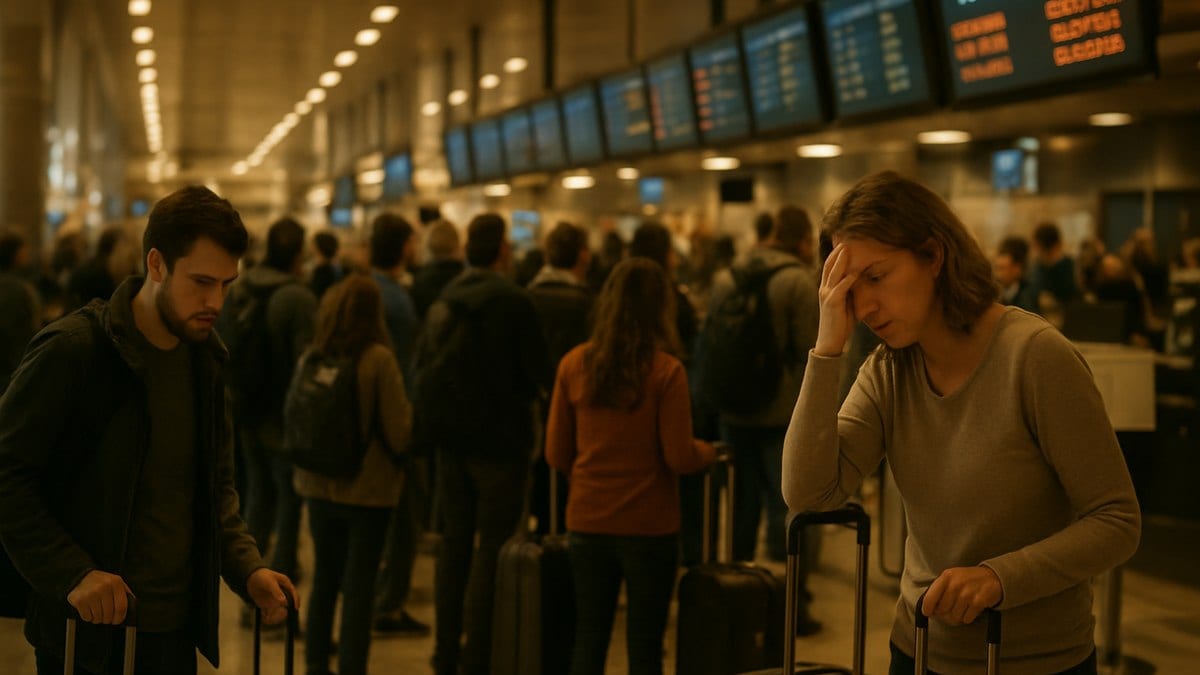
More than 500 travellers were left stranded across France’s major air hubs this weekend as a fresh wave of cancellations and rolling delays disrupted operations at Paris Charles de Gaulle, Orly and Nice Côte d’Azur airports.
Get the latest news straight to your inbox!
Targeted Cancellations Ripple Across Paris and Nice
Published data from aviation analytics platforms and European travel media indicates that a concentrated cluster of cancellations and extended delays affected at least sixteen flights serving France’s key gateways over the past several days. The most visible impact has been at Paris Charles de Gaulle and Paris Orly, with additional disruption at Nice Côte d’Azur, one of the country’s busiest Mediterranean gateways.
Coverage in specialist travel outlets reports that a mix of short and medium haul services on carriers including Air France, easyJet, British Airways, Icelandair and Royal Air Maroc were suspended or heavily delayed on a single operational day, triggering missed connections and overnight stays for onward passengers. While the absolute number of cancelled flights remained relatively contained compared with continent‑wide disruption episodes, the concentration on hub routes multiplied the number of travellers affected.
At Charles de Gaulle, where a single widebody cancellation can displace hundreds of passengers, the loss of several long haul departures combined with delays on European feeders contributed to an estimated several hundred travellers requiring rebooking and, in many cases, last‑minute accommodation. At Orly and Nice, disrupted services to key European and North African cities left additional passengers waiting for scarce replacement seats.
Travel monitoring sites tracking same‑day schedules across Europe show that France’s cancellations were part of a wider pattern of strain on the region’s air network in early April, but with a particularly sharp impact where disrupted flights were tied to long haul connections through Paris.
Operational Pressures, Weather and Staffing Behind the Snarl
Reports from French and pan‑European aviation coverage point to a mixture of operational challenges rather than a single triggering incident. Mild but persistent weather issues, including low cloud and gusty conditions around Paris, combined with air traffic control flow restrictions to reduce departure rates during already busy periods.
Industry commentary also highlights continuing staffing and resource pressures at several European carriers and ground handling firms at the start of the spring peak. When crews or aircraft are out of position from earlier delays, relatively small timetable disturbances can cascade quickly at hub airports, particularly where turnaround times are tightly scheduled.
In parallel, the phased roll‑out of the European Union’s new Entry/Exit System for non‑EU nationals has started to lengthen border control times at key French gateways, according to border technology and travel policy briefings. Airlines and airport groups have warned that longer processing at immigration can lead to missed departures when transfer passengers are held up in queues, adding further stress to departure banks.
Together, these factors contributed to a fragile operating day in which irregular operations at a limited number of flights translated into disproportionate disruption for passengers, especially those relying on tight international connections through Paris and Nice.
Knock‑On Impacts Across European and Long Haul Networks
Although the immediate disruption was focused on France’s own airports, routing patterns mean that delays and cancellations in Paris and Nice were quickly felt across a broader European network. Travel industry round‑ups of the weekend’s operations note that affected services included flights linking France with the United Kingdom, North Africa, Iceland, Morocco and key European capitals.
Passengers connecting through Paris to long haul destinations in North America, West and Central Africa and parts of Asia faced missed onward flights and, in some cases, rebookings several days later as airlines worked through limited spare capacity. With many early spring departures already operating close to full, accommodating stranded travellers required a patchwork of rerouting via alternative hubs.
Regional services feeding into the main French gateways also experienced rolling delays as aircraft operating disrupted rotations arrived late into secondary airports. This created an additional layer of inconvenience for passengers starting or ending their journeys in smaller French and neighbouring European cities, even when local weather or airport conditions appeared normal.
Aviation analysts writing in recent days argue that such episodes underline the vulnerability of hub‑and‑spoke systems in Europe, where a relatively modest number of flight cancellations at one or two major airports can leave hundreds of travellers without straightforward alternatives, particularly outside the height of the summer season when schedules are less dense.
Passenger Rights and What Stranded Travellers Can Expect
Under European air passenger protection rules, travellers departing from French airports on any airline, or flying into France on European carriers, are covered by compensation and assistance provisions when flights are significantly delayed or cancelled for reasons within an airline’s control. Consumer advocacy briefings circulating this weekend reiterate that, in many such cases, passengers may be entitled to meal vouchers, hotel accommodation when overnight stays become unavoidable, and in some circumstances financial compensation.
Travel law specialists note that the classification of the cause is critical. If disruptions are traced mainly to controllable operational or staffing issues, airlines generally have wider obligations than in situations involving severe, unforeseeable weather or sudden airspace closures. For many stranded travellers over the weekend, the mixed nature of the disruption may result in a patchwork of outcomes depending on the specific flight and carrier.
Publicly available guidance from passenger rights organisations encourages travellers who were left in limbo at French hubs to retain boarding passes, booking confirmations and receipts for any out‑of‑pocket expenses incurred during the disruption. These documents can support later claims with airlines once immediate rebooking issues are resolved.
Specialist travel media also report that airlines were encouraging affected customers to use mobile apps and digital self‑service tools where possible, both to secure rebooking more quickly and to reduce congestion at airport service desks, which can become overwhelmed during periods of irregular operations.
Outlook for France’s Airports as Spring Travel Builds
The latest disruption in France comes as European aviation heads into a busy late spring period, with seat capacity and passenger numbers trending upward compared with previous years. Industry forecasts cited in regional travel analysis suggest that passenger volumes through Paris and Nice could approach or exceed pre‑pandemic levels during upcoming public holidays and school breaks.
Airport and airline planning documents referenced in recent coverage indicate that additional staffing, revised schedules and technology upgrades are being rolled out to manage longer processing times associated with new border systems and to build some resilience into turnarounds. However, observers caution that, in the short term, travellers may continue to experience sporadic disruption on peak days, particularly when weather or air traffic control constraints coincide with already high loads.
For travellers with upcoming itineraries through France’s largest hubs, travel experts recommend allowing extra time for check‑in and security, monitoring flight status closely in the 24 hours before departure and considering longer connection windows where itineraries involve transfers in Paris. While the weekend’s issues affected only a subset of total flights, the experience of more than 500 stranded passengers underscores how quickly strain at major hubs can turn scheduled journeys into prolonged waits.