

More news on this day
France’s key airports are facing a new wave of disruption this weekend, with more than 500 travelers stranded across Paris Charles de Gaulle, Orly, Nice and other major hubs as delays, missed connections and scattered cancellations ripple through the country’s air network.
Get the latest news straight to your inbox!
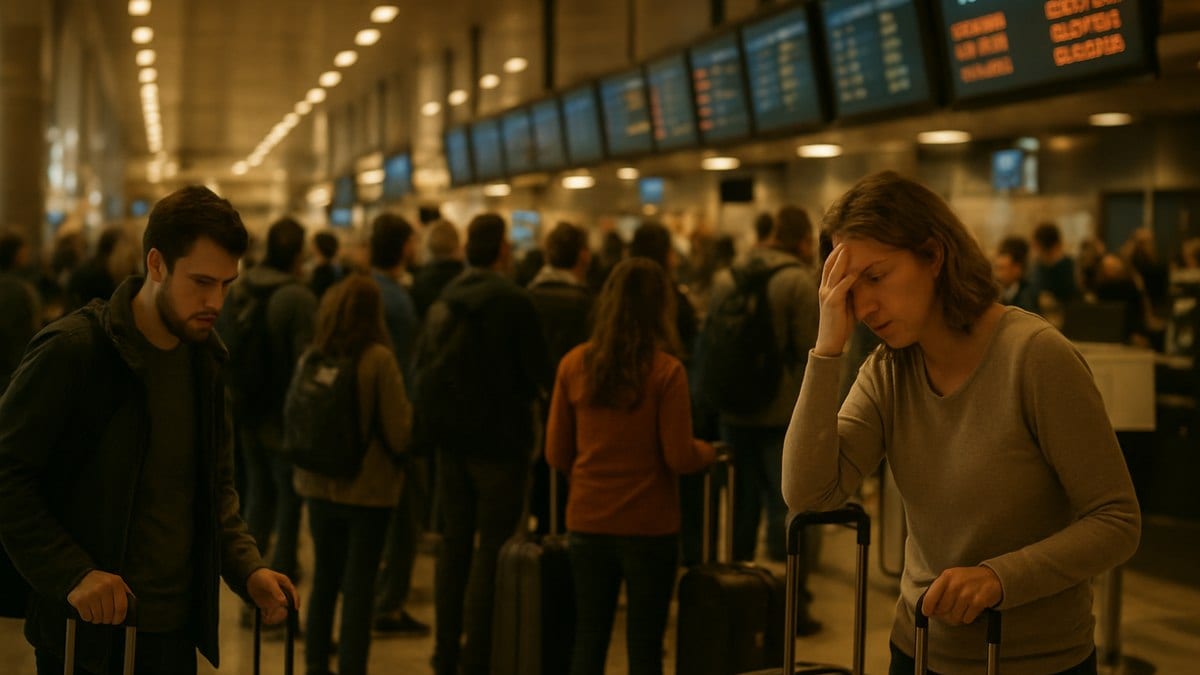
Operational Strains Converge at France’s Busiest Airports
Operational data and recent coverage indicate that France’s aviation system has entered a turbulent stretch in April, with disruption concentrated at the country’s largest hubs. Paris Charles de Gaulle, the primary long haul gateway, is absorbing additional pressure following the transfer of most Air France operations from Orly, while regional centers in Nice, Lyon and Marseille are feeling the knock-on effects as aircraft and crews rotate through the domestic network.
Reports from passenger rights services and travel outlets describe a pattern of scattered cancellations combined with heavy delays, rather than a single mass shutdown. At Charles de Gaulle, only a handful of flights were canceled on April 12, but more than a hundred services linked to Paris and Nice recorded delays, creating tight or missed connections for onward journeys. In several cases, travelers arriving from regional French cities and attempting to connect to transatlantic or long haul departures found themselves stranded overnight when minimum connection times could not be met.
Nice, Marseille and other Mediterranean gateways have not seen large headline cancellation numbers, but local disruption has been compounded by aircraft arriving late from Paris or other hubs. Publicly available schedules and status boards show late-running services on key domestic routes, with some rotations slipping by more than an hour and forcing rebookings onto later departures or next day flights. For travelers at the end of a long itinerary, those delays have translated into hotel scrambles and extended airport waits.
Travel forums and social media posts from the past week describe crowded customer service lines at Charles de Gaulle and Orly as passengers seek rerouting, with some reporting improvised transfers between the two Paris airports in order to salvage long haul tickets. This patchwork of individual disruptions, while less visible than full-scale strike days, has been sufficient to leave hundreds of passengers without same day alternatives.
New Border Controls and Staffing Gaps Slow Passenger Flows
Beyond flight scheduling issues, France’s airports are also adjusting to the European Union’s new Entry/Exit System, which went live on April 10. The biometric regime requires non EU travelers to provide fingerprints and facial images at external border airports including Charles de Gaulle, Orly, Lyon, Marseille, Nice, Toulouse, Bordeaux and Nantes. Early travel industry analysis warns that the extra processing can significantly lengthen border queues, especially at peak times and at transfer-heavy hubs.
Business travel organizations and aviation analysts have noted that immigration and security bottlenecks can quickly turn minor delays into missed connections. With the new system bedding in, even modest surges in arriving traffic can lead to queues that stretch beyond the planned connection windows, particularly for passengers unfamiliar with airport layouts or transfer procedures. In practice, this has meant that some travelers whose flights landed relatively close to schedule still failed to make onward departures and were left waiting for rebooking.
At the same time, France’s main carriers and airport service providers continue to navigate staffing challenges. Industry commentary on Air France operations in 2026 cites ongoing pressure on crew scheduling and ground services, contributing to late gate changes, slower baggage handling and occasional last minute schedule adjustments. While these problems are often localized and short lived, their impact multiplies at hub airports where tight aircraft rotations and heavy connecting traffic leave little margin for error.
Combined, the introduction of new border technology and persistent staffing gaps has created a fragile operating environment. When even one element falters, the result can be clusters of stranded passengers at departure gates, transfer desks and landside arrival halls, as witnessed across France’s key hubs over recent days.
Regional Tensions and Continental Disruption Feed Into France
France’s air travel disruption is not occurring in isolation. Wider operational strains across Europe are feeding back into French airports, particularly via connecting flights and shared airspace. Recent reports on spring travel conditions highlight industrial action in neighboring countries, including air traffic control walkouts in Italy and rolling airport strikes in Spain and other markets, which have forced reroutings and timetable changes throughout the continent.
Weather related disruption earlier in April also played a role. Turbulent conditions and low visibility episodes over northern Europe led to widespread delays at London Heathrow and other major hubs, with airlines rerouting some services through Paris Charles de Gaulle and Istanbul to manage backlogs. Those diversions increased pressure on the French system just as it was grappling with its own seasonal traffic peaks and ongoing resource constraints.
In addition, expert commentary on the broader geopolitical situation in the Middle East notes that French airports are closely tied to long haul networks serving the region. Adjustments to routings, schedules and security procedures on those corridors can reverberate through Charles de Gaulle, Nice and Marseille, particularly for airlines with extensive transfer traffic to Africa and Asia. Even when flights continue to operate, new routings and precautionary measures may reduce schedule flexibility and complicate recovery from earlier delays.
These overlapping external factors help explain why travelers in France have encountered irregular and sometimes severe disruption even on days without a clear domestic trigger such as a nationwide strike or major storm. For passengers on multi leg journeys, a delay or rerouting decision made hundreds of kilometers away can still result in an unplanned night at a French airport hotel.
Stranded Travelers Face Limited Options and Rising Costs
For the more than 500 travelers estimated to be stranded across French hubs this weekend, the practical implications are significant. With flights running near capacity at the start of the spring holiday period, airlines have struggled to find spare seats for same day rebooking, especially on popular transatlantic and Mediterranean routes. Publicly available guidance from passenger rights organizations points out that, in high load periods, it can take multiple days to clear backlogs created in just a few hours of disruption.
Travelers left without immediate options have reported long waits at airline service desks and extended holds on customer service hotlines. In some cases, passengers have turned to high speed rail as a fallback for domestic and short haul journeys, attempting to reach alternative departure points such as Lyon or Brussels in time to catch reprotected flights. However, with rail networks also busy during holiday weeks, last minute availability and pricing can be challenging.
Accommodation has become another pressure point. While some airlines provide hotel rooms and meal vouchers in line with European passenger rights rules, gaps in communication and the sheer volume of disrupted itineraries mean others must secure and finance their own stays. Online reports from Paris area hotels suggest a bump in one night bookings near Charles de Gaulle and Orly, as travelers facing early morning rebooked flights choose to remain close to the airport.
Ancillary costs quickly accumulate, from airport transfers between Charles de Gaulle and Orly to change fees on nonrefundable rail tickets and lost prebooked services at destinations. Even when eventual compensation is available, the immediate out of pocket impact for stranded travelers can be substantial, turning a short delay into a significantly more expensive trip.
What Airlines and Passengers Are Doing to Recover
Airlines operating in and out of France are using a mix of schedule adjustments and rolling rebooking to stabilize operations. Publicly available timetables and tracking data show equipment swaps to larger aircraft on selected routes from Paris, Nice and Marseille in an effort to accommodate disrupted passengers. Carriers are also encouraging travelers with flexible plans to voluntarily move to later flights or off peak days, which can free up seats for those with urgent connections.
Airports and passenger rights platforms are advising travelers to monitor flight status closely in the 24 hours before departure and to use airline apps where possible for real time updates and digital boarding passes. For those connecting through Paris, guidance emphasizes allowing additional buffer time between flights, particularly when transfers involve changing terminals or moving between Charles de Gaulle and Orly. Arriving earlier than usual for check in and security is widely recommended while the new border control systems settle into routine operation.
For stranded travelers already caught in the disruption, consumer advocates point to the importance of documenting delays, cancellations and related expenses. Receipts for hotels, meals, ground transport and alternative travel can play a crucial role when seeking reimbursement or compensation later. Travelers are also urged to familiarize themselves with the scope of European passenger rights rules, which may entitle them to assistance and, in some circumstances, financial compensation depending on the cause and length of the disruption.
With the spring travel season only just beginning, France’s aviation system faces a delicate balancing act between high demand, new regulatory requirements and persistent operational headwinds. The experience of the more than 500 travelers stranded at French hubs this weekend underscores how even limited disruptions can cascade through a complex, interconnected network, and why both airlines and passengers are likely to remain on alert in the weeks ahead.