

More news on this day
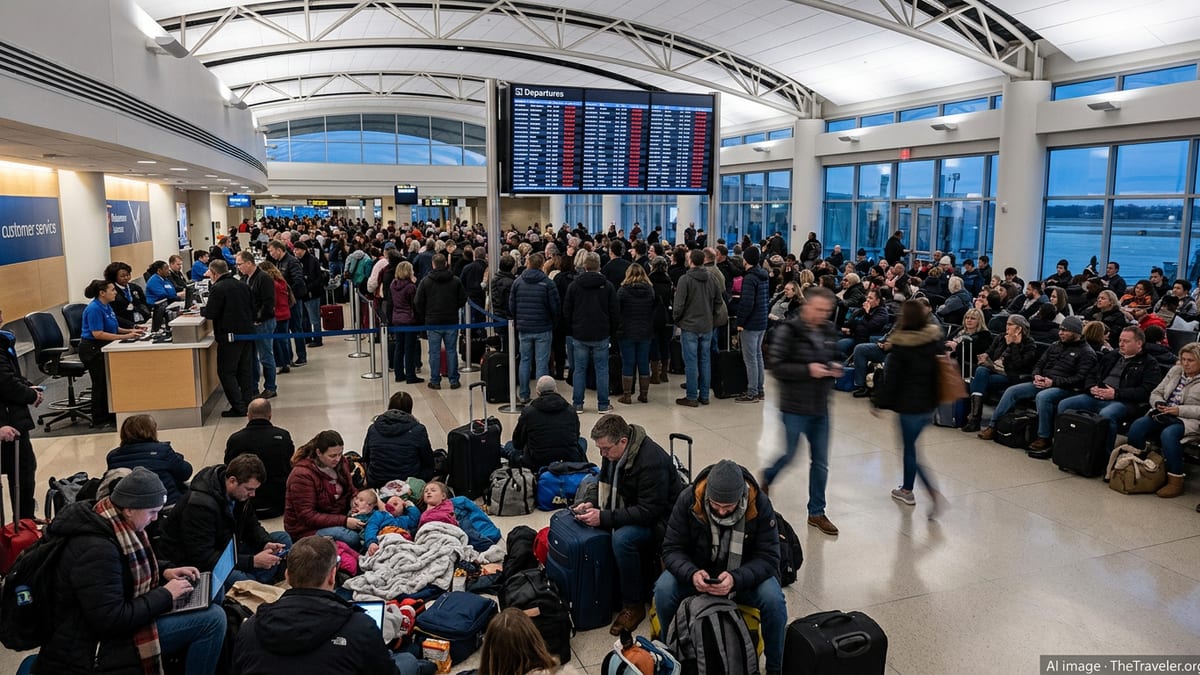
Hundreds of travelers were left stranded at Milwaukee Mitchell International Airport after a wave of disruptions led to 78 flight delays and 15 cancellations, snarling connections to major hubs including Chicago, Denver, Atlanta, and New York on carriers such as Delta Air Lines, American Airlines, United Airlines, and Southwest Airlines.
Get the latest news straight to your inbox!
Widespread Disruptions Hit Regional Hub
The disruptions at Milwaukee Mitchell International Airport turned a routine travel period into a day of prolonged uncertainty for passengers. Publicly available flight-tracking data showed cascading delays across the departure board, with many services pushed back by several hours and others removed from the schedule entirely.
The impact was felt most sharply on flights linking Milwaukee to some of the country’s busiest connecting airports. Services to Chicago, Denver, Atlanta, and New York experienced a combination of late departures and outright cancellations, affecting both nonstop routes and onward itineraries relying on those hubs.
The irregular operations at Milwaukee underscored the vulnerability of a medium-size airport that depends heavily on connections through larger hubs. When schedules began to slip, travelers who had planned tight connections at major airports quickly faced missed links, unexpected overnights, and rebookings that stretched into the following day.
Reports indicate that airport concourses grew increasingly crowded as the disruptions wore on. Families with children, business travelers on tight timelines, and visitors returning home all contended with limited seating, long lines at customer service counters, and uncertainty about when they would be able to depart.
Major Airlines Among Those Affected
According to publicly available information, several of the largest U.S. airlines were among those affected by the operational problems in Milwaukee. Delta Air Lines, American Airlines, United Airlines, and Southwest Airlines all saw schedules disrupted, with a mix of delayed departures and cancellations on key domestic routes.
Travelers booked on Delta, American, and United faced particular challenges on flights connecting through Chicago, Denver, and other Midwest hubs, where even minor delays out of Milwaukee could cascade into missed connections. For Southwest passengers, disruptions on point-to-point routes added to the strain, as rebooking options were limited by reduced frequencies and already-full flights.
Published coverage of recent airline performance trends notes that carriers across the United States have been operating with relatively tight schedules, leaving limited slack when weather, congestion, or technical issues arise. On a day when Milwaukee’s operations were already under pressure, this lack of flexibility translated quickly into longer disruptions and fewer immediate alternatives for stranded passengers.
The situation also highlighted the dependence of regional travelers on a small pool of dominant carriers. With only a handful of airlines offering nonstop service to major hubs from Milwaukee, a disruption affecting several of them at once left passengers with few viable same-day options.
Knock-On Effects for Chicago, Denver, Atlanta, and New York
The disruption at Milwaukee did not remain a purely local problem. Publicly accessible flight-status records show that late departures and canceled flights from Milwaukee rippled outward to major airports including Chicago O’Hare, Denver International, Hartsfield–Jackson Atlanta, and the New York area’s busy terminals.
Passengers who had planned to connect in Chicago or Denver encountered tightened connection windows, with some racing between gates while others watched their onward flights depart without them. In Atlanta and New York, where arrival slots are often closely managed and gates can be in short supply, late-arriving aircraft from Milwaukee added to existing operational complexity.
According to recent analyses of U.S. air travel patterns, congestion at large hubs can intensify even when the original disruption begins at a smaller field. An aircraft delayed departing from Milwaukee can arrive late into a major hub, and that same aircraft may be scheduled to operate subsequent segments, compounding delays for travelers who have no direct connection to Milwaukee at all.
On this day, the combination of delayed and canceled flights originating at Milwaukee contributed to a broader pattern of timetable instability. Passengers arriving in Chicago, Denver, Atlanta, and New York from other origins sometimes found that their onward legs involving Milwaukee were no longer viable, forcing last-minute changes and overnight stays.
Stranded Passengers Face Long Waits and Limited Options
For travelers on the ground in Milwaukee, the immediate challenge was simply finding a way to continue their journeys. As delays mounted and cancellations accumulated, counters for ticketing and customer service saw extended queues as passengers sought rerouting, hotel vouchers, or meal assistance.
Published guidance from consumer travel resources notes that airlines typically prioritize rebooking on their own flights, followed by options on partner carriers where agreements exist. In a situation where dozens of flights are disrupted at once, however, available seats can quickly disappear, leaving stranded travelers to decide between waiting for the next day’s flights or arranging ground transport to alternate airports such as Chicago.
Some passengers reportedly faced the prospect of overnight stays in Milwaukee after evening departures were canceled or rescheduled for the following morning. With airport seating and amenities not designed for extended stays, travelers turned to nearby hotels or waited in terminal areas that grew quieter as the night wore on but never fully emptied.
The experience at Milwaukee echoed recent national patterns in which large-scale disruptions have left travelers improvising new routes, relying on travel insurance, or absorbing additional out-of-pocket costs. While many eventually reached their destinations, the combination of uncertainty, expense, and fatigue added to growing frustration about the resilience of the U.S. domestic air travel system.
Ongoing Questions About Resilience in U.S. Air Travel
The episode at Milwaukee Mitchell International Airport adds to a series of recent travel disruptions that have raised questions about how well airlines and airports can withstand operational shocks. Analysts in publicly available reports frequently point to a combination of tightly packed schedules, crew and staffing constraints, and increasingly volatile weather patterns as contributing factors.
Milwaukee’s role as a regional gateway highlights how even modest disturbances can have outsize effects. With a limited number of flights to major hubs, the cancellation of a single departure to cities like Chicago, Denver, Atlanta, or New York can disrupt onward journeys for hundreds of people, particularly during peak travel periods when alternative flights are already near capacity.
Travel industry observers have noted that travelers are increasingly building more buffer time into their itineraries, favoring longer layovers and earlier departures to reduce the risk of missed connections. Some have shifted toward driving to larger hubs for nonstop flights, a pattern visible in discussions about how airports such as Milwaukee compete with nearby mega-hubs in Chicago.
As operations gradually stabilize after the latest round of delays and cancellations, attention is likely to turn again to what measures airlines and airports can take to manage future disruptions. For passengers stranded in Milwaukee and at connected hubs, the experience serves as another reminder that even a single day of irregular operations can reverberate widely across the national air network.