

More news on this day
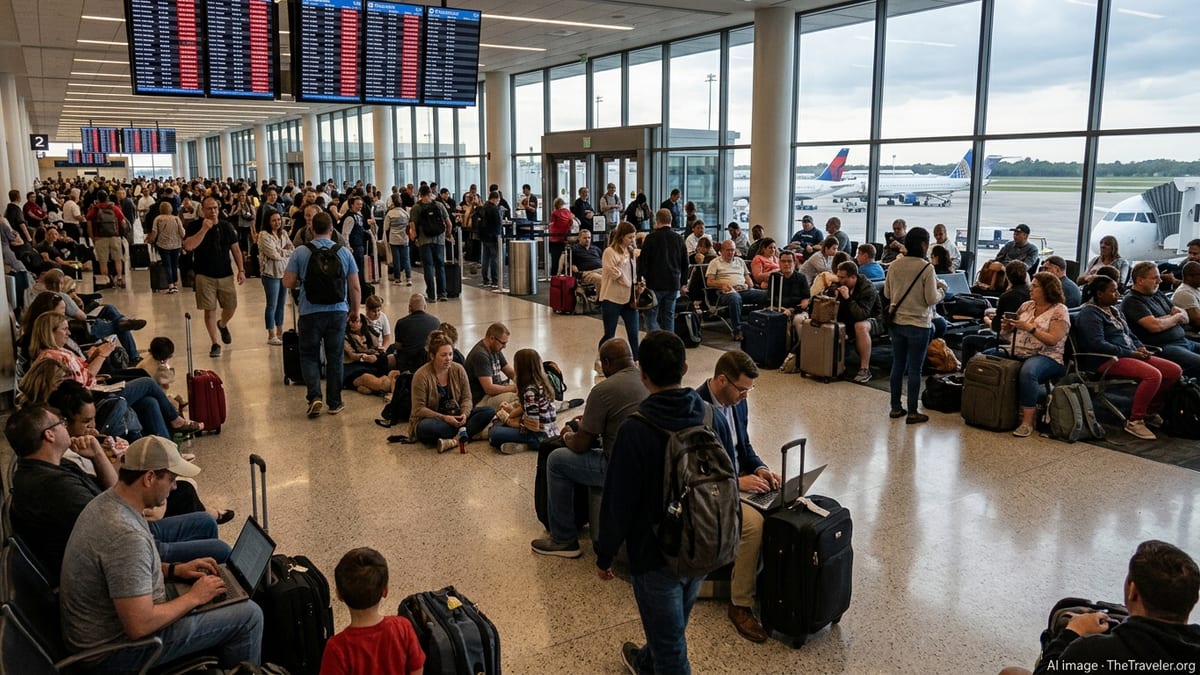
Hundreds of air travelers faced long waits and missed connections on Monday at Louis Armstrong New Orleans International Airport, where publicly available flight-tracking data showed more than 90 departures and arrivals delayed and several services canceled, affecting major domestic routes to cities including Chicago, Atlanta, and Orlando.
Get the latest news straight to your inbox!
Widespread Disruptions Hit Key Domestic Routes
According to multiple flight-status aggregators monitoring Louis Armstrong New Orleans International Airport, a combined total of around 91 flights were delayed and at least five were canceled over the course of the day, disrupting tight spring travel schedules. The disruptions affected both departing and arriving services at the airport, which serves as the primary commercial gateway for the New Orleans metropolitan area.
Major U.S. carriers including Delta Air Lines, Southwest Airlines, and United Airlines featured prominently among the affected operations, alongside other domestic airlines that connect New Orleans to regional hubs. The delays and cancellations were concentrated on popular routes linking New Orleans with Chicago, Atlanta, Orlando, and other large markets that act as connection points for onward domestic and international travel.
Publicly available information from airline status boards showed that some departures were held for more than an hour, while a smaller number of flights were removed from schedules entirely. As aircraft and crews fell out of position, knock-on delays developed across the day, complicating efforts by carriers to return operations to normal.
The latest disruptions add further strain to an already busy period for U.S. aviation, with increased spring travel demand and recent storm systems elsewhere in the country contributing to broader schedule volatility.
Travelers Confront Long Lines and Missed Connections
Passengers at the New Orleans airport reported through social media and online forums that they encountered lengthy check-in and security lines, as well as crowded gate areas where flights were repeatedly pushed back. Some travelers described arriving several hours before departure only to find that their flights had been delayed beyond their planned connection times in cities such as Chicago and Atlanta.
Published accounts from recent days indicate that early-morning and Sunday peak periods at the airport have been particularly challenging, with some travelers describing waits of multiple hours at security checkpoints during the busiest windows. Those experiences appear to have heightened concern among passengers booked on Monday’s affected flights, many of whom chose to arrive substantially earlier than usual to compensate for possible hold-ups.
For travelers heading to major hubs, even relatively short delays in New Orleans translated into missed onward flights and forced rebookings. Passengers bound for Orlando, Chicago, and other large connection points reported being shifted to later departures, sometimes involving reroutes through alternate airports as airlines attempted to work within limited spare capacity.
Families returning from vacations, business travelers on tight schedules, and visitors departing New Orleans after weekend events all appeared to be among those most affected, judging from publicly posted travel accounts.
Ripple Effects Across Airline Networks
Operational disruptions at New Orleans tend to reverberate across the networks of airlines that use the airport to feed traffic into larger hubs. When flights from Louis Armstrong New Orleans International Airport depart late for cities such as Atlanta, Chicago, and Houston, the aircraft involved often arrive behind schedule for their next segments, producing additional delays elsewhere.
Publicly available data on Monday showed a pattern of late-running services on several trunk routes linking New Orleans with major airline hubs. For example, delays on flights bound for Chicago and Atlanta risked impacting evening connection banks that are heavily used by travelers returning to smaller Midwestern and Southeastern cities.
Travel industry analysts have noted that during periods of high demand and constrained staffing, it can be more difficult for carriers to absorb a day with dozens of delays and a handful of cancellations at a single airport. Even a modest number of canceled flights can require extensive re-accommodation efforts if nearby services are already close to full.
With spring travel ramping up and other U.S. airports also managing weather and staffing challenges, options for same-day rebooking have at times been limited, especially for larger groups and travelers needing specific connection times.
Advice for Passengers Departing New Orleans
Airline advisories and recent travel experiences at New Orleans suggest that passengers booked to fly in the coming days should plan for extra time at the airport and closely monitor their flight status. Publicly available guidance from the airport and carriers generally recommends that travelers arrive several hours before departure, particularly during early-morning and Sunday peak periods when security and check-in lines can lengthen quickly.
Travel experts commonly advise passengers to use airline apps and notification tools to track any schedule changes, gate swaps, or rebooking options that might arise if delays continue. For those with tight connections in hub cities like Chicago, Atlanta, or Orlando, same-day adjustments to earlier flights from New Orleans may help reduce the risk of missed onward services.
Travelers with flexible plans have also been encouraged in recent commentary to consider nonstop routes where available, or to build in longer connection times when their itineraries require plane changes. This approach can provide more cushion if operations remain uneven across the national network.
Passengers whose flights are significantly delayed or canceled can review airline policies regarding rebooking, meal vouchers, and hotel accommodation, which vary by carrier and the cause of disruption. Publicly available consumer guidance emphasizes the importance of retaining boarding passes and receipts for any unexpected expenses incurred during long delays.
Outlook for Operations at Louis Armstrong New Orleans International
While Monday’s tally of roughly 91 delays and five cancellations represents a notable disruption for a single day at Louis Armstrong New Orleans International Airport, recent patterns at U.S. airports suggest that conditions can change quickly as weather systems move through and staffing levels shift. Improved visibility into crew availability, aircraft rotations, and air traffic control constraints typically allows airlines to gradually restore more stable schedules.
Publicly accessible operations data in recent weeks has shown that, outside of specific peak periods and severe-weather days, New Orleans flights have often departed with only modest delays. However, the combination of strong travel demand, heavier reliance on connecting routes, and limited spare capacity across some airline networks means that any new pressure on the system can still have an outsized impact on travelers.
Passengers planning to use New Orleans as either an origin or connection point in the near term are likely to keep a close eye on developments, especially if further weather systems or national aviation pressures emerge. For now, Monday’s wave of delays and cancellations serves as a reminder of how quickly a localized disruption can ripple across multiple airlines and major U.S. cities.