

More news on this day
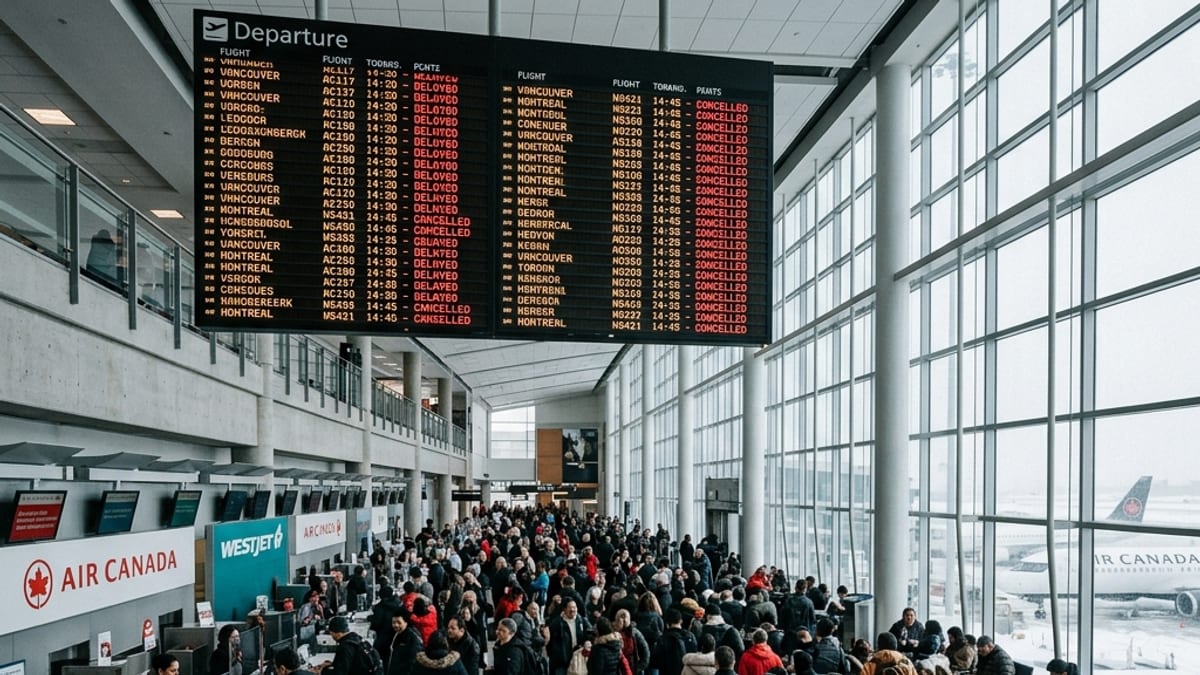
Travelers at Québec City Jean Lesage International Airport faced mounting frustration as 27 flights were delayed and six were cancelled, with disruptions involving Air Canada and WestJet leaving hundreds of passengers stranded across the terminal.
Get the latest news straight to your inbox!
Severe Weather and System Strain Ripple Across Canadian Airports
The disruptions in Québec City occurred against a backdrop of broader operational strain across Canada’s aviation network in early April 2026. Publicly available information on recent travel conditions indicates that late-season winter weather and fast-moving spring storms have repeatedly disrupted flight schedules at major hubs, creating knock-on effects for smaller airports such as Québec City Jean Lesage International Airport.
Reports on national flight performance show that snow, freezing rain, and high winds in central and eastern Canada have recently triggered hundreds of delays and cancellations in Toronto, Montréal, Calgary, and Halifax. As carriers reworked schedules and repositioned aircraft, the resulting congestion in key corridors reduced flexibility across the network and made it more difficult to recover quickly when new weather cells or localized issues emerged.
According to published coverage of these system wide disruptions, airlines including Air Canada and WestJet have been adjusting timetables, consolidating flights, and issuing travel advisories. These measures can help stabilize operations but also concentrate the impact of schedule changes on specific departure windows, which is reflected in the cluster of delayed and cancelled services now reported at Québec City.
In Québec City, the 27 delayed flights and six cancellations appear to mirror the national pattern of rolling disruptions rather than a single isolated incident. Aircraft and crew arriving late from storm affected hubs, tighter turnaround times, and periodic congestion in air traffic flows over eastern Canada all contributed to an environment where even relatively modest weather or logistical setbacks could cascade into extended waits for passengers.
Impact on Passengers Departing and Arriving in Québec City
For travelers at Québec City Jean Lesage Airport, the operational statistics translated into hours of uncertainty. With dozens of flights pushed back from their scheduled departure times, the departure concourses became crowded with passengers seeking updated information on revised takeoff times, missed connections, and overnight arrangements.
Families returning from school holidays, business travelers aiming for same day meetings, and international passengers connecting through Montréal and Toronto were among those affected by the wave of delays. With six flights cancelled outright, some travelers faced the prospect of rebooking for the next day or later, particularly on routes where limited daily frequency restricts alternative options.
Arriving passengers also felt the impact. Extended delays on inbound flights lengthened waits at baggage carousels and ground transport areas, while relatives and drivers monitoring arrival boards saw estimated landing times repeatedly revised. Taxi and rideshare demand spiked in waves as several delayed flights arrived in close succession, briefly overwhelming curbside capacity.
Airport operations teams in Québec City have experience managing disruption driven congestion, particularly during winter conditions. However, when delayed aircraft from larger hubs arrive in bunches, even a relatively compact facility such as Jean Lesage can experience short term strain on gates, baggage handling, and passenger services, amplifying the discomfort for those stuck in transit.
Air Canada and WestJet Under Scrutiny Amid Ongoing Disruptions
The latest figures at Québec City highlight the prominent role of Canada’s two largest carriers in the current disruption cycle. Public flight tracking data and industry analysis indicate that both Air Canada and WestJet have recently faced waves of delays and cancellations nationwide, driven by a combination of weather events, aircraft availability, and tight staffing in key operational areas.
Published reports on national performance trends describe Air Canada managing heavy traffic through Montréal and Toronto, where even minor slowdowns can ripple outward to satellite airports such as Québec City. When incoming aircraft are held on the ground due to de-icing queues, runway constraints, or air traffic control spacing, subsequent departures from secondary airports may launch late or be consolidated into later services.
WestJet has also confronted operational headwinds, including prior schedule adjustments and route changes that have reduced overall slack in the system. When disruptions strike, a leaner network can make it harder to offer rapid same day rebooking options, particularly from smaller markets. For Québec City passengers on affected WestJet flights, this can mean longer re-accommodation timelines and, in some cases, routing through more distant hubs to reach final destinations.
While both carriers provide online tools and mobile applications for real time status updates, many passengers continue to report difficulty securing timely assistance during peak disruption periods. Lengthy customer service wait times and limited seats on remaining flights can compound frustration, especially for those traveling with young children or under time sensitive commitments.
Passenger Rights and Compensation Options under Canadian Rules
The wave of delays and cancellations at Québec City Jean Lesage Airport also draws attention to the protections available to air travelers under Canada’s Air Passenger Protection Regulations. Publicly accessible guidance outlines compensation and assistance standards that vary based on the length of delay at arrival, the size of the carrier, and whether the disruption is considered within the airline’s control.
In cases where disruptions are classified as outside the airline’s control, such as severe weather or unexpected air traffic control restrictions, carriers are generally required to provide standard care, including food vouchers and hotel accommodation in some overnight scenarios, but direct monetary compensation may not apply. When delays or cancellations stem from situations within the airline’s control that are not related to safety, passengers may be eligible for set cash payments, alternative travel arrangements, or refunds.
Consumer advocacy organizations regularly encourage affected travelers to document their experience, retain boarding passes and receipts, and file formal claims through airline channels if they believe their disruption falls within compensable categories. They also note that regulations frequently distinguish between large carriers, such as Air Canada and WestJet, and smaller operators, with different minimum thresholds for assistance.
For those stranded in Québec City during the current disruptions, understanding these rules can help clarify whether to seek refunds, rebooking on different airlines, or additional support such as hotel and meal coverage. With backlogs still working their way through the system, some passengers may find that proactive claims and careful record keeping are necessary to secure the full range of benefits to which they are entitled.
What Travelers at Québec City Jean Lesage Airport Can Expect Next
Looking ahead, operational data and recent patterns suggest that recovery from a disruption of this scale typically unfolds over several operating cycles rather than within a single day. Once weather improves and major hubs stabilize, airlines generally work through the backlog by deploying larger aircraft on select routes, adding extra sections where possible, and rerouting passengers through alternative connections.
For departing passengers in Québec City, this can result in modestly improved seat availability on subsequent days, although peak travel times may remain crowded. Published guidance from travel experts recommends that passengers remain attentive to notifications from their airlines, confirm flight status before heading to the airport, and arrive earlier than usual to account for longer lines at check in and security during the recovery phase.
Travelers with flexible schedules are often advised to consider adjusting plans to off peak times or later dates if carriers publish change fee waivers tied to the disruption. Such waivers, which have been used by Canadian airlines during recent storm systems, can relieve some of the financial burden of altering itineraries while allowing airlines to spread demand more evenly as they restore normal operations.
For Québec City Jean Lesage Airport and its airline partners, the current episode underscores how quickly localized disruptions can escalate when layered onto a stressed national network. As Canada moves deeper into spring, airport performance in Québec City will be closely watched by travelers and industry observers alike as an indicator of whether carriers can rebuild resilience before the busy summer travel season.