

More news on this day
Hundreds of travelers were left stranded at Tampa International Airport in Florida after a wave of flight disruptions led to 101 delays and 6 cancellations, snarling operations for major U.S. carriers and rippling across peak travel schedules.
Get the latest news straight to your inbox!
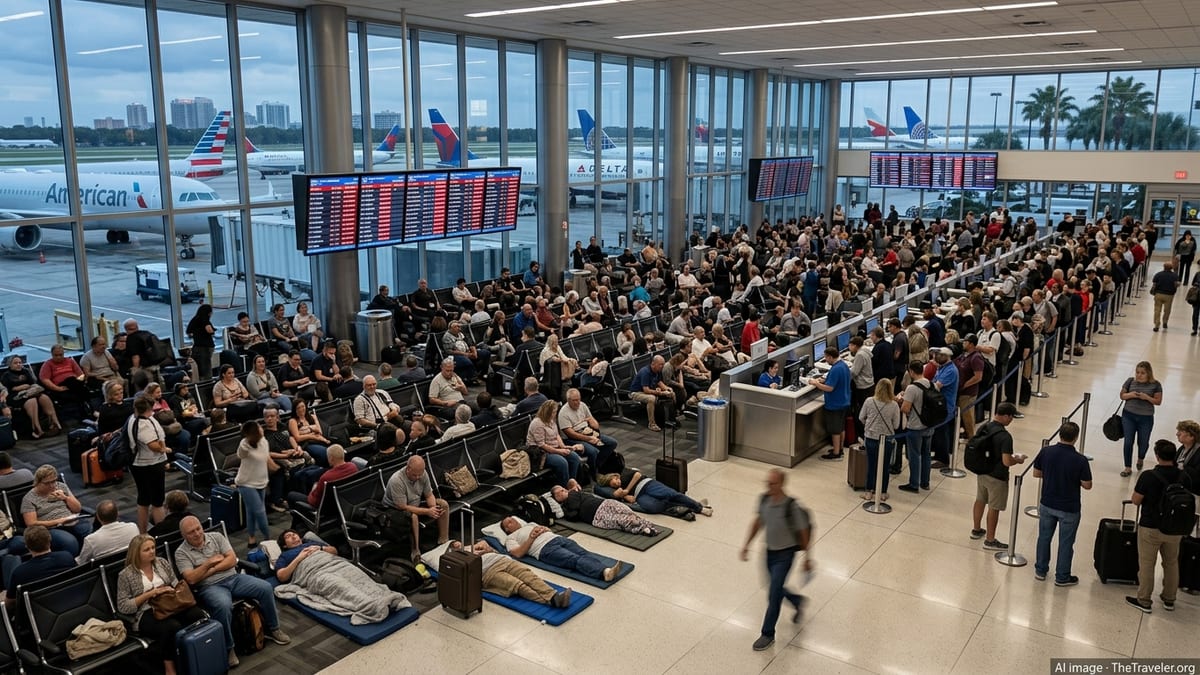
Wave of Disruptions Hits Major Carriers at Tampa
Publicly available flight-tracking data for Tampa International Airport on Friday showed 101 delayed departures and arrivals alongside six outright cancellations, creating a cascade of missed connections and last-minute rebookings. The disruption affected a wide mix of domestic and regional routes into and out of the busy Gulf Coast hub.
Airlines with significant operations at Tampa, including American Airlines, Delta Air Lines, Southwest Airlines, and United Airlines, were among those impacted. Tampa International functions as a key Florida gateway for these carriers, with each operating multiple daily frequencies to hubs such as Atlanta, Dallas, Charlotte, Chicago, and other major cities. When delays mounted, passengers reported long waits at gate areas and customer service counters as limited seats on later flights quickly filled.
While precise passenger counts for the affected flights were not immediately available, typical load factors on peak-season routes suggest that hundreds of travelers experienced extended delays, missed onward connections, or overnight stays. Families returning from vacations, business travelers, and cruise passengers disembarking at nearby ports were all drawn into the disruption.
According to published coverage of recent air travel patterns, even a relatively modest number of cancellations at a mid-sized hub can trigger hours of operational strain. With only six cancellations but more than one hundred delays, airlines at Tampa appeared to favor pushing departure times rather than scrubbing flights outright, a strategy that can keep routes technically operating but often leaves travelers waiting for many hours.
Weather, Congestion, and System Strain Behind the Gridlock
Reports indicate that a combination of factors contributed to the operational problems in Tampa, including unsettled weather patterns over the Southeast, air traffic congestion, and limited slack within airline schedules. Short-lived but intense thunderstorms around Florida and key connecting hubs frequently force ground stops, reroutes, and tighter spacing between aircraft, which can cascade across an entire day’s operations.
Industry data and past disruptions at Florida airports show that carriers such as American, Delta, Southwest, and United often experience the sharpest delays when storm systems snake along heavily trafficked corridors between the Northeast, Midwest, and Gulf Coast. When one or two early flights into Tampa are delayed or diverted, aircraft and crews can quickly fall out of position, creating rolling disruptions for later departures.
Recent federal consumer reports on airline performance highlight that most U.S. carriers have gradually reduced outright cancellations but have seen an increase in the average length of delays. That pattern appears to be reflected in Tampa’s latest episode, with far more flights operating late than being canceled altogether. For travelers, this can mean choosing between waiting out lengthy delays or attempting to rebook through other hubs or carriers, often at higher last-minute fares.
Operational strain can be particularly acute in Florida during busy seasonal peaks, when leisure demand fills aircraft to near capacity and weather volatility is frequent. With fewer empty seats available systemwide, it becomes harder for airlines to quickly re-accommodate disrupted passengers, lengthening the time many spend in airport terminals.
Passenger Experience: Long Lines, Missed Connections, Limited Options
Passengers at Tampa International described scenes that have become increasingly familiar during high-stress travel periods: crowded gate areas, snaking lines at ticket counters, and uncertainty over departure times posted on digital boards. As flights were pushed back, some travelers attempted to rebook via airline apps or call centers, only to find that alternative options were scarce or involved multiple connections.
When delays extend into late evening, options can narrow further. With only a finite number of daily departures on many routes from Tampa, disrupted passengers often face the prospect of staying overnight and trying again the next day. Hotel availability near the airport can tighten quickly in such situations, particularly when multiple airlines are experiencing problems at once.
Travelers with international connections or cruise departures are especially vulnerable to even modest schedule changes. A delay of an hour or two on a domestic leg can be enough to cause a missed overseas departure or boarding window at nearby cruise terminals in Tampa or Port Canaveral, leaving travelers scrambling to rebook or adjust their plans.
For passengers, these experiences reinforce the importance of flexible itineraries and contingency planning. Travel experts often suggest booking longer connection times through congestion-prone hubs, traveling with carry-on luggage when possible to facilitate rapid rebooking, and monitoring flight status closely through both airline channels and independent tracking services.
How Tampa’s Role in Airline Networks Amplifies Disruptions
Tampa International Airport serves as a critical node in the Florida aviation network, with high volumes of origin and destination traffic to major U.S. cities. Data published by airport and transportation authorities show that Tampa maintains dense links to New York, Chicago, Washington, Boston, Atlanta, Philadelphia, Dallas, and other major markets, supported by carriers including American, Delta, Southwest, United, JetBlue, and others.
This structure means that disruptions in Tampa do not only affect local travelers. When flights into or out of the airport are delayed, aircraft and crews intended to continue to other cities can end up out of sequence, spreading knock-on delays throughout airline networks. A single late arrival from Tampa into a hub such as Atlanta, Charlotte, Dallas, or Chicago may cascade into further delays on later flights using the same aircraft or crews.
At the same time, Tampa International’s design and facilities are often cited in travel coverage as comparatively efficient, which can help mitigate some impacts on travelers. Spacious terminals, multiple security checkpoints, and clear signage mean that once a flight is ready to board, passengers can usually move quickly through the airport. However, infrastructure advantages can only go so far when broader weather and network issues constrain airline operations.
Airport planning documents emphasize coordinated responses to irregular operations, including contingency plans for extended tarmac delays and procedures for reallocating gates to accommodate disrupted flights. These frameworks aim to keep passengers moving off aircraft and into terminals, even when airlines are struggling to get them onto their intended departures.
What Travelers Can Expect in the Days Ahead
Travelers flying through Tampa in the coming days are being advised by airline notices and airport alerts to monitor their flight status frequently and to arrive at the airport early, especially during morning and late afternoon peaks. Even after the immediate disruption, residual delays can persist as airlines reposition aircraft and crews and work through backlogs of stranded passengers.
Publicly available scheduling data suggest that carriers intend to operate full timetables at Tampa, but recovery periods following weather and congestion events can span several days. Travelers with flexible schedules may find it easier to accept rebookings at off-peak times or on less direct routings, while those with fixed commitments could face longer waits for suitable seats.
Analysts note that flight disruptions of the scale seen in Tampa are no longer rare outliers but recurring features of a strained air travel system balancing strong demand, tight staffing, and weather volatility. While performance has improved in some areas since the most severe meltdowns of recent years, the pattern of widespread delays with lower cancellation counts remains a challenge for both airlines and travelers.
For now, passengers using Tampa International Airport are likely to continue facing a degree of uncertainty around precise departure and arrival times, even as airlines work to stabilize operations. Those planning upcoming journeys through the region may benefit from allowing extra time, considering travel insurance options, and preparing for schedule changes as part of the modern air travel landscape.