

More news on this day
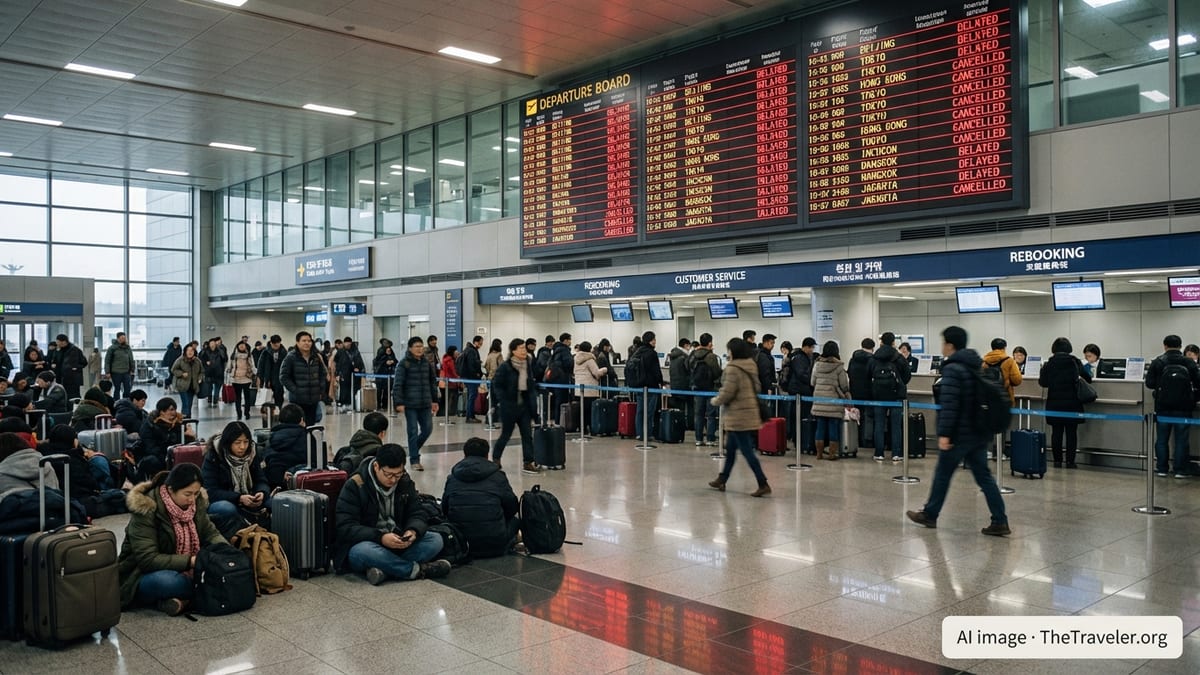
Thousands of air travelers across Asia faced missed connections and overnight airport stays as 63 flights were canceled and at least 854 delayed on April 5, disrupting operations at six major hubs from mainland China to Indonesia.
Get the latest news straight to your inbox!
Multiple Airports Hit by Concentrated Day of Disruption
Publicly available flight-tracking dashboards for April 5 indicate that Changsha Huanghua International, Shanghai Hongqiao, Shenzhen Bao’an, Guangzhou Baiyun, Tianjin Binhai and Jakarta Soekarno Hatta International airports all reported elevated disruption, with 63 cancellations and 854 delays logged across the six gateways. The figures represent a snapshot of conditions over the course of the day rather than a single weather or technical incident, pointing to a broader pattern of operational strain at the start of the work week.
The affected airports function as key connectors in China’s domestic network and in Indonesia’s role as Southeast Asia’s largest aviation market. Even modest spikes in cancellations at such hubs can have outsized effects on regional connectivity, as many flights operate as feeder services into longer haul routes. Travelers connecting through these airports reported extended waits at departure gates, long queues at check in counters and last minute gate changes as airlines attempted to re sequence aircraft and crews.
Data compiled from airport disclosure and independent aviation analytics for the same date shows Asia Pacific carriers already operating under pressure from a busy early April travel period. The additional cancellations at these specific hubs added a new layer of complexity, with some routes facing tight aircraft rotations that left little slack in the system when earlier flights ran late.
Mainland China Gateways Struggle With Knock On Delays
In mainland China, Changsha Huanghua, Shanghai Hongqiao, Shenzhen Bao’an, Guangzhou Baiyun and Tianjin Binhai all saw disruption levels above a typical early April day. These airports anchor dense domestic networks linking provincial capitals with coastal megacities, and their schedules rely heavily on short turnaround times. When an early morning sector departs behind schedule, later flights using the same aircraft can quickly stack up delays throughout the day.
Shenzhen Bao’an and Guangzhou Baiyun, which together serve the fast growing Pearl River Delta region, have recently experienced construction and terminal transition activity that adds operational complexity. Industry briefings on these airports note that even routine schedule adjustments can ripple across overlapping banks of departures, particularly during holiday and peak travel periods when load factors are high and spare seats for rebooking are limited.
Shanghai Hongqiao, a key domestic hub, typically posts relatively strong on time performance metrics compared with other large Chinese airports. However, on a day when other regional hubs are also under strain, even a small number of late arriving aircraft can interfere with carefully balanced wave patterns of departures and arrivals. Travelers on trunk routes between Shanghai, Beijing, Guangzhou and Chengdu are especially vulnerable to such knock on effects because frequencies are high and aircraft often cycle through multiple cities in a single duty day.
Jakarta Soekarno Hatta Adds Southeast Asian Pressure Point
Jakarta’s Soekarno Hatta International Airport, the primary international gateway for Indonesia and one of Southeast Asia’s busiest hubs, added a critical Southeast Asian dimension to the disruption picture. Aggregated aviation data for April 5 already highlighted Jakarta among airports with elevated cancellation and delay counts, reflecting tight scheduling and growing demand on both domestic and regional routes.
Soekarno Hatta serves as a hub for Indonesian carriers operating extensive networks across the archipelago as well as international services to Asia, the Middle East and beyond. When departures from Jakarta run late or are canceled, travelers headed to secondary Indonesian cities often have limited same day alternatives. Missed onward connections can require overnight stays in Jakarta or the rebooking of entire itineraries, particularly for passengers traveling on separate tickets or low cost carriers that do not offer protected connections.
The airport’s role in feeding traffic into other Asian hubs means that delays in Jakarta can also remove aircraft or passengers from later flights elsewhere in the region. This amplifies the impact of a relatively modest number of cancellations when measured at a single airport, as each grounded or late aircraft fails to appear on time at its next scheduled departure point.
Network Effects Turn Local Problems Into Regional Disruption
Industry analyses of Asia Pacific operations in recent days emphasize how cancellation and delay figures at individual airports rarely tell the whole story. Aircraft are scheduled in long sequences that crisscross national borders, and crews often operate multi segment rotations over the course of a workday. When a flight is canceled at a hub such as Guangzhou or Shanghai, the aircraft that would have flown on to another city simply never arrives, eliminating capacity and forcing last minute schedule changes further down the line.
On April 5, the 63 cancellations and 854 delays registered across the six highlighted airports coincided with wider regional disruption recorded at other major hubs. Reports from aviation data providers describe a pattern where relatively small disruptions compound as the day progresses, particularly during peak travel seasons when spare aircraft and crew are limited. Once delays cross a certain threshold, recovery often takes more than a single operational day, leaving residual knock on effects that persist into subsequent schedules.
These conditions are occurring within a broader context of rapid traffic recovery across Asia following the pandemic lows. Air transport data bulletins for the region over the past year have pointed to double digit growth in passenger volumes at major Chinese and Southeast Asian airports. That growth has supported the return of routes and frequencies but has also reduced buffer capacity within airline schedules, making the system more sensitive to weather events, air traffic constraints or localized technical issues.
Impact on Travelers and What Passengers Can Expect Next
For travelers caught in the latest wave of disruption, the immediate impact has been time lost in transit, missed family events and disrupted business plans. Passengers at Changsha, Shanghai, Shenzhen, Guangzhou, Tianjin and Jakarta reported being offered rebooking on later flights the same day where seats were available, but heavily booked routes around the early April period left some with limited options and the prospect of overnight stays or rerouting through alternate hubs.
Consumer facing travel advisories published in recent weeks continue to stress the importance of monitoring flight status closely through airline apps and airport information boards, particularly in the 24 hours before departure when schedule changes are most likely to appear. Travelers with tight connections are encouraged to build in additional buffer time or to favor itineraries with protected connections on a single ticket, which can make it easier to secure rebooking when disruptions occur.
In the near term, aviation data trends for early April suggest that Asian carriers and airports are likely to remain under pressure as spring travel demand holds firm and network schedules operate near full capacity. While operational performance can improve quickly once weather and technical conditions stabilize, any new disruption at a major hub has the potential to trigger another round of cascading delays. Passengers flying through Changsha Huanghua, Shanghai Hongqiao, Shenzhen Bao’an, Guangzhou Baiyun, Tianjin Binhai and Jakarta Soekarno Hatta in the coming days may wish to allow extra time, keep documentation handy for potential disruption related claims, and prepare for the possibility of last minute gate or timing changes.