

More news on this day
Passengers traveling through Calgary International Airport on April 4 are facing a wave of disruption as major carriers delay 39 flights and cancel 3 more, snarling air travel between Calgary, Toronto, and Vancouver and leaving many travelers stranded in terminals for hours.
Get the latest news straight to your inbox!
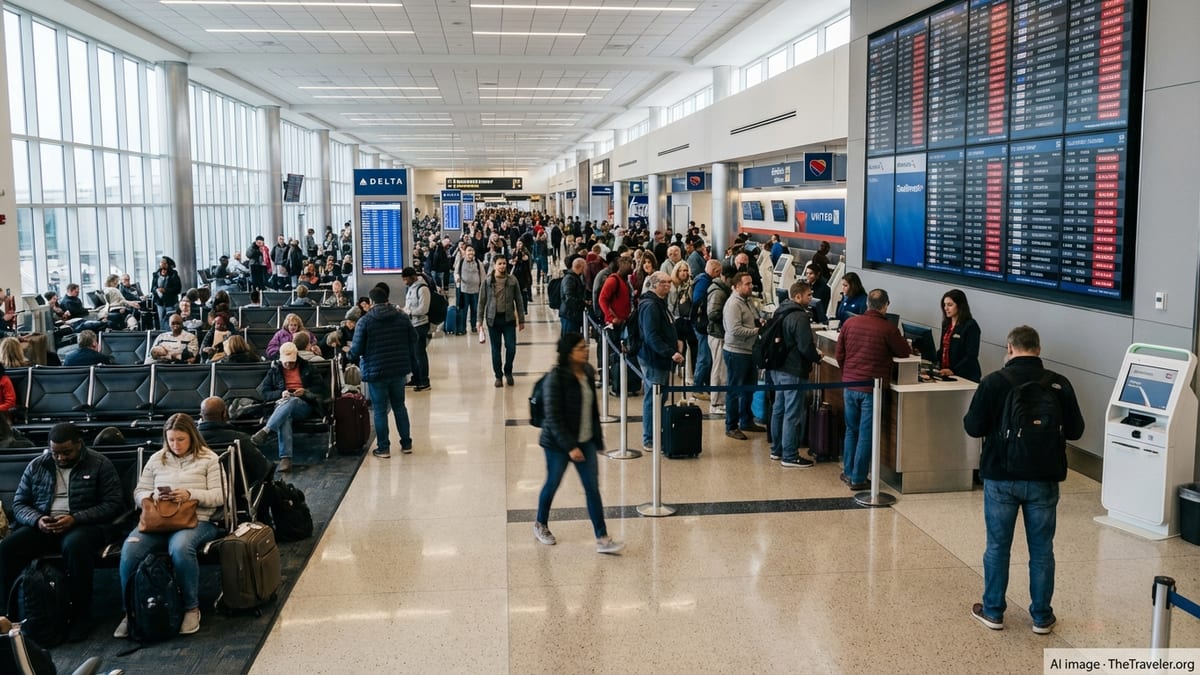
Major Carriers Hit by Wave of Schedule Disruptions
Publicly available flight tracking data for April 4 indicates that Calgary International Airport has recorded 39 delayed departures and arrivals and 3 outright cancellations, affecting routes within western Canada as well as key connections to Toronto and Vancouver. The disruptions involve a roster of major airlines, including WestJet, Air Canada, American Airlines, Sunwing, and Delta, all of which maintain regular traffic through Calgary.
The pattern mirrors a wider trend of operational strain seen across Canadian hubs in recent days, with industry-focused coverage noting elevated levels of delays and cancellations at Toronto Pearson and Vancouver International as well. Earlier this week, similar counts of disrupted flights were reported across multiple Canadian airports, suggesting that the issues emerging in Calgary are part of a broader network challenge rather than an isolated local event.
While precise causes can vary by flight, aviation observers point to a familiar mix of factors that commonly trigger this type of cascading disruption, from tight aircraft and crew rotations to minor technical checks, ground handling bottlenecks, and congestion elsewhere in the network. Even relatively small schedule upsets on early services can leave aircraft and crews out of position for later legs, amplifying the impact by mid-day.
The result for travelers at Calgary has been a patchwork of rolling departure estimates, crowded gate areas, and uncertain arrival times for those attempting to make onward connections to Toronto, Vancouver, and other Canadian cities.
Calgary Delays Ripple Into Toronto and Vancouver
Calgary’s role as a key western hub means that disruption there rarely stays local. Several of today’s delayed departures are tied to routes that connect directly to Toronto Pearson and Vancouver International, two of the country’s busiest airports and important interchange points for both domestic and transborder trips.
Recent aviation reports highlight that, on other days this week, Toronto and Vancouver have already been managing sizable numbers of delayed and cancelled flights of their own. When Calgary-originating services run late into these hubs, they feed into already tight schedules, increasing the risk of missed connections and additional knock-on delays for subsequent departures.
Travel industry coverage has previously underscored how even a few dozen delays at regional hubs can accumulate into more than a hundred disrupted flights across the national network. The current situation appears to be following that pattern, with Calgary’s 39 delays and 3 cancellations contributing to a wider tapestry of schedule changes affecting passengers who may never set foot in Alberta but depend on aircraft and crews routed through the province.
For travelers booked on multi-leg itineraries, this has translated into extended layovers, unexpected overnight stays, and the prospect of arriving many hours behind schedule at final destinations across Canada and beyond.
WestJet, Air Canada, American, Sunwing, and Delta Among Affected Airlines
WestJet and Air Canada, which both operate substantial schedules through Calgary, appear prominently in today’s lists of affected flights, alongside American Airlines, Sunwing, and Delta. These carriers collectively serve a wide range of domestic, transborder, and leisure routes that are highly sensitive to schedule changes, particularly during peak travel periods.
Industry analysis of recent operational performance has noted that Canadian carriers, including WestJet and Air Canada, have experienced recurring pockets of disruption over the past two years, often linked to weather, air traffic control constraints, and resource shortages at key airports. In parallel, U.S. airlines such as American and Delta have faced their own episodes of irregular operations, highlighting how tightly integrated North American networks can transmit problems across borders.
Sunwing, which focuses heavily on leisure markets, has previously drawn attention when technical or systems-related issues affected its ability to operate flights on time, prompting advisories for travelers to monitor flight status closely. The inclusion of the carrier among those impacted in Calgary today raises particular concern for holidaymakers with tightly timed resort stays or cruise connections.
Although each airline’s policies differ, passengers typically find that rebooking options, meal vouchers, and hotel support depend on the cause of the disruption and whether it falls within the airline’s control, making clear, timely communication critical for those trying to adjust their plans from the terminal floor.
Passengers Face Long Waits, Missed Plans, and Limited Options
For passengers at Calgary International, the operational details translate into very personal challenges. Extended waits at gates, uncertainty about rebooking options, and anxiety over missed events or tours are common experiences on a day marked by dozens of delays and multiple cancellations.
Reports from previous disruption events in Canada show that travelers frequently struggle to secure same-day alternatives when flight loads are already high, particularly on popular domestic corridors linking Calgary with Toronto and Vancouver. When more than one major carrier is facing schedule pressure at the same time, spare seats become scarce, and options to switch airlines or reroute through other hubs diminish rapidly.
Families and business travelers alike often must decide whether to wait in hopes of a late-night departure or accept rebooking for the following day, sometimes at the expense of prepaid accommodations, car rentals, or meetings. In such circumstances, travel insurance and credit card protection can play an important role, but many travelers only learn the details of their coverage once they are already in difficulty.
Observers note that the emotional toll of uncertainty can be as significant as the financial impact, with passengers describing past episodes of being “stranded” in Canadian airports for hours or days while they navigated complex rebooking processes and unclear timelines for recovery.
What Today’s Disruptions Signal for Canada’s Air Travel Network
The events at Calgary International on April 4 underscore the fragility of a highly interconnected air travel system in which relatively modest local disruption can generate substantial national consequences. With a total of 39 delays and 3 cancellations linked to flights involving some of North America’s largest carriers, the episode adds to a growing body of evidence that Canadian air travel remains vulnerable to operational shocks.
Recent coverage of system-wide disruption days across Canada has highlighted that airports such as Calgary, Toronto, and Vancouver are increasingly operating at or near capacity during peak periods. Under these conditions, even small variations in weather, air traffic flow, or staffing can leave airlines little margin to absorb unexpected events without resorting to schedule changes.
Analysts suggest that ongoing investment in airport infrastructure, improved coordination between airlines and air navigation services, and more resilient crew and fleet planning will be key to reducing the scale and frequency of incidents like today’s. At the same time, travelers are being encouraged by consumer advocates and travel media to build additional buffer time into itineraries that rely on tight connections through major Canadian hubs.
For the hundreds of passengers who found themselves waiting at Calgary, Toronto, and Vancouver on April 4, however, the immediate priority remained simple: securing a seat on a flight that would finally get them to their destinations, even if it arrived far later than they originally planned.