

More news on this day
Hundreds of travelers faced long waits and uncertain connections on Monday as Cincinnati/Northern Kentucky International Airport recorded roughly 50 flight delays and four cancellations, disrupting operations for major carriers and itineraries across the United States.
Get the latest news straight to your inbox!
Widespread Delays Ripple Across Major Routes
Publicly available flight-tracking data for Cincinnati/Northern Kentucky International Airport on Monday showed about 50 delayed departures and arrivals alongside four outright cancellations. The disruptions affected a cross-section of domestic routes, including key connections to Chicago, Atlanta and Orlando, amplifying the impact on travelers using the airport as both an origin and a connecting hub.
The pattern of delays suggested a mix of weather and broader system congestion, with many flights operating behind schedule rather than being removed from the schedule entirely. Flights bound for large hubs such as Chicago and Atlanta, which themselves were managing weather and traffic constraints, appeared particularly vulnerable to knock-on delays as crews and aircraft rotated through strained networks.
Reports from passengers and aviation watchers indicated that late-arriving inbound aircraft were a recurring issue, forcing rolling pushbacks in departure times throughout the day. As the schedule slipped, shorter-haul services and regional operations were among the first to see significant timetable changes, with some departures pushed into late evening.
While four cancellations may seem modest compared with disruptions at the country’s largest hubs, the concentrated effect at a mid-sized airport can be significant. With limited frequencies on some routes and high demand related to recent storm systems, a small number of cancellations can quickly cascade into missed connections and crowded rebooking queues.
Impact on Major Airlines and Connecting Passengers
According to airline status boards and tracking platforms, operations for Delta Air Lines, Southwest Airlines, United Airlines and other carriers all experienced some level of disruption at Cincinnati/Northern Kentucky International Airport. Delays ranged from modest schedule slips of 30 to 45 minutes to extended waits of several hours as carriers worked to reposition aircraft and crews.
Passengers on routes to major hubs such as Chicago and Atlanta were particularly exposed, since these airports serve as primary transfer points for cross-country and international itineraries. A late departure from Cincinnati can easily translate into missed onward flights, forcing same-day rebooking, overnight stays or complete itinerary changes for travelers connecting through those hubs.
Services to leisure destinations including Orlando also saw schedule volatility. When flights to vacation markets operate only a few times per day from a regional gateway, a single significant delay or cancellation can leave travelers with limited immediate alternatives, especially during busy travel periods influenced by school holidays or peak-season demand.
Publicly available airline rebooking tools showed constrained seat availability on some subsequent departures, mirroring nationwide capacity pressures after successive winter storm systems. For many affected travelers, that meant longer layovers, re-routes through less direct paths, or standby status while they waited for an open seat.
Travelers Confront Overnight Stays and Full Rental Car Lots
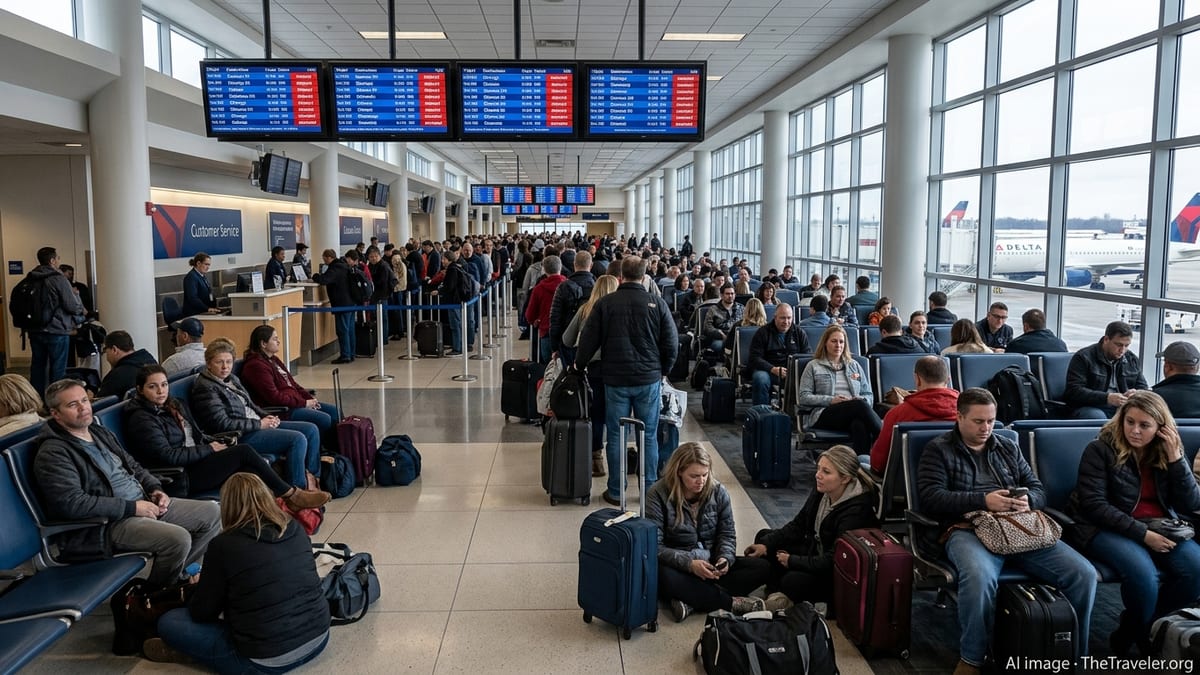
Accounts shared on social platforms and travel forums described long lines at customer service desks, crowded gate areas and uncertainty about when flights would depart. Some passengers reported being rebooked for next-day departures after cancellations or severe delays, effectively stranding them overnight in the Cincinnati and Northern Kentucky area.
As is common during regional disruption events, hotel capacity and ground transportation were also strained. Travelers noted difficulty finding last-minute rooms near the airport and reported limited availability of rental cars, a recurring pattern at secondary hubs when multiple flights are delayed or canceled within a short window.
Families traveling with children and passengers with tight onward commitments, such as cruises or events, appeared especially affected. Many described adjusting plans on the fly, including rerouting through alternative hubs, switching airlines where possible or seeking bus and rail options to nearby major cities when flight options became scarce.
Airlines’ self-service tools and mobile apps provided some relief, allowing travelers to confirm new itineraries without waiting in line. However, for those with checked baggage or complex multi-carrier tickets, resolving disruptions on the ground at the airport often remained necessary, adding to congestion at help desks and customer support counters.
Weather Systems and Network Strain Behind the Snarl
The latest disruptions at Cincinnati/Northern Kentucky International Airport follow a series of significant winter weather events that have affected the broader Midwest and Ohio Valley in early 2026. Recent storm complexes and blizzard conditions across the region and farther north have forced airlines to repeatedly reshuffle networks, reposition aircraft and juggle crew schedules, putting added stress on operations even on days with more moderate local weather.
Historical data from recent weeks shows that large-scale storm systems can lead to thousands of cancellations and delays nationwide, with mid-continent and Great Lakes hubs absorbing much of the impact. When major hubs slow down, smaller airports linked to them through spoke routes often experience secondary disruption as carriers concentrate resources on the busiest corridors.
In such conditions, mid-sized airports like Cincinnati can experience sharp but temporary spikes in irregular operations. A relatively small number of cancellations combined with dozens of delayed flights can create conditions that feel like a major disruption on the ground, especially during peak departure banks when multiple carriers are scheduled to move large volumes of passengers in a short time.
Observers note that recovery from these events is rarely instantaneous. Crews must comply with duty-time rules, aircraft may require de-icing or additional maintenance checks after operating in harsh weather, and slot-controlled hubs can limit the speed at which delayed flights are accommodated. These factors can keep disruption levels elevated for several days after the most severe weather has passed.
What Travelers Can Expect in the Coming Days
Based on recent patterns following regional storms and system-wide congestion, travelers using Cincinnati/Northern Kentucky International Airport in the coming days may continue to see residual delays, even if the number of outright cancellations remains limited. Airline schedules typically take time to fully normalize as aircraft and crew rotations are brought back into balance.
Travel experts generally advise passengers to monitor flights closely in the 24 hours before departure, check in early and keep digital notifications enabled for schedule changes. During periods of heightened disruption, same-day schedule adjustments are more likely, and early awareness can expand rebooking options before popular alternatives fill up.
Passengers with essential same-day connections through hubs like Chicago, Atlanta or other major cities may wish to allow additional buffer time between flights or consider earlier departures where possible. Longer layovers can help absorb minor delays without jeopardizing onward travel, particularly when severe weather remains in the forecast for parts of the nationwide route network.
While Monday’s tally of around 50 delayed flights and four cancellations at Cincinnati/Northern Kentucky International Airport represents only a fraction of nationwide disruption totals, the experience underscores how quickly regional weather and network strain can upend travel plans. With winter weather patterns still active across much of North America, travelers are likely to continue navigating a more unpredictable flying environment as airlines work to stabilize schedules.