

More news on this day
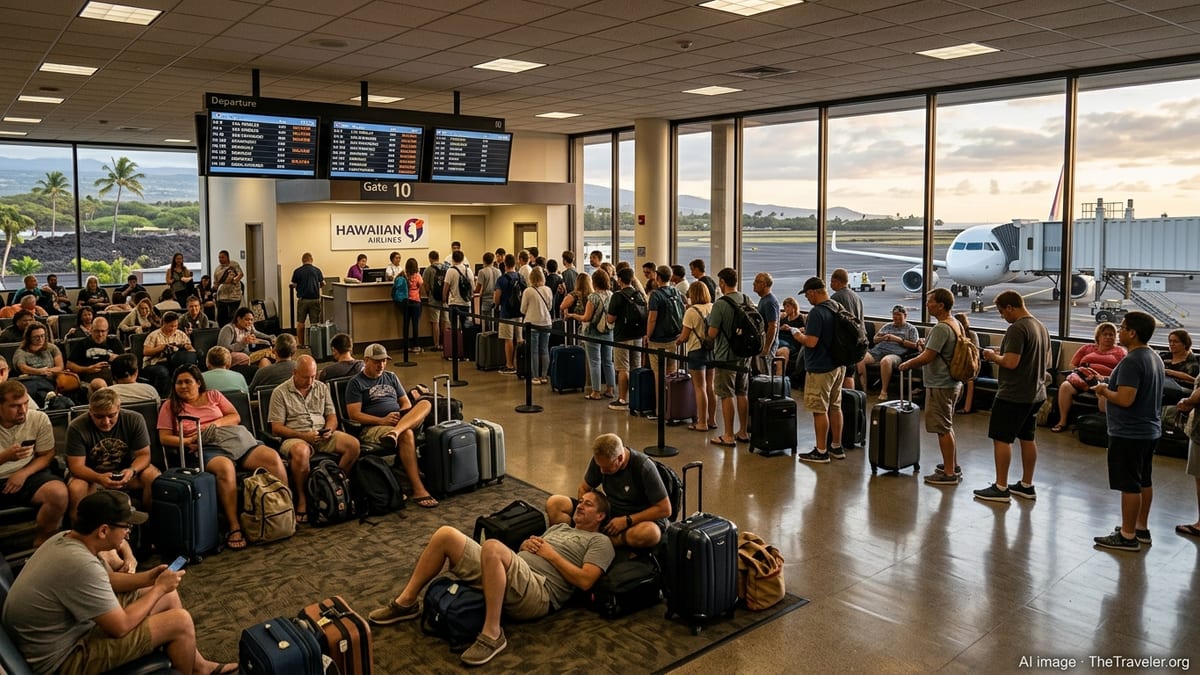
Hundreds of travelers were left facing hours-long delays and last-minute cancellations at Ellison Onizuka Kona International Airport on Hawaii Island, as publicly available flight-status data on Sunday indicated at least 11 delayed departures and four cancellations affecting major carriers and key routes to the U.S. mainland and Honolulu.
Get the latest news straight to your inbox!
Significant Disruptions at a Key Hawaii Gateway
The operational problems at Ellison Onizuka Kona International Airport, commonly known as Kona Airport, concentrated around a core set of routes linking Hawaii Island with Los Angeles, San Francisco, Honolulu and other West Coast and inter-island destinations. Flight tracking boards showed a cluster of departures listed as significantly delayed, alongside outright cancellations, creating bottlenecks across the afternoon and evening schedule.
Reports indicate that the disruptions involved multiple carriers, including Hawaiian Airlines, American Airlines, Alaska Airlines and other domestic operators that connect Kona with major hubs. The mix of delays and cancellations meant many passengers were not only stuck in Kona but also at risk of missing onward connections on the mainland.
Publicly accessible aviation data and local coverage suggest that the impact extended beyond a single departure bank, with staggered late departures and scrubbed flights rippling through the day. Travelers described crowding in gate areas and longer queues at airline counters as they sought rebooking options and clarification on revised departure times.
The elevated number of affected flights at a relatively compact airport like Kona amplified the disruption. With limited daily frequencies to certain mainland cities, losing even a handful of departures can leave travelers waiting until the following day for open seats, especially during busy travel periods.
Mainland and Honolulu Routes Hit Hard
The hardest-hit passengers were those booked on flights between Kona and major West Coast cities such as Los Angeles and San Francisco, as well as on high-demand services to Honolulu, which function as crucial connectors to other islands and long-haul routes. According to flight-status dashboards, several departures on these corridors were either delayed for multiple hours or canceled outright.
Such interruptions can quickly cascade through airline networks. Travelers heading to Los Angeles or San Francisco often rely on tight connections to reach destinations across North America and beyond. When an evening Kona departure is significantly delayed or removed from the schedule, options to reroute via other islands or carriers can narrow rapidly.
Honolulu services from Kona play an equally important role for inter-island business travelers, residents, and visitors who have onward flights from the state’s primary international gateway. When these legs encounter long delays or cancellations, passengers may miss transpacific departures and face overnight stays or complex rebooking along alternative island-hopping routes.
Available scheduling information shows that the reduced reliability on these key links has an outsized effect compared with a similar event at a larger mainland airport. With fewer backup flights and more limited late-night operations, Hawaii-bound and Hawaii-based travelers can experience extended disruptions when irregular operations occur.
Multiple Airlines Grapple With Operational Strain
The day’s flight records indicate that no single carrier bore the entire brunt of the problems. Hawaiian Airlines, which maintains a significant presence in Kona and operates both inter-island and mainland routes, accounted for a portion of the late and canceled flights. American Airlines and Alaska Airlines, both important links between Hawaii Island and the continental United States, also saw schedules affected, alongside other operators.
Publicly available information does not point to a single, clearly defined cause for the disruptions. In modern airline operations, a combination of factors can lead to irregular operations, including aircraft maintenance needs, crew scheduling constraints, weather along flight paths, and the knock-on effects of earlier delays elsewhere in the network.
Industry observers note that Hawaii routes can be particularly vulnerable once delays build up, because aircraft and crews may have fewer alternate airports and schedule windows available for recovery. When a flight is pushed back repeatedly or canceled outright, the aircraft and crew intended for the next leg can be displaced, spreading disruption into later departures.
Operational strain may also be compounded when airlines are already working with tightly scheduled fleets serving popular island destinations. In such circumstances, a small number of mechanical issues or staffing challenges can translate quickly into widespread inconvenience for passengers at an airport like Kona.
Stranded Passengers Face Long Waits and Limited Options
For travelers caught in the disruption at Kona Airport, the practical consequences ranged from missed family events and lost vacation time to added expenses for lodging and food. Public online posts from affected passengers referred to extended waits in terminal seating areas, shifting departure estimates on information screens, and uncertainty about when reliable alternatives would become available.
Unlike larger mainland hubs where dozens of flights may connect the same city pairs, Kona’s relatively lean schedule reduces flexibility once irregular operations appear. When a limited number of daily departures to Los Angeles or San Francisco are canceled or heavily delayed, rebooking many passengers onto later services can prove challenging, particularly if those flights are already heavily booked.
Travelers attempting to reach Honolulu to meet onward departures also face complex decisions when inter-island flights are disrupted. Some may elect to reroute through other islands or connect via different mainland hubs, while others may need to accept overnight stays and complete their journeys the following day, depending on seat availability and personal schedules.
Consumer advocates point to federal rules that define lengthy delays and cancellations as significant events, noting that passengers may be eligible for refunds when an airline cancels a flight or makes substantial schedule changes. However, compensation policies can vary by carrier and circumstance, and many travelers must navigate these details while already coping with the stresses of being stranded away from home.
Ongoing Scrutiny of Airline Reliability on Hawaii Routes
The episode at Kona Airport comes against a broader backdrop of heightened attention to airline performance across U.S. domestic and transpacific routes, including those serving Hawaii. Recent seasons have seen recurring complaints from travelers about operational reliability, long delays, and communication challenges when flights do not run as scheduled.
Public data from transportation regulators and independent trackers has highlighted variability in on-time performance among carriers and routes serving the islands. Observers note that while Hawaii remains a high-demand leisure and visiting-friends-and-relatives market, the geographic isolation of the state magnifies the human impact of irregular operations compared with disruptions in more connected regions.
For Hawaii residents, disruptions on routes linking Kona to Honolulu and the mainland are not just a vacation inconvenience but a recurring concern affecting medical appointments, work travel, and essential family visits. For visitors, irregular operations can cut short long-planned trips or add unanticipated costs to already expensive itineraries.
As airlines continue to adjust their schedules and capacity in and out of Hawaii, travel analysts suggest that reliability metrics and customer experience on island routes will remain under close watch. The latest wave of delays and cancellations at Kona Airport reinforces how quickly operational strain on a single day can ripple outward, affecting hundreds of travelers and drawing renewed focus to how carriers manage disruptions in one of the world’s most remote air travel markets.