

More news on this day
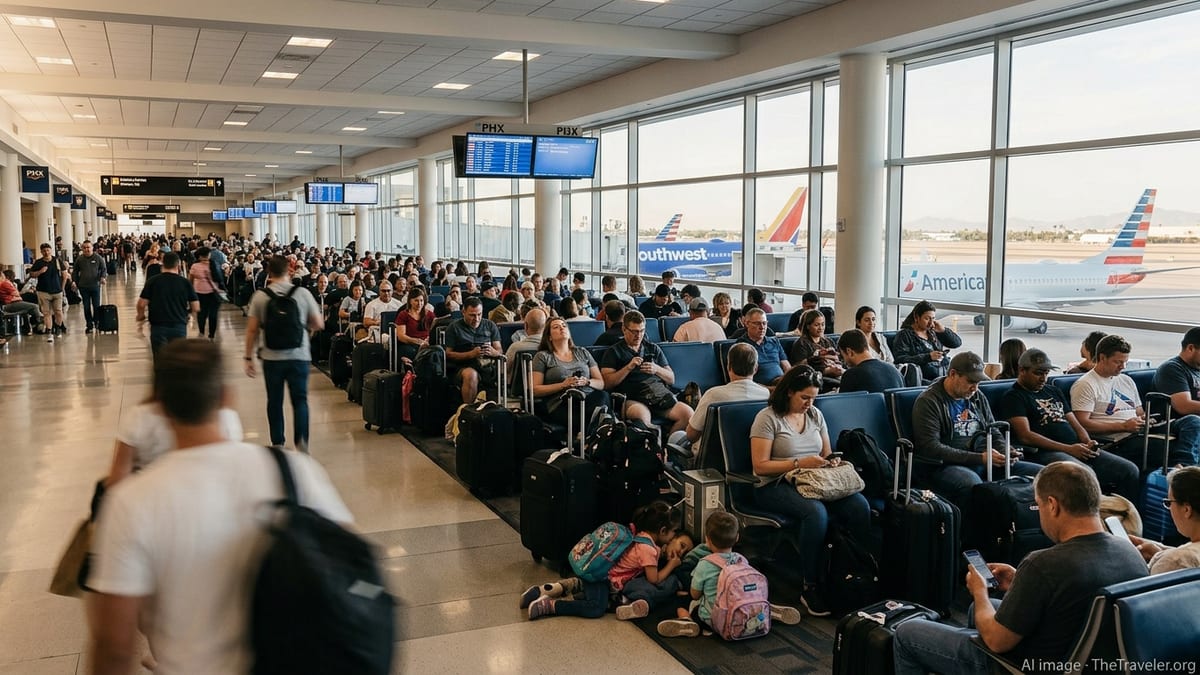
Hundreds of travelers at Phoenix Sky Harbor International Airport in Arizona faced hours of disruption as publicly available flight tracking data on March 22 indicated at least 137 delayed departures and two cancellations, snarling operations for major carriers and impacting key routes across the United States.
Get the latest news straight to your inbox!
Major Airlines See Schedules Upended Across Key Domestic Routes
The disruption at Phoenix Sky Harbor involved a broad mix of carriers, with American Airlines, Southwest Airlines and Delta Air Lines among the operators experiencing the largest number of schedule changes. Publicly visible departure boards and flight-tracking platforms showed delays rippling across morning and afternoon banks, particularly on high-frequency business and leisure routes.
Flights from Phoenix to New York, Chicago and Atlanta, along with other hub destinations such as Dallas, Denver and Los Angeles, were among the services most affected. Many departures showed rolling delays extending 45 minutes to more than two hours, forcing travelers to remain in terminal gate areas while crews and aircraft were repositioned.
Some connections at downline hubs were also impacted, as aircraft and crews scheduled to operate onward services arrived late from Phoenix. Passengers with tight connections in cities like Chicago and Atlanta faced rebookings onto later departures as airlines adjusted their networks to accommodate the disruption.
The limited number of outright cancellations, compared with the far larger tally of delays, suggested efforts by carriers to keep most flights operating, even with extended ground times. However, for travelers with evening commitments or international connections, the prolonged waits still represented significant interruptions to carefully planned itineraries.
Weather, Airspace Management and Capacity Constraints Converge
While Phoenix is known for generally stable flying conditions, recent seasonal weather systems across the United States, combined with airspace management measures, have placed additional pressure on flight operations. Publicly available aviation data in March highlighted intermittent low cloud ceilings, ground delay programs at major hubs and route adjustments tied to winter and early spring storm systems across the Midwest and East Coast.
When departures from Phoenix are routed into regions dealing with congestion or adverse weather, flights can receive extended departure times to prevent bottlenecks at arrival airports. In practice, that can leave aircraft ready for pushback at Sky Harbor but held at gates or on ramps until updated release times are issued, contributing to the kind of rolling delays logged across dozens of departures.
Industry performance reports also indicate that Phoenix Sky Harbor, while generally efficient, is not immune to broader systemic issues such as national air traffic staffing constraints and construction-related capacity reductions. Federal aviation documentation for the current period notes taxi and gate operations at Phoenix may experience minor slowdowns tied to ongoing airfield work, which can compound delays during already busy travel windows.
For passengers on the concourses, the result is often experienced simply as crowded gate areas and repeated schedule updates, even when the primary causes of delay originate outside Arizona or involve national-level traffic management decisions.
Stranded Travelers Face Long Waits, Missed Connections and Extra Costs
By midday, terminal seating areas at Phoenix Sky Harbor were noticeably crowded as passengers on delayed flights waited for revised boarding times. Families traveling for spring holidays, business travelers connecting to East Coast meetings and visitors returning from Arizona vacations were among those facing extended stays in the terminal.
Travelers with connections through New York, Chicago and Atlanta were particularly affected, as delays departing Phoenix eroded built-in layover buffers. Publicly available flight schedules showed some passengers forced onto later evening services or next-day flights when original onward connections became unworkable.
The disruption also carried financial implications. While many airlines sought to rebook customers at no additional charge when missed connections occurred, some travelers without flexible tickets or those using separate bookings faced extra costs for last-minute hotel stays, meals and replacement flights. Airport concessions remained busy throughout the day as passengers waited out extended ground times.
Despite the challenges, Phoenix Sky Harbor’s layout and amenities provided some relief, with travelers using walkways, seating zones and dining areas across Terminals 3 and 4 to pass the time. Nevertheless, the cluster of delays served as a reminder of how quickly a concentrated day of schedule disruptions can cascade through one of the Southwest’s primary aviation hubs.
Operational Outlook and Guidance for Upcoming Phoenix Departures
Looking ahead, published airfield planning documents show that Phoenix Sky Harbor is in the midst of a period that includes construction-related adjustments and seasonal traffic peaks, factors that can elevate the risk of delays during busy times of day. Even moderate constraints on gate or taxi capacity can magnify the impact of any weather or airspace restrictions elsewhere in the country.
Travel industry guidance commonly recommends that passengers departing large hub airports like Phoenix build additional buffer time into their itineraries, particularly when connecting through weather-sensitive hubs in the Midwest or Northeast. Morning departures often retain a higher on-time performance, while later flights can be more susceptible to cascading delays from earlier disruptions.
Publicly accessible tools such as airline mobile applications, airport departure boards and independent flight-tracking platforms can help travelers monitor real-time changes to gate assignments and departure times. On days when delay counts begin to climb, same-day rebooking onto earlier flights, when available, may reduce the risk of missed connections downline.
For those planning travel through Phoenix in the coming days, monitoring conditions not only at Sky Harbor but also at destination and connecting airports can provide a clearer picture of potential disruptions. As demonstrated by the 137 delays and two cancellations recorded in a single day, localized operations can be significantly affected by conditions playing out hundreds or even thousands of miles away.