

More news on this day
Passengers across the United Arab Emirates and Saudi Arabia are facing fresh travel turmoil as FlyDubai, Air Arabia, Saudia and Gulf Air register 18 flight cancellations and 98 delays, disrupting major routes and leaving travelers stranded at some of the Middle East’s busiest hubs.
Get the latest news straight to your inbox!
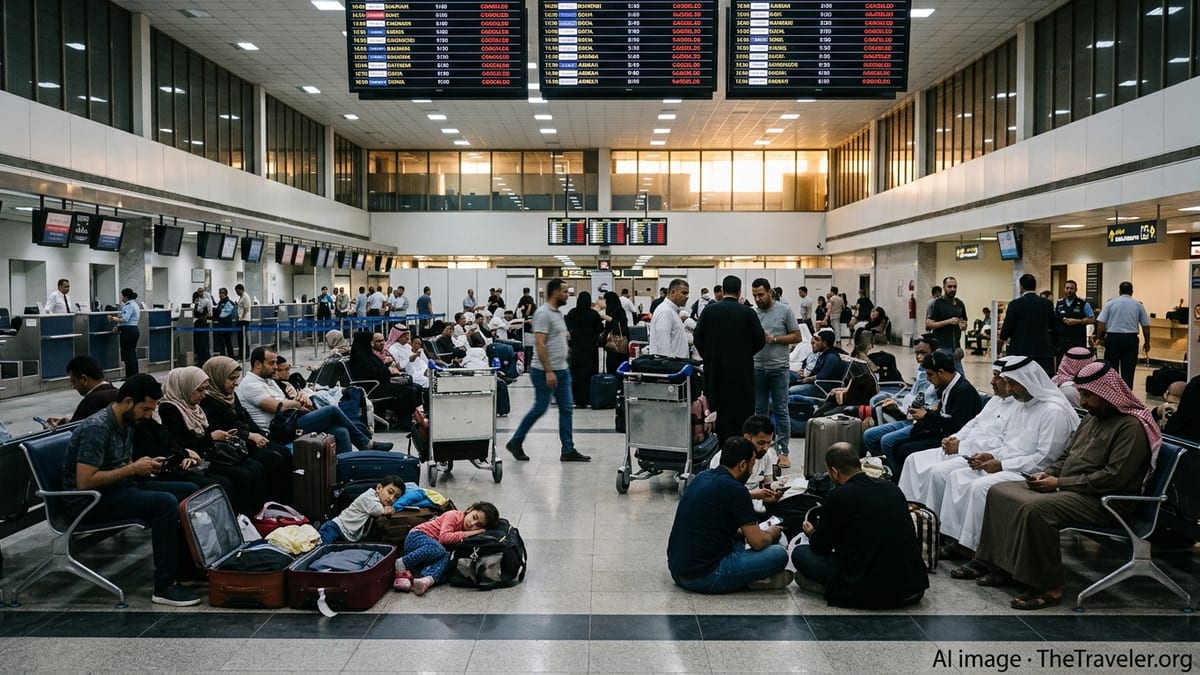
Flight Cancellations Concentrated at Key Gulf Gateways
Published aviation data and regional travel coverage for April 12, 2026 indicate that the latest wave of disruption is concentrated at major airports in the UAE and Saudi Arabia, including Dubai International, Sharjah and key Saudi hubs such as Jeddah and Dammam. FlyDubai, Air Arabia, Saudia and Gulf Air together account for 18 grounded flights and 98 delayed services, compounding an already fragile operating environment across the region.
Reports tracking day-of-operation performance show that FlyDubai has been among the most affected carriers at Dubai International, where a cluster of cancellations and late departures has rippled across short haul routes to the Gulf, Levant and South Asia. Air Arabia, which operates out of Sharjah and other UAE airports, is also recording cancellations and rolling delays on high demand routes, including services linking the Emirates with South Asian and North African markets.
In Saudi Arabia, Saudia and Gulf Air are contending with a similar pattern of disruption, particularly on flights linking Saudi cities to nearby Gulf capitals and longer haul connections to Europe and Asia. Publicly available tracking tools show that even a relatively small number of cancellations is generating outsized knock on effects as aircraft and crews fall out of position and already limited spare capacity is quickly exhausted.
The cumulative result is a patchwork of interruptions that make it difficult for passengers to predict whether flights will depart as scheduled, even when services remain formally listed as operating. Travel analysts note that the figures reported for April 12 represent a snapshot of a broader and more volatile pattern that has persisted throughout recent weeks.
Regional Airspace Pressures Amplify Operational Strain
The latest disruptions are unfolding against a backdrop of heightened geopolitical tension and airspace restrictions that have transformed the operating map for Middle Eastern carriers. Coverage from regional and international outlets in recent days highlights how closures and restrictions affecting corridors over parts of Iran, Iraq and Israel have forced airlines to reroute or trim services, increasing flight times and operational complexity.
Analysts point out that the Middle East sits at a crossroads for global aviation, and that any constraint on overflight rights can quickly cascade across networks. Longer routings raise fuel burn and crew duty times, while aircraft spend more hours in the air and fewer on the ground, reducing scheduling flexibility. These pressures make it harder for airlines such as FlyDubai, Air Arabia, Saudia and Gulf Air to absorb routine disruptions caused by weather, technical checks or congested air traffic flows.
Recent coverage on the wider impact of the Iran conflict on global aviation also underlines how Gulf based carriers have had to adjust timetables, suspend certain routes and, in some cases, operate limited repatriation style services rather than full commercial schedules. Against this constrained baseline, even a modest uptick in same day delays and cancellations can quickly translate into visible queues, missed connections and overnight strandings at hub airports.
Industry observers note that regional disruptions are not occurring in isolation. Reports from Europe and North America over the past week, including jet fuel supply concerns and labor related disruptions, show airlines worldwide grappling with similar volatility, underscoring how quickly air travel systems can become stressed when multiple shocks converge.
Passengers Face Missed Connections, Visa Hurdles and Extra Costs
For travelers, the numerical tally of 18 cancellations and 98 delays translates into missed family events, lost business opportunities and mounting out of pocket expenses. Social media posts and passenger forums are filled with accounts of travelers sleeping on terminal floors, scrambling to rebook via alternative hubs and facing uncertainty over reimbursement for hotels, meals and replacement tickets.
Connecting passengers are among the hardest hit. Many itineraries involving FlyDubai, Air Arabia, Saudia and Gulf Air rely on tight transfers through Dubai, Sharjah, Jeddah or Dammam to reach final destinations in Asia, Africa or Europe. When an initial segment is canceled or severely delayed, downstream legs are often forfeited or require complex reissuing, particularly when multiple carriers appear on the same booking.
In some cases, travelers transiting without prearranged visas find themselves unable to leave the airport when overnight disruptions occur, compounding fatigue and limiting access to accommodation. Others report difficulties reaching call centers or securing clear written confirmation of cancellations and delays, paperwork that is often needed to support insurance claims or requests for compensation under applicable consumer protection rules.
Consumer advocates monitoring the situation point out that experiences can differ significantly from one carrier to another, and even between passengers on the same airline, depending on ticket type, point of sale and whether the disruption is attributed to extraordinary circumstances or operational decisions.
Airlines Adjust Policies as Travelers Seek Clarity
In response to the continuing instability, FlyDubai, Air Arabia, Saudia and Gulf Air have updated portions of their publicly available travel advisories and conditions of carriage in recent weeks, outlining options for rebooking, vouchers or refunds in the event of cancellation. Documents describing FlyDubai’s current disruption policies emphasize rebooking on the next available flight and, in some circumstances, the issuance of travel vouchers when schedules are heavily impacted.
Guides and policy summaries circulated for Air Arabia and Saudia similarly reference rebooking, credits and partial refunds, although travelers posting online frequently highlight confusion over how these options are applied in practice. Some passengers describe receiving vouchers where they had expected cash refunds, while others report delays in receiving responses to refund or reissue requests sent through digital channels.
Travel industry commentators note that Gulf based carriers must also work within varying legal and regulatory frameworks depending on a passenger’s origin and destination. Flights touching the European Union or United Kingdom, for example, involve specific compensation regimes, while trips beginning and ending outside those jurisdictions may fall under different national or contractual rules.
As airlines seek to preserve liquidity and manage capacity through an uncertain operating environment, tensions can arise between commercial imperatives and passenger expectations. Clear, accessible information about rights, remedies and time frames for processing claims is emerging as a key factor in how travelers perceive each carrier’s handling of the crisis.
What Travelers Can Do Amid Ongoing Uncertainty
With flight schedules in the Gulf remaining fluid, travel experts recommend a cautious, highly informed approach for anyone planning to fly with FlyDubai, Air Arabia, Saudia or Gulf Air in the coming days. Public guidance from aviation and consumer groups emphasizes checking flight status repeatedly in the 24 hours before departure, monitoring both airline apps and airport information boards for last minute changes.
Travel planners also encourage passengers to build in longer connection times where possible, particularly when itineraries involve separate tickets or transfers between different Gulf hubs. Booking fully flexible or refundable fares, while more expensive upfront, may offer useful protection in a landscape where route suspensions and day of travel adjustments have become more common.
Insurance specialists advise reviewing the fine print of travel policies to understand which types of disruption are covered, and whether benefits apply only when cancellations are initiated by the airline. Keeping records of boarding passes, delay notifications and receipts for incidental expenses can be critical if travelers later seek reimbursement or compensation.
While some regional carriers are beginning to cautiously restore selected routes, reports from airports across the UAE and Saudi Arabia on April 12 suggest that irregular operations remain widespread. For now, passengers flying through the Gulf’s busiest hubs are likely to face an environment where flexibility, patience and diligent preparation are as essential as a valid ticket and passport.