

More news on this day
Spring travelers at Indianapolis International Airport faced an unexpectedly tense Sunday as flight-tracking tallies showed 48 delayed services and 5 cancellations, stranding passengers on busy domestic and international routes and rippling disruption across airline networks in the United States and Europe.
Get the latest news straight to your inbox!
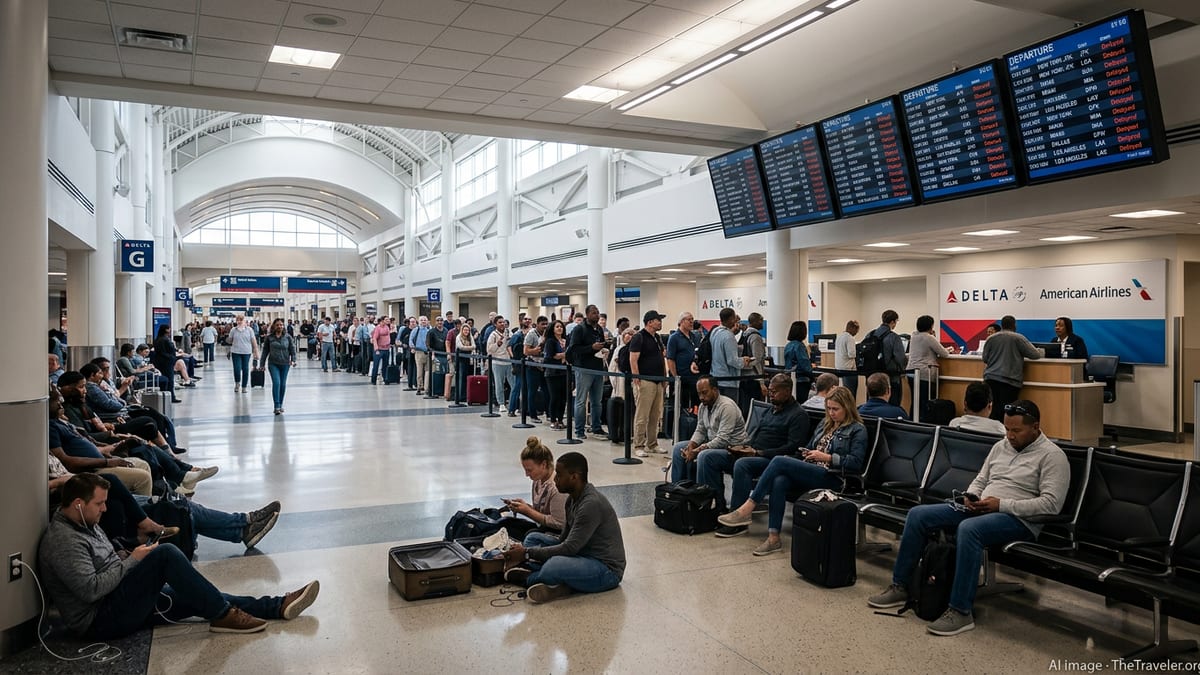
Disruptions Hit Major U.S. and European Gateways
Publicly available aviation dashboards on April 5 and 6 indicate that operations at Indianapolis International Airport were affected across multiple carriers, contributing to a broader pattern of delays and cancellations seen at several U.S. airports in early April. Recent coverage has documented elevated disruption at major hubs such as Los Angeles, Detroit, Dallas Fort Worth, and New York, with knock-on effects across domestic and transatlantic networks.
At Indianapolis, the 48 delays and 5 cancellations affected a mix of short and medium haul services, feeding into onward connections at hubs including New York, Atlanta, Chicago, and international gateways in Europe. Aggregated route data show that Indianapolis is linked to large hubs and intercontinental services through carriers such as American Airlines, Delta Air Lines, Southwest Airlines and others, meaning that even a modest number of disrupted departures can quickly cascade into missed connections.
Published industry information for April 2026 describes Indianapolis as a growing node in the U.S. network, with expanding connectivity to Canada, Central America and Europe. When services from such a node fall behind schedule, itineraries involving onward travel to cities like Frankfurt or large coastal centers such as New York and Los Angeles become vulnerable to additional delays and rebookings.
The timing of the Indianapolis disruptions coincides with a busy spring period in North American aviation, following a winter season marked by major storms and a blizzard in March that left schedules tightly wound and susceptible to renewed pressure. Analysts routinely note that when airlines operate dense timetables with limited spare capacity, even localized operational strains can trigger wider network imbalances.
American, Delta, Southwest and Others Affected
According to flight-tracking snapshots and recent airline activity reports, American Airlines, Delta Air Lines and Southwest Airlines remain among the largest operators at Indianapolis, alongside carriers such as United Airlines, Allegiant and several international partners. The mix of 48 delayed flights and 5 cancellations involved departures and arrivals on multiple brands, mirroring patterns observed at other airports where no single airline has been solely responsible for the disruption.
In recent days, travel-industry coverage has highlighted similar situations at Nashville, Detroit and New York’s LaGuardia, where combinations of weather, congestion and staffing constraints produced mixed disruption across legacy and low cost carriers. These reports describe American, Delta, Southwest and other airlines all contending with tight aircraft rotations, crew duty limits and heavy passenger volumes at the start of the spring travel surge.
While detailed airline-by-airline breakdowns for Indianapolis on this particular day are limited in public reporting, historical data and current schedule maps show that American and Delta use the airport to funnel passengers into major hubs including Chicago, New York area airports and Atlanta. Southwest, which operates dozens of point to point routes into Indianapolis, provides additional connectivity to large cities in the Midwest, South and West Coast, increasing the number of itineraries exposed whenever delays emerge.
The shared nature of these pressures makes it difficult for passengers to avoid knock-on effects simply by choosing one carrier over another on busy days. Industry observers point to a combination of structural constraints, including air traffic control staffing, airport infrastructure limits and high utilization of aircraft fleets, as underlying factors that can affect multiple airlines at the same time.
Key Routes to New York, Atlanta, Chicago and Frankfurt Disrupted
Route databases for April 2026 confirm that Indianapolis maintains frequent links with large domestic hubs such as Atlanta, Chicago and the New York metropolitan area, as well as intercontinental connectivity to Europe. Recent service announcements and route maps highlight connections to Frankfurt and other major European gateways via both nonstop and one stop itineraries.
On the day of the latest disruption, flight tracking information indicates that several services on these high demand corridors experienced extended delays, while others were canceled outright. Passengers bound for New York area airports, Atlanta and Chicago faced missed or compressed connection windows for onward travel, particularly on itineraries scheduled to reach connecting banks at peak times.
Travel industry reporting across the United States this weekend has underscored how critical these hubs are for maintaining schedule stability. Disruptions at Dallas Fort Worth, Detroit and Los Angeles, for example, have been shown to produce ripple effects on flights to and from Chicago, New York and key European cities such as Frankfurt and Munich. When Indianapolis departures into those hubs are delayed, the chances of passengers making same day onward connections decrease sharply.
In practical terms, these route level challenges translate into longer days at the airport, unplanned overnight stays and rerouted journeys for affected travelers. Some passengers are rebooked via alternative hubs, while others are encouraged to accept later departures or shifted to partner airlines where interline agreements allow.
Knock-On Effects Across Domestic and International Networks
The Indianapolis delays and cancellations form part of a wider mosaic of disruption reported across the U.S. aviation system in early April. Coverage from multiple travel and aviation outlets over the last several days has chronicled elevated delay counts at Los Angeles International Airport, New York’s LaGuardia, Ronald Reagan Washington National and Atlanta’s Hartsfield Jackson, among others.
These reports point to a blend of contributing factors, including unsettled spring weather, lingering operational strain from earlier winter storms, and staffing and equipment constraints across both airlines and ground handling services. When conditions deteriorate at multiple hubs on the same weekend, mid sized airports like Indianapolis often feel the impact through arriving aircraft that are already late and reduced flexibility to recover schedules quickly.
Network planners typically prioritize restoring long haul and hub critical flights first, which can lead to smaller or off peak services from airports such as Indianapolis being delayed or canceled to free aircraft and crews. The resulting imbalance can leave passengers on regional or secondary routes facing longer disruptions, even when their local weather appears calm.
Recent commentary from transportation analysts has emphasized that such episodes are likely to remain a recurring feature of the travel landscape while airlines, airports and regulators work through post pandemic recovery, infrastructure upgrades and staffing realignments. For travelers using airports like Indianapolis that feed into major hubs and intercontinental routes, the advice repeated across consumer guidance remains consistent: monitor flight status closely, build extra time into itineraries where possible, and be prepared for schedule changes on busy travel days.