

More news on this day
Travelers across the United States faced fresh disruption on Tuesday as Delta Air Lines, American Airlines, United Airlines and Southwest Airlines reported dozens of delayed and cancelled departures at major hubs in Detroit, Chicago, New York and other key cities, stranding passengers at the height of a busy winter travel period.
Fresh Turbulence in an Already Difficult Winter for Air Travel
The latest wave of disruption, totaling at least 46 flight delays and 10 cancellations across the four largest U.S. carriers, comes on the heels of a winter marked by repeated storms and operational stresses on the aviation system. While the numbers are modest compared with recent nationwide meltdowns that saw thousands of flights grounded in a single day, they add to a cumulative pattern of unpredictability that has shaken traveler confidence.
Tuesday’s delays were concentrated at some of the country’s most vital hubs, including Detroit Metropolitan Wayne County Airport, Chicago O’Hare International Airport and the New York area’s major airports. Even minor interruptions at these nodes can ripple across the network, affecting passengers far from the original problem spots as aircraft and crews fall out of position.
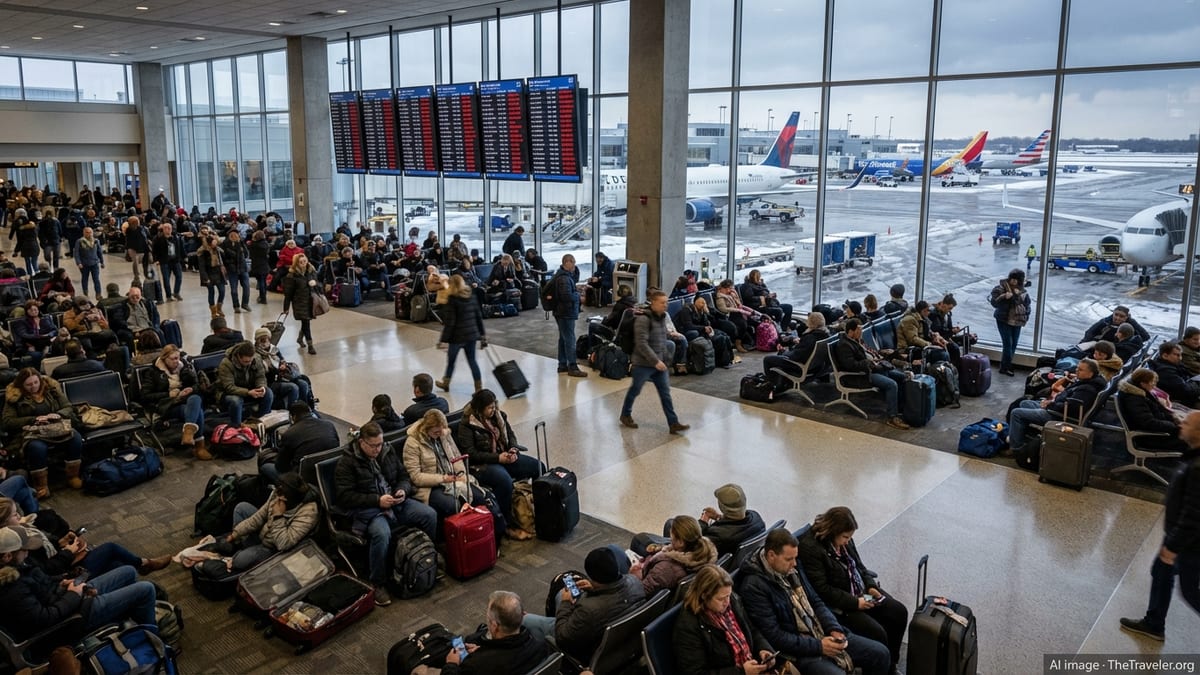
Airport departure boards in Detroit, Chicago and New York showed a familiar mosaic of yellow and red status updates, with “delayed” tags creeping across morning and midday banks of flights. Travelers reported extended waits on the tarmac, last minute gate changes and rolling departure times that pushed some journeys into late evening.
For airlines already stretched by earlier winter storms and a tight labor market in critical roles such as pilots, mechanics and ground crews, the latest disruptions underscore how little slack remains in the system. Even relatively small operational hiccups can quickly translate into visible pain for passengers.
Detroit, Chicago and New York Bear the Brunt
Detroit, Chicago and New York once again found themselves on the front lines of disruption, reflecting their status as both weather sensitive airports and essential hubs in the domestic network. At Detroit Metro, a key hub for Delta Air Lines and an important connecting point for Midwest and transborder traffic, early delays cascaded into later departures as aircraft rotated through tightly scheduled routes.
In Chicago, O’Hare’s role as a central hub for both United and American meant even a limited number of delayed departures quickly affected downline cities. Passengers connecting through O’Hare bound for smaller Midwestern and Great Plains destinations faced the familiar dilemma of missed connections and overnight rebookings, as limited remaining seat capacity left few same day options.
New York area airports, particularly LaGuardia and Newark, also saw knock on effects as weather sensitive arrival and departure banks slipped behind schedule. High traffic density and complex airspace around the New York region mean that even modest slowdowns quickly translate into airborne holding patterns, ground delay programs and staggered departures.
For travelers, the geography of these hubs matters. A delayed departure from Detroit bound for New York can translate into a missed transatlantic connection hours later. Likewise, a pushed back shuttle from Chicago to the East Coast can derail carefully planned day trips and business itineraries, even if the disruption looks minor in raw numbers.
Airlines Cite Weather and Congested Skies as Operations Tighten
While each carrier framed Tuesday’s disruptions slightly differently, executives and operations managers pointed to familiar culprits. Lingering winter weather in the Midwest and Great Lakes region, combined with gusty conditions over parts of the Northeast, constrained airport capacity and prompted air traffic control to slow the flow of arrivals and departures for safety.
Carriers also continue to operate with tighter margins for error after a sequence of severe winter storms in late January and early February that forced widespread cancellations. Those events left aircraft and crews out of position across multiple hubs, and though airlines have largely restored regular schedules, the system has less flexibility to absorb the next wave of irregular operations.
Industry analysts note that even when skies appear clear at one airport, weather elsewhere in the network often drives the timing of flights. A Boeing or Airbus rotating from a snow affected city may arrive late into a sunny destination, setting off a chain of later departures there as well. With high demand and tightly sold flights, there are fewer spare aircraft or crews to step in when the schedule slips.
Beyond weather, air traffic control staffing and airspace constraints remain a simmering concern. When sectors of the national airspace system are placed under flow restrictions, airlines must slow departures, add en route spacing and occasionally cancel individual flights rather than risk widespread gridlock, a calculation that can be felt most acutely at already busy hubs like Chicago and New York.
Passengers Face Missed Connections, Overnight Stays and Added Costs
For travelers, the practical consequences of 46 delays and 10 cancellations extend well beyond a few extra hours at the gate. On Tuesday, passengers in Detroit described watching their departure times slide repeatedly as aircraft awaited inbound crews or final safety checks, only to see tight connections on the other end slip out of reach.
Families connecting in Chicago for onward flights to smaller regional airports reported being forced to choose between long standby lists on later evening departures or overnight stays in airport hotels. Business travelers, many of whom had condensed itineraries after earlier winter disruptions, scrambled to rebook meetings and adjust plans as midday delays spilled into the late afternoon.
At New York airports, international travelers were particularly vulnerable. A delayed domestic feeder flight can mean a missed overnight departure to Europe or South America, with limited alternatives until the following day. Even when airlines issue meal vouchers or hotel accommodation for the most severely affected passengers, many stranded travelers face incidental expenses that add up quickly, from rideshares and food to lost prepaid reservations at their destinations.
Travel advocates continue to urge passengers to document all expenses and keep detailed records of communication with airlines. While U.S. regulations differ from European compensation rules, some carriers offer goodwill gestures, bonus loyalty miles or travel credits in response to significant disruption, especially for elite frequent flyers and passengers on higher fare tickets.
Delta, American, United and Southwest Work to Contain the Impact
Each of the four major carriers moved on Tuesday to limit knock on effects and reassure customers. Delta, which has contended with several high profile disruptions in recent months, focused on rerouting passengers through alternative hubs where possible and encouraging affected travelers to use digital tools for same day flight changes.
American Airlines leaned on its network of hubs in Chicago and other cities to re accommodate disrupted passengers, opening additional call center capacity and issuing travel alerts reminding customers to check flight status before leaving for the airport. Gate agents at Chicago O’Hare and New York reported heavier than usual traffic at service desks as travelers sought new itineraries.
United Airlines, whose operations are deeply intertwined with Chicago and Newark, emphasized proactive aircraft swaps to keep as many departures as possible within acceptable delay windows. Dispatchers prioritized flights with large numbers of connecting passengers, aiming to preserve long haul international departures and first bank morning flights for the following day.
Southwest Airlines, less concentrated in the New York market but with a significant presence in Chicago and other affected cities, implemented rolling schedule adjustments. The carrier shifted some departure times and, in a handful of cases, consolidated lightly booked flights in order to free up aircraft and crew for heavily impacted routes, a strategy designed to minimize systemwide complications.
Why a Handful of Flights Can Snarl a National Network
To many travelers, headlines about dozens rather than hundreds or thousands of disruptions may sound relatively minor. Yet aviation experts emphasize that even a small number of delayed or cancelled flights in the wrong places can have outsized effects across the map, particularly when they involve large hub airports or peak travel periods.
Modern airline schedules are tightly interwoven. A single narrowbody aircraft can fly multiple legs in a day, shuttling between several hubs and smaller cities. When the first departure of that sequence leaves late, each subsequent leg risks falling further behind as airport congestion, crew duty limits and turnaround times tighten the window for recovery.
Crew scheduling adds another layer of complexity. Pilots and flight attendants operate under strict federal duty time limits designed to prevent fatigue. If delays stretch into the evening, crews can “time out,” forcing cancellations even when an aircraft is physically available. Replacing those crews is not as simple as assigning any available pilot or attendant; each must be properly trained and qualified for the specific aircraft type and route.
At connecting hubs, these compounding factors can create bottlenecks that resemble traffic jams, with aircraft waiting for gates, passengers waiting for rebooking and ground operations racing to turn planes for their next departures. Once that congestion sets in, it can take hours or even days for the system to return to normal, especially during a season already stressed by weather and high demand.
How Travelers Can Protect Their Plans in a Volatile Season
With winter weather still in play and the national air travel system operating with little margin for error, seasoned travelers are adopting more defensive strategies. One increasingly common tactic is building extra buffer time into itineraries, especially when connecting through weather sensitive hubs like Chicago, Detroit and New York.
Many passengers are also gravitating toward morning departures, which tend to be more reliable because aircraft and crews are already in place from the night before. When disruptions do occur later in the day, those on earlier flights typically have more options for same day rebooking compared with travelers booked on late afternoon or evening departures.
Experts recommend that passengers monitor weather forecasts not only at their departure and arrival cities but also at major hubs along likely routings. Signing up for airline text and app notifications, as well as tracking flight status through aviation data services, can provide early warning if a flight’s incoming aircraft is delayed or rerouted.
Flexible ticketing policies, which many airlines deploy during significant weather events, can also provide a safety valve. When alerts are issued, affected travelers are often allowed to change flights within a specified window without change fees or fare differences, a tool that can be valuable for those able to move trips by a day or shift to less affected airports.
Outlook: More Weather, Ongoing Strains and a Long Winter Ahead
Tuesday’s disruptions underscore that the winter travel season is far from over. Forecasters are tracking additional storm systems poised to sweep across the Midwest and Northeast in the coming days, raising the prospect of further ground delays, de icing bottlenecks and constrained airport capacity at exactly the hubs that have already borne the brunt of this season’s turbulence.
For Delta, American, United and Southwest, the challenge will be not only managing the immediate operational pressures but also restoring traveler confidence ahead of the spring and summer peak seasons. Recent months have highlighted how vulnerable even the largest carriers can be to a mix of extreme weather, infrastructure constraints and technology related shocks.
Regulators and industry groups, meanwhile, face growing pressure to modernize key elements of the national airspace system, from air traffic control staffing and equipment to airport infrastructure at high traffic hubs. These long term investments, experts argue, are essential to reducing the frequency and severity of disruptions that strand passengers and strain airline finances.
For now, travelers in Detroit, Chicago, New York and other major cities are once again living the reality of a volatile winter in the skies, watching departure boards, reloading airline apps and hoping that their next flight lifts off roughly on time. Even when the raw numbers of delays and cancellations appear modest, the lived experience at the gate tells a more complicated story about an air travel system still searching for stability.