

More news on this day
Hundreds of travellers were left facing extended waits and disrupted plans on Thursday as a wave of delays and cancellations affected flights at Norfolk International Airport and connecting hubs across the eastern United States.
Get the latest news straight to your inbox!
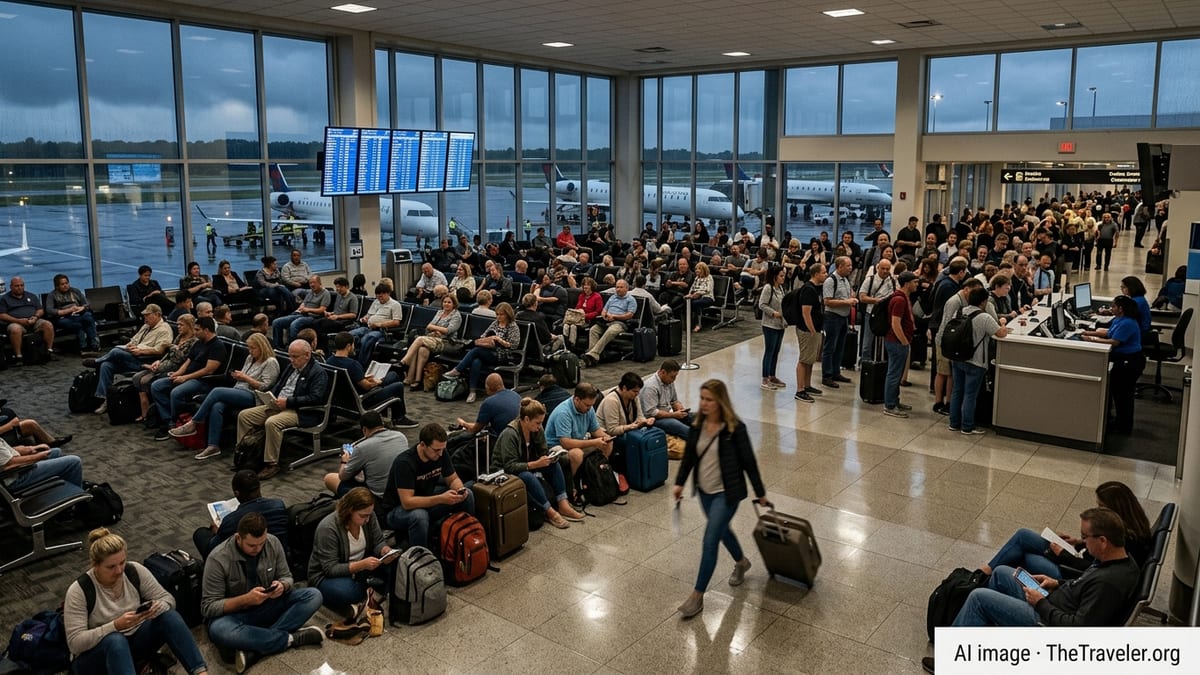
Delays and Cancellations Ripple Across Norfolk Operations
Flight status data and publicly available tracking information on Thursday indicated that operations at Norfolk International Airport were significantly constrained, with at least 16 departures and arrivals delayed and six flights cancelled across the day’s schedule. The disruption affected services operated by American Airlines, Delta Air Lines, United Airlines and other carriers that link Norfolk with major hubs such as Atlanta, Charlotte, Washington and New York.
While Norfolk is a relatively compact regional airport, its role as a feeder to larger hub airports means that even a moderate number of delayed and cancelled flights can quickly strand a large number of passengers. Travellers booked on early morning departures reported extended waits at gates as aircraft arriving from other cities were held up by wider operational challenges along the East Coast.
Publicly available airline and aviation data suggested that a combination of residual weather issues in the broader region, air traffic flow restrictions and aircraft repositioning contributed to the day’s irregular operations. Delayed inbound aircraft from other airports led to knock-on schedule changes in Norfolk, turning what might otherwise have been short holds into lengthy disruptions for connecting travellers.
Weather and Network Strain Behind Wider East Coast Disruptions
The situation in Norfolk unfolded against a backdrop of a turbulent late-winter season for US air travel. Major storms impacting the East Coast and Mid-Atlantic in recent weeks have led to repeated travel waivers from large carriers and waves of cancellations and delays affecting thousands of flights. Travel advisories covering Norfolk and other regional airports have been issued around recent winter systems and severe weather patterns, adding pressure to already busy airline schedules.
In this context, even routine thunderstorms or low clouds along the coast can have an outsized impact. When flying in and out of constrained airspace on peak days, carriers often reduce schedules or slow departures to maintain safety margins, which can cascade through the network. Norfolk’s dependence on hub connections means that disruptions in cities such as Charlotte, Atlanta, Washington and New York are quickly felt by local passengers, especially those with tight onward connections.
Recent government data and industry analysis have highlighted how winter weather and severe storms can generate prolonged ripple effects, with aircraft and crews displaced across multiple days. Norfolk’s current wave of delays and cancellations appears to reflect this broader pattern, with airlines working to recover regular schedules while also managing high spring travel demand.
Travellers Face Missed Connections and Overnight Stays
For passengers at Norfolk on Thursday, the operational strain translated into hours of uncertainty. With 16 flights delayed, many travellers missed onward connections at hub airports and were compelled to seek rebookings for later departures. The six outright cancellations intensified the challenge, as available seats on remaining flights quickly filled, particularly on routes with limited daily frequencies.
Reports from passengers and publicly shared accounts on social platforms described long lines at customer service desks and crowded gate areas as travellers attempted to secure alternative itineraries. Some passengers heading to international destinations through major hubs faced the prospect of overnight stays after misaligned connections, while others opted to switch to ground transport for shorter regional journeys.
Families, business travellers and military personnel using Norfolk to reach bases and ports across the region were among those affected. With many relying on tightly timed itineraries, the compounding impact of weather-related disruptions and congested hub operations turned routine trips into day-long ordeals, particularly for those travelling with children or tight work commitments.
Airlines Offer Waivers and Limited Flexibility
In response to the irregular operations, major airlines serving Norfolk have continued to lean on flexible rebooking policies and previously published travel waivers linked to severe weather across the East Coast. Publicly available information from recent advisories shows that carriers such as United, American and Delta have periodically allowed travellers to change flights without additional change fees when storms or thunderstorms affect cities including Norfolk.
On days like Thursday, that flexibility can provide some relief for passengers whose trips are not time sensitive. Travellers with later departure windows or discretionary journeys are often encouraged by airlines, through online self-service tools and app notifications, to move to less congested times or different dates, easing pressure on peak periods.
However, for those who must travel on specific days for work, medical appointments or family events, available alternatives may remain limited. Seats on remaining flights from Norfolk to key hubs tend to sell out quickly once disruptions begin, leaving some travellers on standby lists or facing multi-stop routings that extend total journey times far beyond their original plans.
What Today’s Disruptions Mean for Upcoming Travel
The latest wave of delays and cancellations at Norfolk International underscores how vulnerable smaller but strategically important airports can be to disruptions in the wider airline network. Industry observers note that passengers flying through Norfolk in the coming days may encounter residual schedule adjustments as airlines reposition aircraft and work to return operations to normal.
For travellers with upcoming itineraries, publicly available guidance from carriers and airport information sources consistently emphasizes preparation and flexibility. Checking flight status frequently on the day of departure, allowing additional time to reach the airport amid regional traffic issues, and planning longer layovers at major hubs can all reduce the risk of missed connections when conditions are unstable.
The experience at Norfolk on Thursday also highlights the importance of understanding passenger rights when flights are significantly delayed or cancelled. While compensation policies vary by airline and depend heavily on whether disruptions are classified as weather-related or controllable, travellers who face lengthy delays or abandoned trips may be eligible for refunds, meal vouchers or hotel accommodations in some circumstances. As airlines and airports continue navigating an unsettled late-winter and early-spring travel period, Norfolk’s stranded passengers exemplify the broader challenges facing air travel across the United States.