

More news on this day
A new bout of disruption across Europe’s crowded spring aviation schedule has triggered the cancellation of 261 flights and delays to 1,446 more, with major hubs in Germany, Ireland, Denmark, Norway and England reporting knock-on impacts for airlines including British Airways, Lufthansa, SAS and Air Nostrum.
Get the latest news straight to your inbox!
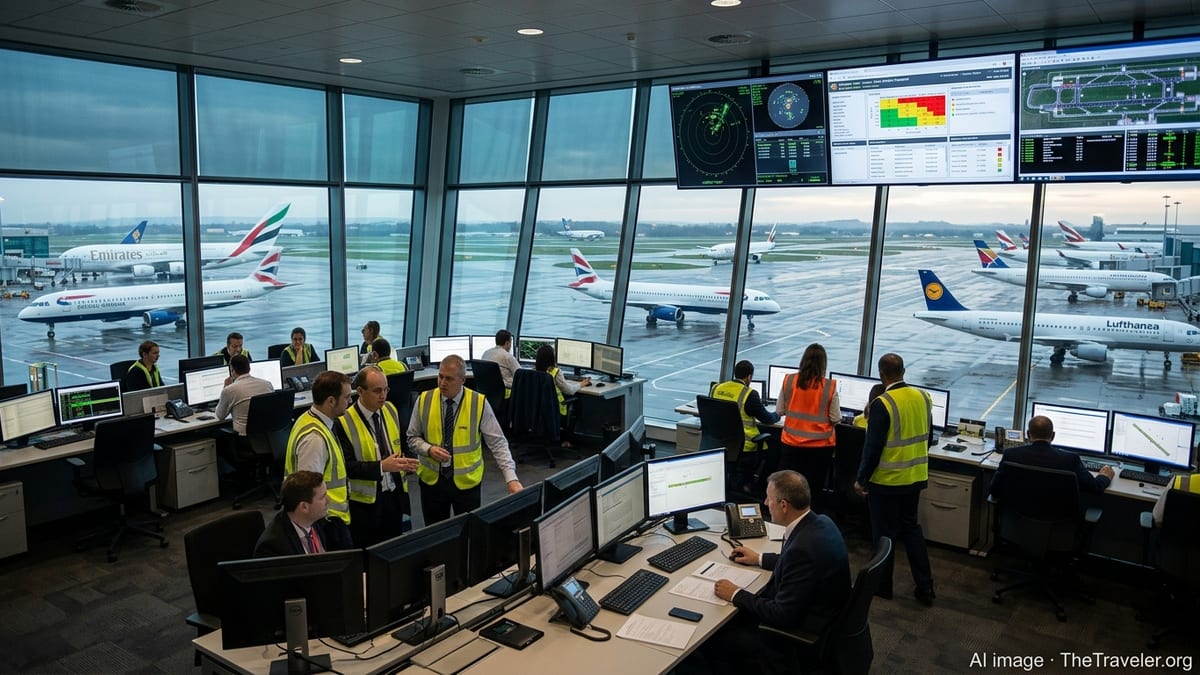
Operational Strain Across Key Northern European Hubs
Publicly available operational data for early April indicate that flight schedules at major European airports have come under sustained pressure, with cancellations and delays clustering around hubs such as Frankfurt, Dublin, Copenhagen, Oslo and London. Monitoring platforms tracking day-of-operations performance show that Germany and England account for a significant share of the disruption, but airports in Ireland, Denmark and Norway are also experiencing elevated delay levels compared with typical spring patterns.
The total of 261 cancellations and 1,446 delays across the region reflects a single 24 hour window in which adverse weather, air traffic control restrictions and congested rotations converged. Coverage from European travel industry outlets describes rolling disruption rather than a single point failure, as small schedule slips on morning departures cascade into larger gaps by late afternoon and evening peaks.
Frankfurt and London’s main airports remain at the center of the turbulence, with services feeding in and out of the German and UK hubs showing higher than usual rates of late departures. Dublin, Copenhagen and Oslo, normally viewed as relatively punctual northern gateways, have also seen their on time performance eroded as aircraft and crews cycle through delayed inbound legs.
Flag Carriers and Regional Airlines Among Those Hit
Published coverage of the disruption shows that both large network airlines and regional operators are affected. Lufthansa flights to and from Frankfurt, British Airways and other UK based carriers operating from London, and SAS departures linking Copenhagen and Oslo to the wider European network are all reported among the delayed and cancelled services.
Regional and franchise operators, including carriers such as Iberia’s regional partners, Air Nostrum and CityJet, have also appeared in cancellation and delay tallies, particularly on shorter intra European legs that connect secondary cities to the main hubs. These routes are especially vulnerable to knock on effects, as a missed slot or late arriving aircraft can quickly undermine tight turnaround times.
Low cost operators and hybrid carriers are not immune. Reports highlight that services run by airlines such as easyJet, Norwegian and other leisure focused brands have been caught in the same web of disruption, especially on routes linking the UK and German markets with holiday destinations and island airports. With aircraft often scheduled for multiple sectors per day, a single disrupted rotation can ripple through the entire daily program.
Weather, Airspace Constraints and Spring Peak Demand
Travel and aviation monitoring outlets attribute the current wave of irregular operations to a mix of seasonal and structural factors. Changeable early spring weather across the North Atlantic and Northern Europe has prompted temporary capacity reductions and stricter separation at some airports, while air navigation authorities have continued to manage traffic flows cautiously on busy corridors serving Germany and the UK.
At the same time, demand for leisure and visiting friends and relatives travel is increasing as the Easter period and school holidays send more passengers through already crowded terminals. Aviation analytics reports note that traffic volumes at many large European hubs have climbed above last year’s levels, leaving less slack in the system when storms, strong winds or local operational issues arise.
Industry observers also point to the lingering impact of staff shortages in some segments of the aviation ecosystem, including ground handling, security screening and technical services. While staffing has improved compared with the immediate post pandemic years, even modest gaps can lengthen turnaround times and make it harder for airlines to recover from early morning disruptions later in the day.
Impact on Passengers and Hubs from Frankfurt to Dublin
For travelers, the practical impact of the 261 cancellations and more than 1,400 delays has been felt as long queues, changing departure times and missed connections. Passenger experiences compiled by consumer platforms describe early morning flights departing significantly behind schedule, cascades of schedule changes appearing in airline apps, and rebooked itineraries that add extra stops or overnight stays to what were planned as same day journeys.
Frankfurt, an essential hub for Lufthansa and partners, has seen particular pressure on connecting banks, where even small delays can cause passengers to miss onward flights to regional German cities or long haul destinations. In Dublin, disruption has weighed on routes linking Ireland to the UK, continental Europe and North America, creating uncertainty for business travelers and tourists transiting through the airport on tight connections.
Further north, Copenhagen and Oslo have experienced fewer outright cancellations than some larger hubs, but higher than usual proportions of flights departing late. London’s airports have recorded a mix of both cancellations and extended delays, with Heathrow and Gatwick bearing the brunt of weather related constraints and volume driven bottlenecks at peak times.
Rights, Remedies and What Travelers Can Do Now
Consumer organisations and passenger rights specialists note that many of the affected services fall under the scope of European and UK air passenger protection rules. Regulations such as EC 261 in the European Union and its UK equivalent establish minimum standards of care, including meals, refreshments, hotel accommodation and rerouting when journeys are heavily disrupted, and may in some circumstances provide for fixed sum cash compensation.
Eligibility depends on several factors, including the length of delay at arrival, the distance of the flight and whether the cause of disruption is considered within the airline’s control. Weather related restrictions or mandatory air traffic control measures are often treated differently from technical faults, crew rostering problems or operational decisions by carriers to consolidate flights.
Travel advisories compiled from airline notices and passenger advocacy platforms recommend that travelers monitor flight status closely in the 24 hours before departure, keep airline apps and contact information to hand, and allow extra time at the airport during this period of elevated disruption. Where possible, rebooking to earlier departures in the day, travelling with carry on luggage only, and building longer connection times into complex itineraries may reduce the risk of missed flights as Europe’s busy spring flying season continues.