

More news on this day
Hundreds of airline passengers faced unexpected hours on the ground around Florida today as Palm Beach International Airport reported three flight cancellations and at least 38 delays, snarling operations for Delta Air Lines, American Airlines, JetBlue, Southwest, United, and several smaller carriers.
Get the latest news straight to your inbox!
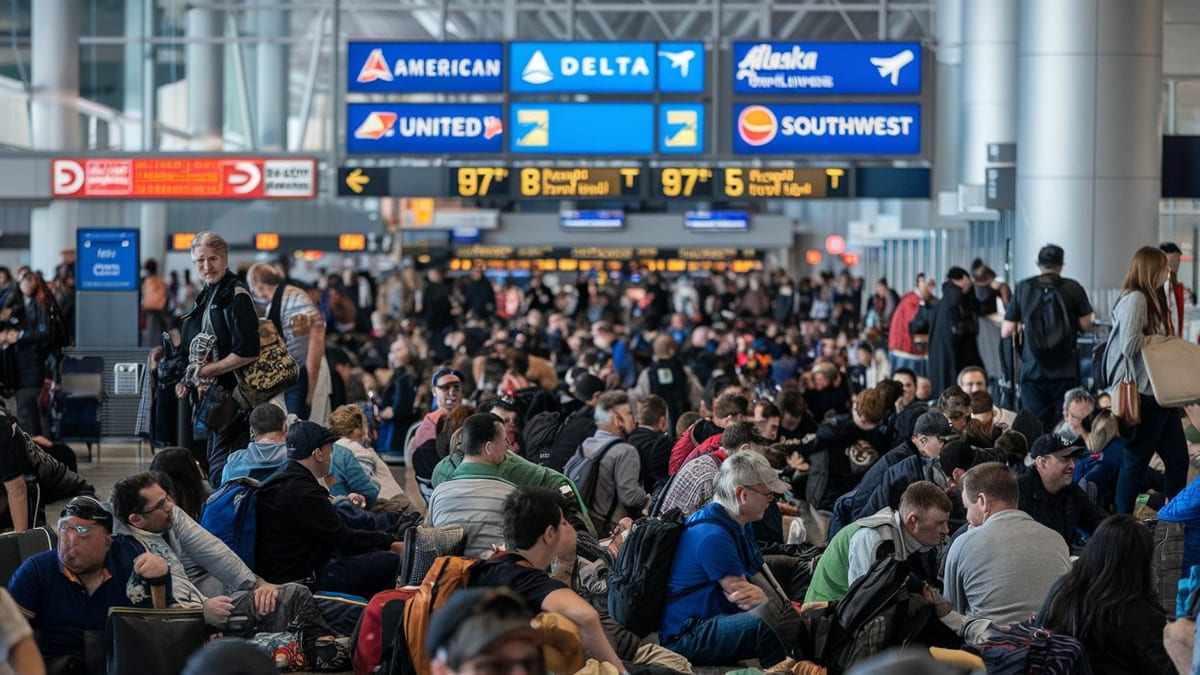
Image by Travel And Tour World
Delays At Palm Beach International Ripple Across Florida
Publicly available tracking data for March 29 indicates that Palm Beach International Airport in West Palm Beach, Florida, saw a cluster of schedule disruptions concentrated through the late morning and afternoon, with three departures cancelled outright and nearly forty flights delayed. The affected services included a mix of domestic routes within Florida and connections to major hubs along the East Coast and in the Midwest.
The disruption at Palm Beach International quickly fed into a wider pattern across Florida, as aircraft and crews scheduled to turn around in West Palm Beach arrived late to other airports. Travelers at Orlando, Fort Lauderdale, Tampa, and Miami reported longer-than-usual waits at departure gates and on the tarmac, in part because jets operating from Palm Beach arrived behind schedule or required new slot times.
While the overall number of cancelled flights remained relatively small, the concentration of delays at a busy leisure and snowbird gateway amplified the impact. Many of today’s disrupted services were heavily booked at the tail end of the spring break period, leaving limited spare seats on later departures and forcing some passengers to accept overnight rebookings.
The cascading effect of delays is a known vulnerability in Florida’s highly interconnected air network. Once an originating airport such as Palm Beach International experiences a period of irregular operations, downstream hubs and spokes often feel the knock-on impact for the rest of the day as aircraft and crews fall out of their planned rotations.
Major U.S. Airlines Juggle Squeezed Schedules
According to live schedule boards and flight-tracking platforms, today’s disruptions struck a broad cross-section of the U.S. airline industry. Delta, American, JetBlue, Southwest, and United all showed delayed departures or arrivals connected to Palm Beach International, underscoring how a localized slowdown can reverberate through multiple national networks at once.
Delta and American, which rely heavily on connections through Atlanta, Charlotte, and Miami, appeared to experience rolling delays on several Florida-bound and Florida-originating flights during the afternoon peaks. JetBlue’s point-to-point services along the East Coast, particularly to New York area airports and Boston, also showed extended departure holds, reflecting congestion as carriers tried to absorb the schedule shock.
Southwest and United, which serve Palm Beach International with fewer daily frequencies than some competitors, nonetheless had to adjust their rotations after aircraft due in or out of West Palm Beach ran late earlier in the day. In some cases this meant swapping aircraft or crews, while in others passengers were asked to wait onboard as dispatchers and air traffic managers re-sequenced departures.
For travelers, the airline logos on the tail made little difference to the on-the-ground experience. Long lines formed at customer service counters as travelers sought meal vouchers, hotel rooms, or alternative routings, while others crowded around gate podiums waiting for updated departure estimates that sometimes shifted in 15 to 30 minute increments throughout the afternoon.
Operational Strain In A High-Growth Florida Market
The timing of today’s issues at Palm Beach International comes against a backdrop of sustained growth in Florida air travel. Recent traffic reports from local airport authorities show that Palm Beach International handled more than 800,000 terminal passengers in January 2026, a year-over-year increase that reflects the state’s continued appeal for both tourism and seasonal residents.
Higher passenger volumes translate into tighter operating margins for airlines and airports. With fuller flights and busy runways, even relatively small disruptions can create a backlog that is difficult to clear before the end of the operating day. When an airport has limited slack in its schedule, a brief ground delay, a mechanical inspection, or weather-related spacing in the wider regional airspace can quickly escalate into dozens of delayed departures.
Florida’s concentration of large, high-traffic airports also raises the stakes. Orlando, Miami, Fort Lauderdale, Tampa, and Palm Beach collectively serve millions of passengers each month, and many carriers use the state’s airports as critical nodes in their national networks. When one of those nodes experiences operational stress, it can limit aircraft availability and gate space in nearby cities, compounding the challenges of getting passengers where they need to go on time.
Analyses of U.S. flight performance in recent years have consistently placed several Florida airports among the nation’s more delay-prone facilities, particularly during peak travel seasons. Today’s events at Palm Beach International align with that pattern, illustrating how the state’s popularity can at times overwhelm a system that is already running near capacity.
Travelers Confront Missed Connections And Overnight Stays
For many passengers, the immediate consequence of today’s cancellations and delays was the risk of missing onward connections. Travelers booked on multi-leg itineraries through Atlanta, Charlotte, Dallas, and northeastern hubs faced particular uncertainty as they watched their connecting windows shrink on airline mobile apps and airport monitors.
Some domestic passengers arriving late into major hubs still managed to make tight connections after sprinting between concourses or being accommodated on later flights. Others, especially those heading to smaller regional destinations with limited daily service, found that a missed connection meant an overnight stay at their intermediate hub or a lengthy re-routing through an entirely different city.
International itineraries were also affected. A delayed departure from Palm Beach International toward a gateway such as Miami or New York can jeopardize a once-daily transatlantic or South American connection, leaving few immediate alternatives. Travelers caught in that situation often must wait until the following day, especially when long-haul services are already heavily booked at the end of March.
Families traveling at the close of spring break season, as well as business travelers seeking to return home for the workweek, appeared among those most heavily impacted. With hotel availability near some Florida airports already tight, last-minute overnight stays added financial and logistical strain to what had been planned as routine journeys.
What Today’s Disruptions Signal For Spring And Summer Flyers
While three cancellations and 38 delays at a single airport may appear modest in the context of nationwide air traffic, today’s events at Palm Beach International offer a cautionary signal for the coming months. As Florida heads into a period of continued high demand, carriers and airports will be pressed to maintain on-time performance despite tight schedules and limited slack in the system.
Publicly available performance data from the past several years suggests that airlines have reduced cancellation rates overall but continue to struggle with delays, particularly in congested or weather-sensitive regions such as Florida. That trend means travelers are somewhat less likely to see a flight scrubbed altogether, but more likely to encounter extended waits on the ground or in crowded terminals.
For passengers planning trips through Florida in the weeks ahead, today’s experience at Palm Beach International reinforces the value of building extra time into itineraries. Booking longer connection windows, favoring morning departures when possible, and monitoring flight status closely on the day of travel can help reduce the risk that an isolated airport disruption cascades into an overnight interruption.
As airlines and airport operators analyze the causes and consequences of today’s irregular operations, travelers will be watching to see whether schedule adjustments, staffing measures, or infrastructure tweaks are introduced before the peak summer vacation period. For now, the scenes in West Palm Beach and at other Florida airports serve as a reminder that even on a mostly clear day, the modern air travel system can quickly become strained when a single node encounters trouble.