

More news on this day
Air travel across the United States faced another day of severe disruption today as major hubs including Chicago, New York, Orlando, Philadelphia, and San Francisco reported at least 55 cancellations and more than 2,345 delays, affecting operations for American, Southwest, United, Delta, Alaska and other carriers.
Get the latest news straight to your inbox!
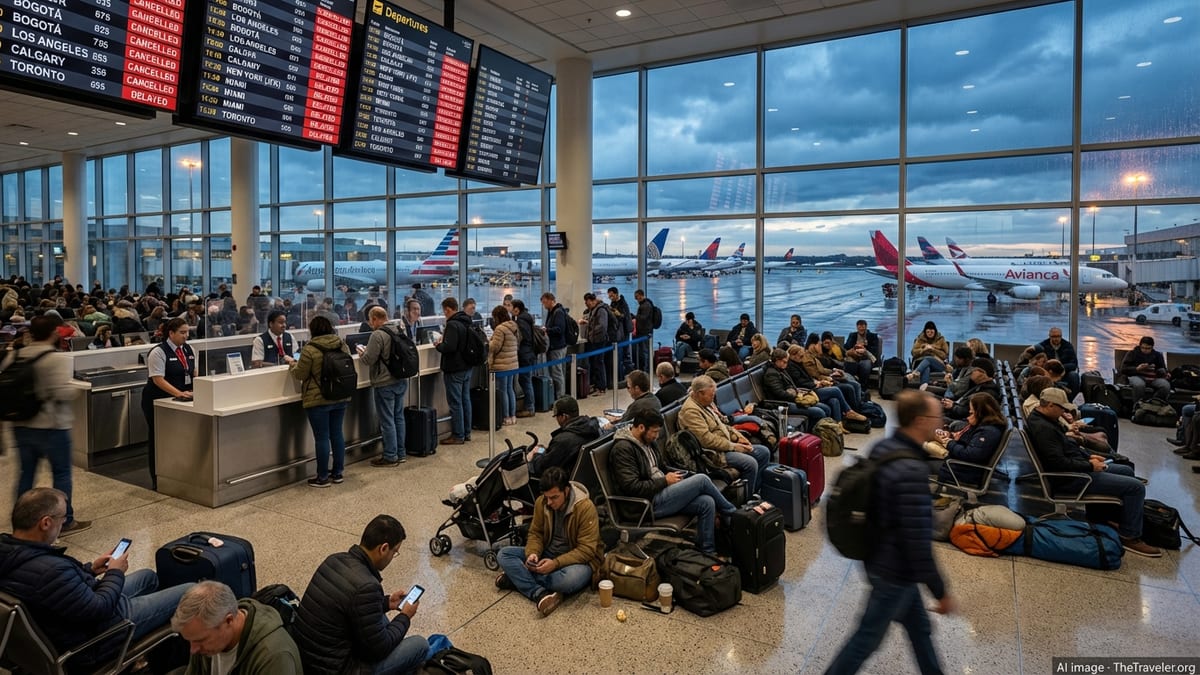
Major Hubs Log Hundreds of Delays as Spring Disruption Continues
Publicly available flight-tracking data and aggregated industry coverage indicate that the latest wave of disruption is concentrated at some of the country’s busiest airports, where already stretched schedules are colliding with crowded spring travel demand. New York area airports, Chicago O’Hare, Orlando International, Philadelphia International, and San Francisco International all appear prominently in today’s delay and cancellation tallies.
Reports from travel-industry outlets tracking same-day data show that, taken together, airports across the United States have logged at least 55 cancellations and well over 2,300 delays into, within, or out of the country. While these figures are lower than the most extreme days seen over the Easter holiday period, they still represent a significant system-wide strain that is rippling through airline networks.
Operational summaries highlight that the disruption is not confined to any single region. Delays are clustered in the Northeast, Midwest, and key Sun Belt gateways, suggesting a mix of localized weather constraints and broader airspace or staffing limitations that are slowing traffic flows through critical corridors.
Travel-news analyses point out that today’s figures follow several consecutive days of heavy disruption, including one recent day when U.S. airports recorded more than 4,000 delays and over 200 cancellations nationwide. That backdrop has left many routes and crews out of optimal position, making schedules more vulnerable to even modest new constraints.
Chicago, New York, Orlando, Philadelphia, San Francisco Among Worst Hit
Data snapshots from delay-monitoring services show Chicago O’Hare once again among the airports facing elevated disruption, with triple-digit delay counts placing it near the top of national rankings. New York’s major airports are also heavily affected, continuing a pattern seen throughout late March and early April in which this airspace has repeatedly required traffic-management measures.
Orlando International, a key leisure gateway, continues to feature prominently in disruption tables. Recent reports clocked nearly 200 delays and multiple cancellations there in a single day, as large volumes of spring break and theme-park traffic amplified the impact of even routine slowdowns. That congestion has knock-on effects for routes linking Orlando to hubs such as Atlanta, Dallas, Boston, Chicago, and New York.
Philadelphia and San Francisco are also reporting significant numbers of delayed departures and arrivals. At San Francisco, a combination of coastal weather patterns and high long-haul volumes tends to magnify the impact of any airspace constraint, while Philadelphia’s position within the busy Northeast corridor leaves it exposed when flow-control programs are in place over the region.
Travel-industry roundups note that today’s patterns closely mirror those seen in recent disruption summaries, which repeatedly list Chicago, New York, Orlando, Boston, Los Angeles, Seattle, Houston, and other large hubs among the most affected. The repetition underscores how concentrated stress at a small number of key airports can quickly cascade nationwide.
Big U.S. Carriers Face System-Wide Knock-On Effects
The latest disruption has once again hit the largest U.S. airlines hardest, with American Airlines, Delta Air Lines, United Airlines, Southwest Airlines, Alaska Airlines, and several low-cost carriers all experiencing elevated delay counts. On some recent days, analyses of publicly available data have shown individual carriers managing hundreds of delayed flights and dozens of cancellations across their networks.
Earlier this month, published coverage of a particularly difficult day for one major U.S. airline highlighted more than 800 delays and over 40 cancellations for that carrier alone, concentrated at its largest hubs. While today’s numbers appear less extreme for any single airline, the breadth of affected airports means that multiple carriers are simultaneously juggling late-arriving aircraft, missed connections, and crew timing constraints.
Industry observers note that this month’s pattern has unfolded at a time when airlines are operating packed schedules with limited spare capacity. Aircraft utilization remains high and many carriers have relatively few standby planes and crews available, a strategy that is efficient when conditions are smooth but leaves little margin when storms, airspace restrictions, or unexpected technical issues arise.
As a result, even a modest number of cancellations can strand large numbers of passengers when subsequent flights are already heavily booked, making same-day rebooking difficult on popular routes. Disruptions on one coast can quickly ripple to the other as aircraft and crews miss their scheduled turns.
Weather, Airspace Constraints, and Staffing Pressures Converge
Recent analyses of U.S. aviation performance suggest that today’s problems are part of a broader convergence of factors affecting the system in early April. Spring storm systems have repeatedly swept across key regions, with thunderstorms, high winds, and pockets of late-season snow forcing reductions in airport capacity on multiple days.
At the same time, reports drawing on Federal Aviation Administration data point to persistent air-traffic control staffing challenges at several major facilities. An aviation-industry publication this week highlighted that New York-area airspace has been subject to frequent ground delay programs, with average hold times sometimes stretching beyond an hour. When such programs are activated on already busy days, delays at New York airports can quickly propagate to Chicago, Philadelphia, and beyond.
Travel-industry commentary also notes that the lingering effects of earlier weather events are still being felt. Over the Easter weekend alone, national statistics showed tens of thousands of delays and well over 2,000 cancellations, leaving many aircraft and crews out of position. Recovery from such episodes can take days, particularly during peak travel periods when schedules are tightly packed.
While no single cause fully explains today’s disruption, the overlap of volatile spring weather, constrained airspace, high demand, and thin staffing margins appears to be a consistent theme in recent weeks. Observers say that combination has turned relatively routine slowdowns into system-wide challenges more often than in previous years.
Passengers Face Long Lines, Missed Connections, and Limited Options
For travelers passing through affected hubs today, the numbers translate into long security and check-in lines, crowded gate areas, and significant uncertainty about departure and arrival times. Industry coverage and firsthand accounts shared on public forums describe early-morning delays compounding throughout the day as aircraft fall increasingly behind schedule.
Missed connections are a particular concern at hubs such as Chicago, New York, and San Francisco, where many domestic passengers are connecting to limited-frequency transcontinental or international departures. When long-haul flights operate only once a day, a missed connection can mean an overnight stay or rerouting across multiple additional legs.
Travel experts quoted in recent reporting advise passengers to monitor flight status frequently via airline apps or flight-tracking services, arrive early at the airport, and build longer layovers into itineraries that involve tight connections through known congestion points. Flexible travelers are also encouraged to consider rebooking through less congested hubs when possible, particularly during periods of active weather systems.
With spring travel demand expected to remain strong in the weeks ahead, and forecasts indicating the potential for further storm systems, industry observers suggest that intermittent days of heavy disruption are likely to continue. For now, today’s tally of at least 55 cancellations and more than 2,345 delays serves as another reminder of how quickly stress at a handful of major hubs can reverberate throughout the U.S. aviation network.